Reviewed · TOURS
Prehistoric Temples of Malta Tour
Malta’s prehistoric temples are not small piles of old stones. At Hagar Qim and Mnajdra, huge limestone blocks form doorways, chambers, and curved walls built around 3150 BC. I like that this tour pairs those famous monuments with Ghar Dalam Cave and Museum, where Malta’s prehistoric animal bones help explain what the island was like before people built temples.
I also like the smooth half-day format and the guides, especially Mark, Mario, Marco, and Marlon, who are often praised for clear explanations and lively storytelling. The main catch is time: pickup runs across many resort areas, and some groups want another 20 minutes at the temples.
Key points at a glance
- See two of Malta’s finest megalithic sites: Hagar Qim and nearby Mnajdra are the core of the tour.
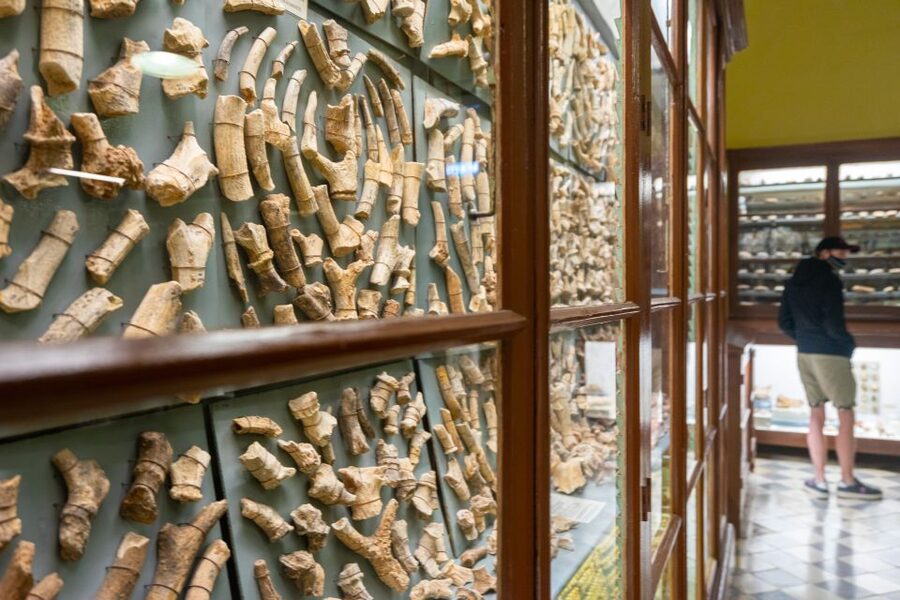
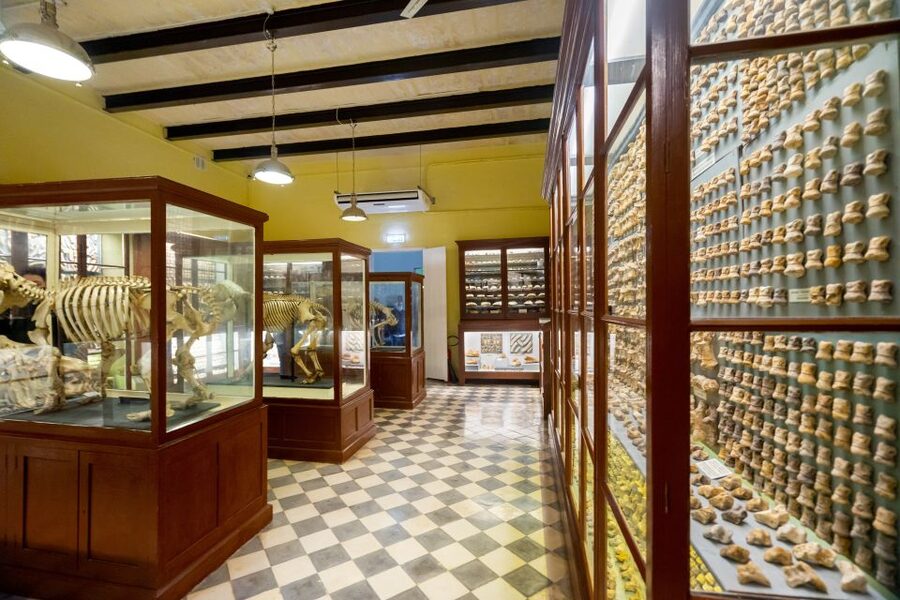
- Start with Ghar Dalam Cave and Museum: The displays include bones and fossils from animals that lived in prehistoric Malta.
- Look for Hamrija Tower: This 17th-century watchtower adds a later layer of Maltese history near the temples.
- Expect a walking morning: The route between Hagar Qim and Mnajdra includes an uphill return, so comfortable shoes matter.
- Use the guide for context: Mark, Mario, Marco, and other guides explain how archaeologists interpret the sites, not just what each stone is called.
- Pay for convenience: At $59 per person, transport, hotel pickup, entrance fees, and a multilingual guide are included.
Why Malta’s temple stones matter
The Megalithic Temples of Malta date back roughly 5,500 years. That makes them some of the oldest free-standing stone structures on Earth, older than the Egyptian pyramids in their earliest form and far older than the Roman monuments most people associate with Mediterranean sightseeing.
The value of a guided visit is that the stones can seem puzzling at first. You see thick walls, enormous blocks, and rounded rooms, but the builders left no written explanation. A good guide helps you think about how the sites were found, reconstructed, and interpreted.
That interpretive work is one of the strongest parts of this experience. Mark, in particular, is repeatedly praised for making the subject easy to follow and for discussing how archaeologists understand temple culture. Marco has been described as an archaeologist, while Marlon brought experience as a retired archaeologist and lecturer. The specific guide varies, but the tour is built around explanation rather than simply dropping you at the entrance.
The temples are UNESCO World Heritage sites, but that label alone does not tell you what the visit feels like. These are open-air monuments in a stark Mediterranean setting, surrounded by low scrub and exposed stone. You get archaeology, sea views, and a strong sense of how isolated southern Malta can feel beyond the towns.
Other Malta days people book alongside this one:
- Malta: Gozo & Comino Islands, Blue Lagoon & Seacaves Tour
★ 4.5 · 15,672 reviews - Comino: Blue Lagoon, Crystal Lagoon, and Seacaves Tour
★ 4.6 · 5,673 reviews - Malta: Blue Lagoon, Beaches & Bays Trip by Catamaran
★ 4.7 · 5,496 reviews
Ghar Dalam Cave and Museum: Malta before the temples
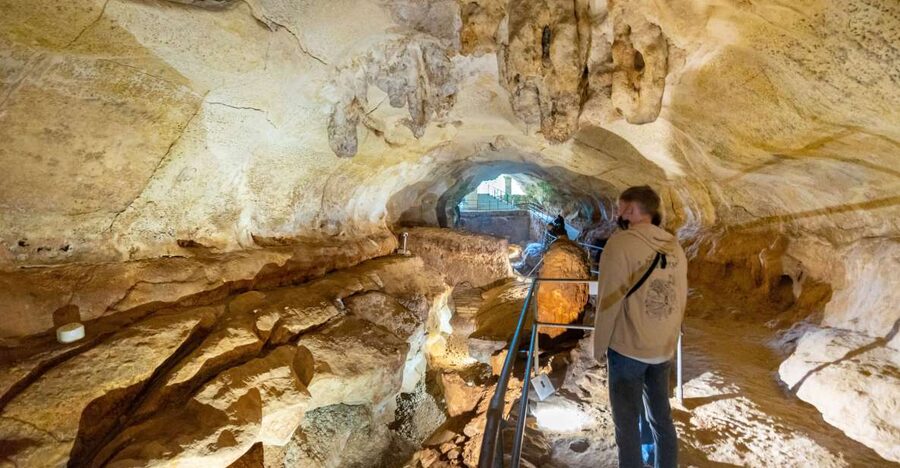
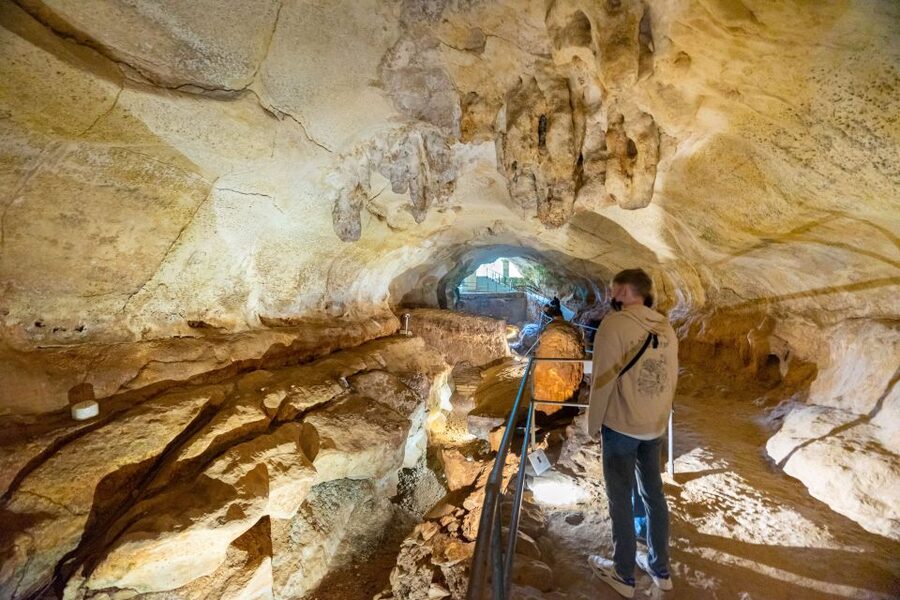
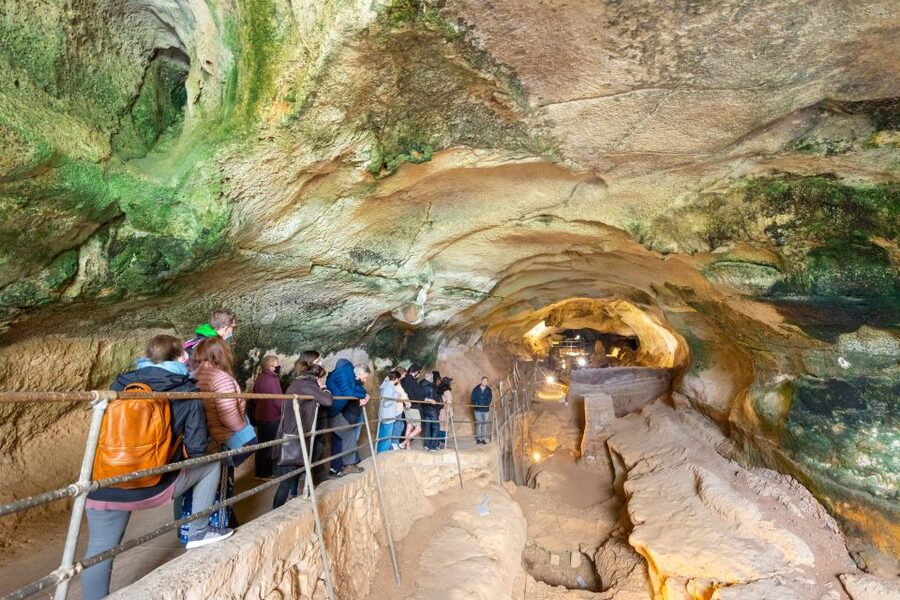
Ghar Dalam is usually the first major stop. The cave itself is not a show cave filled with dramatic stalactites, underground lakes, or broad caverns. If that is what you expect, you may find the cave modest.
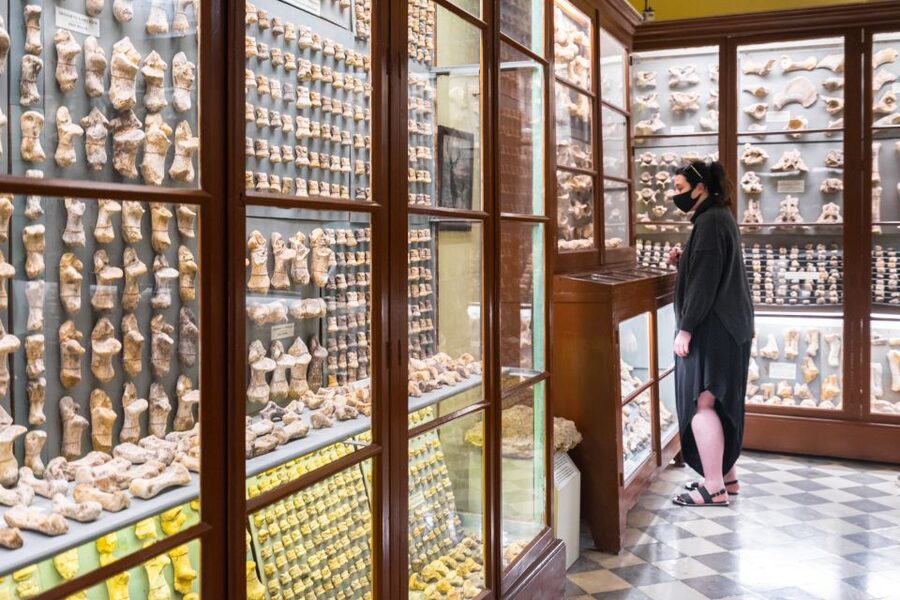
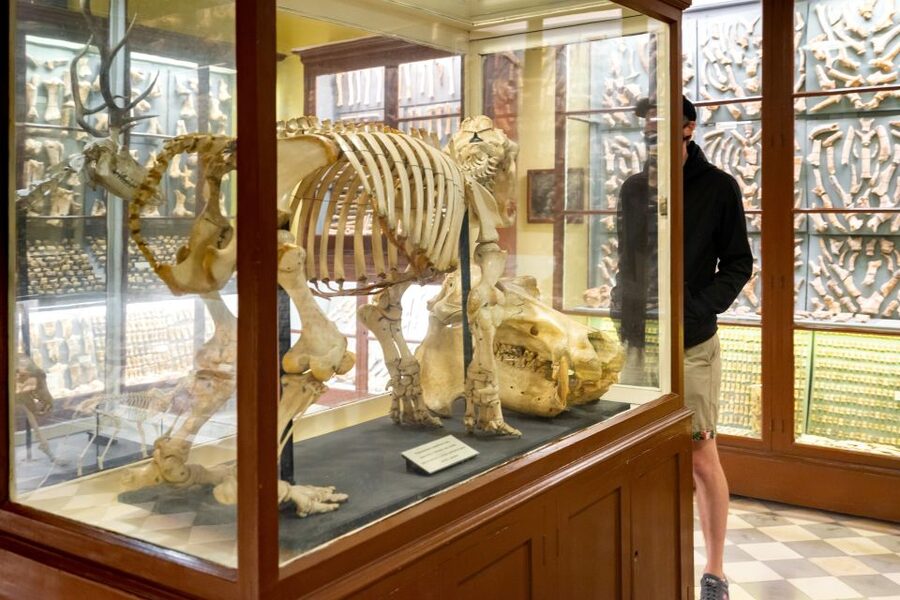
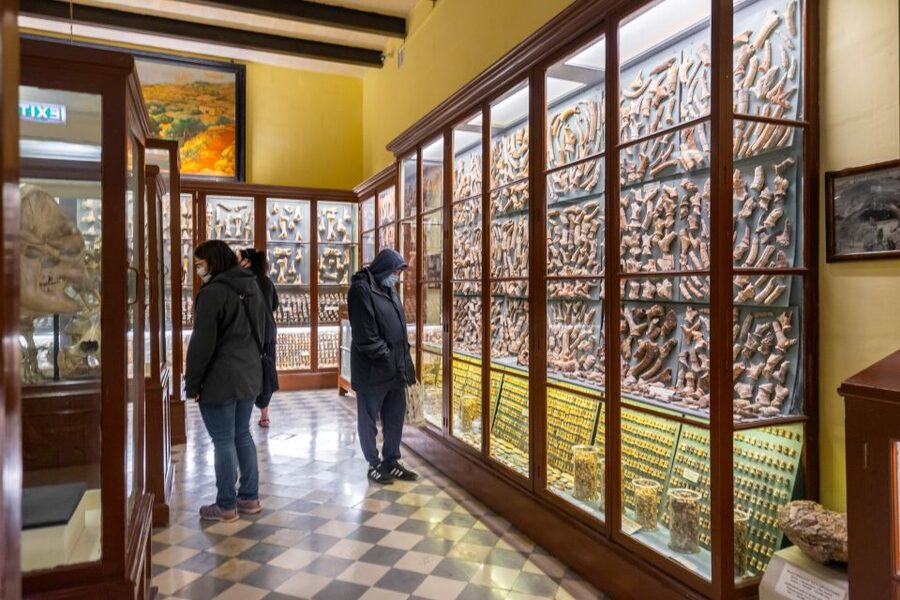
The museum is the real prize here. Its displays include bones and fossils from prehistoric animals that lived on Malta, giving you a look at the island before the temple builders arrived. This makes Ghar Dalam a useful opening chapter: you begin with Malta as an island inhabited by animals, then move forward to the human communities that shaped the megalithic sites.
You get a short period for the museum and cave, so you will need to keep moving. Several people have wished for more time with the displays, and that is a fair criticism if you enjoy natural history. Still, the stop adds something important that a temple-only outing would miss.
One practical point: the cave is not the main event. Think of it as a compact archaeological introduction, not a full underground expedition. The museum’s bones and fossils do more to explain the site than the cave’s physical appearance.
Hagar Qim, the first great temple encounter
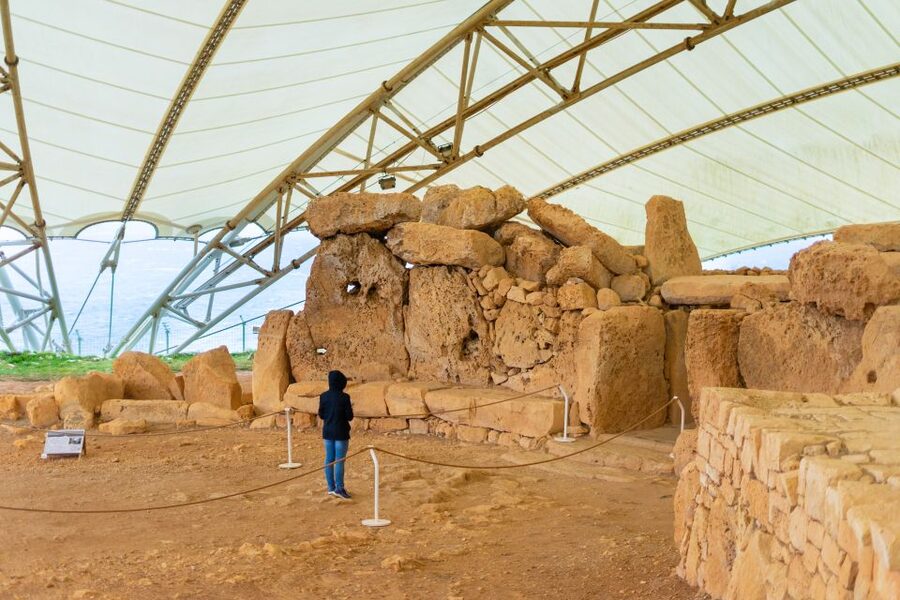
Hagar Qim sits on a ridge in southern Malta, built from the island’s soft globigerina limestone. The setting gives the site much of its power. You are not walking through a dense modern neighborhood or a city museum. The temple complex occupies open ground, with scrub, rock, and sea around it.
The stones are massive, and their size is one of the first details you notice. Hagar Qim’s builders worked without modern machinery, yet they created substantial walls and carefully arranged spaces. Your guide can point out carved details and help separate original features from later conservation work.
The word fragile matters here. The limestone is vulnerable to weather, so protective coverings have been installed over the temples. These roofs do not ruin the experience, but they do change the view. You are looking at an archaeological site that needs protection, not a monument frozen in perfect condition.
Allow yourself time to look closely. The best moments are often not the broad views but the small details: the curve of a wall, a carved pattern, the relationship between a doorway and an inner chamber, or the way the blocks were fitted together. Without a guide, it is easy to take a few photographs and move on. With one, the site becomes a set of questions about ritual, engineering, and daily life.
The tour gives you enough time to see the complex without turning the stop into a race. Still, the schedule is tight enough that you probably will not examine every display at length. If you are an archaeology specialist, you may want a separate visit with more time. If you are seeing Malta’s prehistory for the first time, the guided stop gives you a strong foundation.
Walking from Hagar Qim to Mnajdra
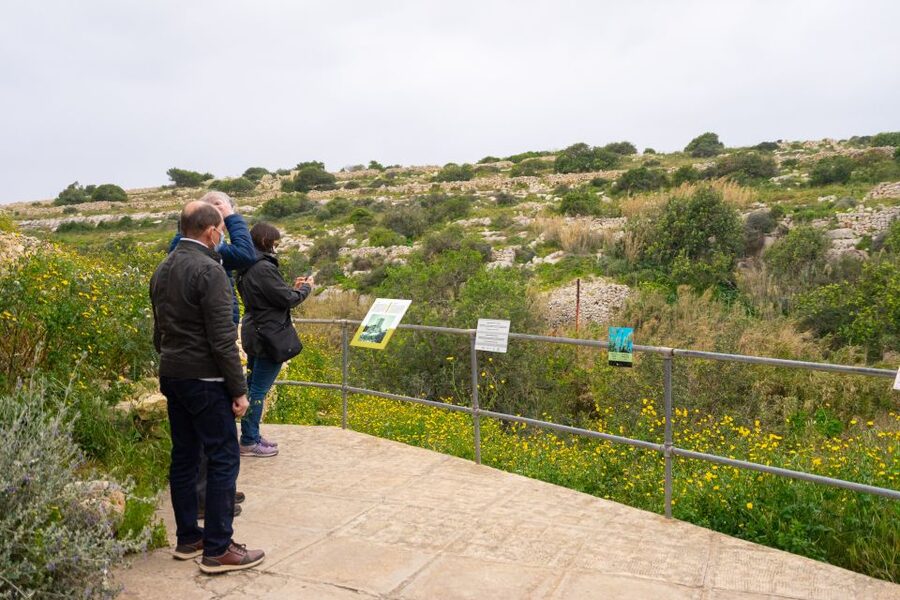
Hagar Qim and Mnajdra are close to one another, but this is not a step straight from one doorway to the next. You should expect a walk between the sites, followed by an uphill return. One person estimated the outing at around 10,000 steps and more, while another noted that the route is manageable but includes a climb.
That makes comfortable shoes essential, even though the tour description lists them as a simple packing suggestion. Bring water too, especially in warm weather. The open setting offers limited relief from sun, and the stone paths can make the walk feel harder than the distance suggests.
This section is also part of the appeal. The temples are surrounded by Mediterranean garrigue, a low scrub habitat typical of Malta. The area has been designated a Heritage Park, so the walk is not merely a transfer between attractions. You get a better sense of the site’s setting and the distance from Malta’s busy resort centers.
If you have mobility concerns, pay attention when the guide explains the route. Guides have been praised for outlining the physical demands and pointing out choices for people who may not manage every stair or longer walk. That does not make the entire route fully effortless, but it lets you decide what suits you before committing.
Same islands, a completely different day out:
- Malta: Gozo, Comino, Blue & Crystal Lagoon, & Caves Cruise
★ 4.6 · 5,092 reviews - From Malta: Full-Day Gozo UTV Tour with Lunch and Boat Ride
★ 4.6 · 4,408 reviews - From Sliema: Comino, Crystal Lagoon, and Blue Lagoon Cruise
★ 4.5 · 3,792 reviews - From Sliema: Gozo, Comino and Blue Lagoon Cruise
★ 4.5 · 3,461 reviews
Mnajdra, Malta’s most graceful temple complex
Mnajdra is often regarded as the best surviving example of Maltese megalithic architecture. Its position below Hagar Qim gives it a different feel, even though the two sites belong to the same prehistoric story.
The complex is made up of several temple structures, with rounded forms and carefully arranged entrances. The design feels more graceful than rugged. Your guide can explain the layout and highlight details that are easy to miss when you are simply looking at large blocks of limestone.
Mnajdra is also the point where the age of the site becomes most striking. These walls were built thousands of years before the familiar classical civilizations of Greece and Rome. The builders were not leaving behind a rough camp. They were planning formal spaces, moving heavy stone, and creating places with symbolic importance.
You may wish the visit lasted longer. The standard complaint is not that the tour is badly paced, but that the temples are interesting enough to deserve more time. That distinction matters. The schedule works for a first look, yet anyone who likes to linger over architecture, take photographs, or study the information panels could feel hurried.
The view toward the Mediterranean adds another reason to slow down. Filfla, the small uninhabited islet visible offshore, can be seen from the temple area. The combination of ancient stone and open sea is one of the most memorable parts of the morning.
Hamrija Tower and the later history of the site
A few hundred meters from the temples, you can see Hamrija Tower. It belongs to a much later chapter of Maltese history, built by Grand Master Martin de Redin as one of 13 coastal watchtowers.
The tower helps you read the area across centuries. The temples reflect Malta’s prehistoric communities, while Hamrija Tower belongs to the era of the Knights of Malta and coastal defense. You are not visiting it as a separate fortress tour, but its presence gives the outing more depth.
Do not expect an extended interior visit based on the information provided. The value is primarily in seeing the tower near the ancient temples and understanding how the same exposed coast mattered to very different societies.
The guide makes the difference
This tour’s strongest feature is its human element. The ancient sites are impressive on their own, but the quality of the morning depends heavily on how clearly the guide explains them.
Mark has received especially warm praise for his archaeological knowledge, clear English, and ability to work in more than one language. He has also guided groups made up of English, Italian, and French speakers, explaining each section in all three languages. Mario is often described as enthusiastic, approachable, and easy to listen to. Marco has been praised for keeping groups organized and answering questions about both the temples and their builders.
The listed tour languages are English, German, Italian, and French. In a multilingual group, explanations may take longer because the guide repeats key points in several languages. That is useful if you need one of those languages, but it can affect the pace for everyone else.
There has been at least one poor experience with spoken English, so a perfect guide is not guaranteed. Still, the broad pattern is clear: the guide is a major reason to choose this tour over simply taking public transport to the sites.
Transport, pickups, and the real half-day timing
Hotel pickup and return transport are included, which is a major convenience in Malta. Pickup points cover Cirkewwa, Mellieha, Xemxija, Golden Bay, St. Paul’s Bay, Bugibba, Qawra, St. Julian’s, Sliema, Valletta, and Attard.
The published morning times range from 8:30 to 9:10. For example, Cirkewwa and Attard are listed at 8:30, Valletta at 8:40, Sliema at 8:55, and Qawra and St. Julian’s at 9:10. Your exact meeting point and time are sent by email the day before, so check your messages carefully.
The wide pickup area is both a strength and a weakness. You do not need to arrange a taxi or work out the bus connections to southern Malta. But the coach may spend a fair amount of time collecting people, and some outings include a wait while another bus joins the group.
Transport quality can vary. Several people found the bus comfortable, including one who appreciated the air conditioning. Others encountered an older or less well-maintained vehicle on the return journey, and one person found the driver’s road style unsettling. Malta’s roads can be busy and narrow, so the ride is part of the practical trade-off for door-to-door service.
The advertised duration is 4.5 hours, although the experience is also presented as a five-hour archaeological outing. Treat it as a morning program rather than a precision-timed block. Traffic, pickup delays, and group organization can affect the finish time.
Is $59 a fair price?
At $59 per person, this is not the cheapest way to see Hagar Qim and Mnajdra. The sites can be reached by public transport, and independent visitors may prefer setting their own pace.
The price becomes easier to justify when you add the entrance fees for Ghar Dalam Cave and Museum, Hagar Qim, and Mnajdra. You also receive hotel pickup and return transport, a live guide, and a planned route that links three related sites. For a first visit to Malta, that removes a lot of planning.
I would call it fair value for convenience, not a bargain. You are paying for interpretation and transport as much as for admission. If you dislike organized groups or want two hours at each temple, book independently. If you have limited time and want the major prehistoric sites explained in one morning, the price is sensible.
The tour’s rating is 4.2 out of 5 from 517 ratings, which fits the overall picture: very strong archaeological content and guide service, with some deductions for pickup time, vehicle quality, and the wish for longer temple visits.
Who should book this Malta temple tour?
I would choose this outing if you are visiting Malta for the first time, have only a few days, or want the prehistoric sites placed in a clear story. It also suits history fans, families with older children, and anyone who prefers not to manage buses and entrance tickets.
You should be comfortable walking outdoors, including an uphill stretch between the temples. Bring water and wear shoes with good support. The open garrigue setting is part of the experience, but it also means heat and sun can matter.
This is less suitable if your priority is a slow photographic visit or detailed museum study. The Ghar Dalam museum stop is short, and the temple schedule leaves limited time for lingering. You might prefer an independent visit if you want to read every panel or return to a favorite chamber.
If you have limited mobility, use the guide’s route briefing to make informed choices. The outing may be manageable in parts, but the walk between sites and uphill return should not be treated as trivial.
FAQ
How long does the Prehistoric Temples of Malta Tour last?
The activity is listed as lasting 4.5 hours, while the description also calls it a five-hour archaeological tour. Allow roughly half a day, with traffic and passenger pickups potentially affecting the exact finish time.
What sites are included?
The tour includes Ghar Dalam Cave and Museum, Hagar Qim Temples, and Mnajdra Temples. You also see Hamrija Tower near the temple area.
Are entrance fees included?
Yes. Admission to Ghar Dalam Cave and Museum, Hagar Qim Temples, and Mnajdra Temples is included in the $59 price.
What languages are available?
The live guide service is offered in English, German, Italian, and French. The guide may explain information in several languages when the group is multilingual.
Where is hotel pickup available?
Pickup is listed for Cirkewwa, Mellieha, Xemxija, Golden Bay, St. Paul’s Bay, Bugibba, Qawra, St. Julian’s, Sliema, Valletta, and Attard. The exact pickup point and time are sent by email one day before the tour.
What should I bring?
Bring comfortable shoes and water. The visit includes walking between Hagar Qim and Mnajdra, with an uphill section on the return.
Should you book it?
Book this tour if you want Malta’s prehistoric temples explained by an expert guide and reached without transport planning. The combination of Ghar Dalam’s fossils, Hagar Qim’s huge limestone blocks, Mnajdra’s elegant layout, and the sea views makes a strong half-day introduction to ancient Malta.
Skip it if you want complete freedom or a very slow visit. The pickup circuit can eat into the morning, and $59 is more than a do-it-yourself outing. For most first-time visitors, though, the included admissions, hotel transport, and high standard of guiding make this a practical choice, especially when Mark, Mario, Marco, or another strong guide is leading the group.
Just added around Malta
- Serenity at Sea: Comino Blue Lagoon Exclusive Day Cruise★ 5.0 · 3 reviews
- Gozo Unveiled: Guided Hiking in Gozo – South East★ 5.0 · 3 reviews
- Gozo Unveiled: Guided Hiking in Gozo – The West★ 5.0 · 3 reviews
- Malta Chocolate Factory Gin and Truffle Making Experience★ 5.0 · 3 reviews
- From St. Julian’s: Jet Ski Safari to the South of Malta★ 5.0 · 3 reviews
- St. Julian’s: Comino Blue Lagoon Sunset Cruise by Speedboat★ 3.6 · 3 reviews
- Malta: Around Comino Cruise With Blue Lagoon stop★ 5.0 · 3 reviews
- Private Speedboat Tour: Blue Lagoon & 3 Islands from Split★ 5.0 · 3 reviews
Tours, compared.
Gozo & Comino Islands, Blue Lagoon & Seacaves Tour
Read our review →
Blue Lagoon, Crystal Lagoon, and Seacaves Tour
Read our review →
Full-Day Gozo UTV Tour with Lunch and Boat Ride
Read our review →
Highlights of Malta & Mdina Full Day Tour with Lunch
Read our review →
The Three Fortified Cities Tour including Boat Trip
Read our review →