
Reviewed · MALTA
A Monumental Maltese Experience
Malta’s oldest monuments are the real stars here: enormous limestone blocks, carved spirals, altar spaces, and temple rooms built thousands of years before Rome. This private day combines four prehistoric sites with the fishing villages of Marsaxlokk and Wied iz-Zurrieq, giving you a broad look at southern Malta without renting a car.
I like the private transport and the freedom to linger at a temple or move on when you have had enough. I also like the audio guides, since they add structure at the archaeological sites while your driver-guide can fill in the wider story of Maltese life and culture.
The main drawback is the packed schedule. Six to eight hours is enough to see a great deal, but not enough for long, leisurely visits everywhere. Lunch is extra, and the Blue Grotto boat trip is optional, separately paid, and dependent on good weather.
Key points to know before booking
- Four major prehistoric sites in one day: Hagar Qim, Mnajdra, Tarxien, and Borg in-Nadur cover Malta’s earliest monumental past.
- A private car keeps the day flexible: Only your group takes part, so you are not waiting for a large bus party at every stop.
- Christopher is a particularly strong guide choice: He is praised for explaining archaeology, Maltese culture, and modern island life in an easy, personal way.
- Marsaxlokk adds everyday Malta: Its harbor, fishing boats, and traditional market break up the temple visits.
- The Blue Grotto boat ride is not included: You can decide on the day, but the ride operates only when conditions are suitable.
- The price includes useful extras: Entry fees, hotel pickup, air conditioning, WiFi, bottled water, and a map are covered, but lunch is not.
Why this private Malta day works so well
Malta can look small on a map and still take time to cross. Roads, village streets, and sightseeing stops add up quickly, especially in the south. This experience solves the basic transport problem without asking you to drive, navigate, find parking, or work out which prehistoric site belongs to which period.
You begin at 10:00 am, with pickup offered from your accommodation. The vehicle is private, air-conditioned, and equipped with WiFi. Cold bottled water is available, and a map of the islands helps you keep track of the places you are seeing.
I value the private format most at the archaeological sites. You are not tied to a fixed walking group, so your guide can adjust the rhythm to your interests. If you want more time with ancient carvings, you can use it. If you are ready for lunch or sea views, you can move along.
Guides named in the tour feedback include Christopher, Chris, Marc, and Mark. Christopher receives especially strong praise for explaining the ancient temples, answering questions, and connecting Malta’s early monuments with sites such as Stonehenge, Egypt, and Mexico. That broader context matters. Without it, the temples can look like piles of pale stone. With a good explanation, the carved blocks and odd-shaped chambers begin to make sense.
The package also gives you audio guides at the temple sites. That is a useful arrangement. You get formal information while exploring independently, then personal conversation and local perspective between stops. It is less rigid than following one guide through every room and more informative than simply being dropped at an entrance.
Other Malta days people book alongside this one:
- Malta: Gozo & Comino Islands, Blue Lagoon & Seacaves Tour
★ 4.5 · 15,672 reviews - Comino: Blue Lagoon, Crystal Lagoon, and Seacaves Tour
★ 4.6 · 5,673 reviews - Malta: Blue Lagoon, Beaches & Bays Trip by Catamaran
★ 4.7 · 5,496 reviews
Hagar Qim and Mnajdra: Malta’s great hilltop temples
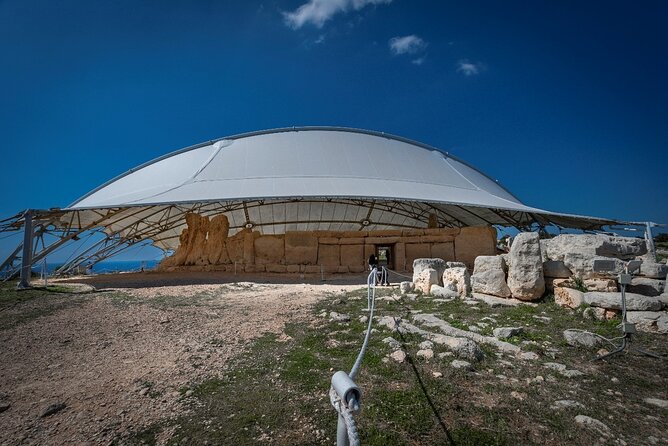
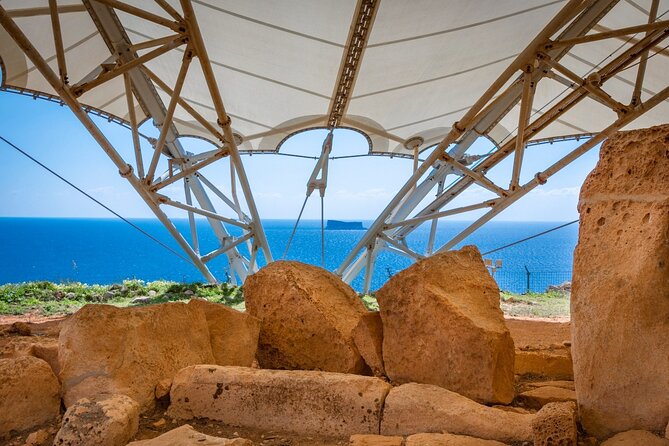
The first major archaeological stop is the Hagar Qim and Mnajdra Archaeological Park, on a hill overlooking the small islet of Fifla. The setting is part of the appeal. You are near the coast, with open views and pale limestone under the sun, while the temples sit in a place that feels both exposed and carefully chosen.
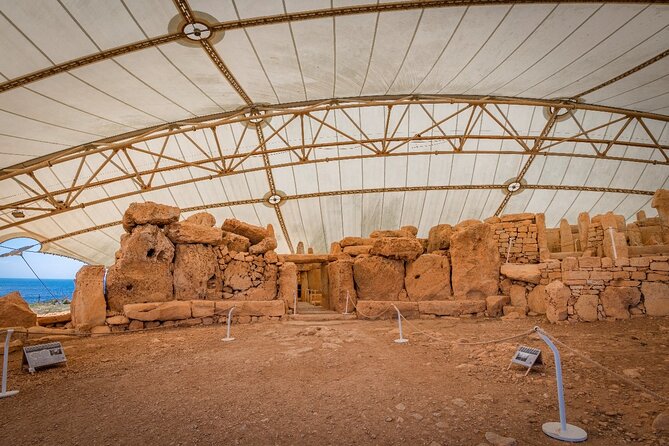
Hagar Qim dates to about 3800 BC. Its stones are on a scale that surprises even people who have seen other megalithic sites. One huge block is estimated to weigh close to 20 tons, and some stones reach about five meters in height.
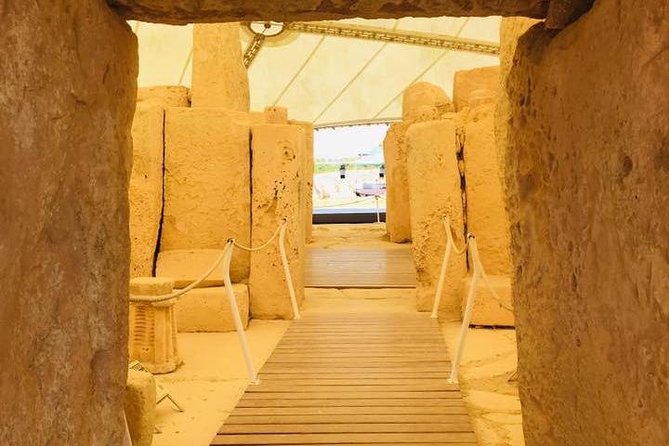
Inside and around the temple, look for apses, altars, decorated doorways, and the careful arrangement of the limestone walls. The builders had no modern lifting gear, yet they created a serious architectural complex with repeated forms and distinct spaces.
You get about an hour at this part of the park. That is enough for a useful visit, especially with the audio guide, but it is not an unlimited archaeology session. If ancient architecture is your main reason for coming to Malta, tell your guide early. The private setup may allow the day to be adjusted, but the full route still has several stops.
Mnajdra is located farther down the hill, closer to the cliffs. It has decorated porthole doorways, monumental facades, limestone floors, and smaller chambers that feel more enclosed. The change in setting helps separate it from Hagar Qim, even though the two sites are often visited together.
The temples date back thousands of years before the better-known monuments of classical Greece and Rome. That is the key fact to carry with you. Malta’s prehistoric builders were not working on a minor scale. They were creating large ceremonial structures from local stone at a time when much of Europe had no comparable architecture.
Marsaxlokk brings the day back to the sea
After the first temple visit, the tour heads to Marsaxlokk, a fishing village on a broad harbor. The stop lasts about 30 minutes, so think of it as a chance to stretch your legs, see the boats, and take in the harbor rather than a full village tour.
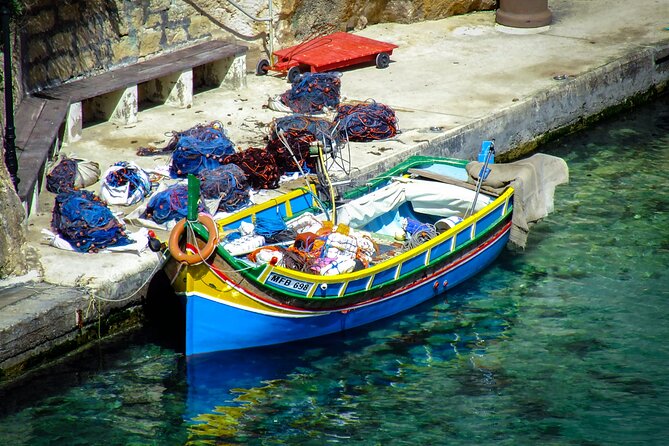
Traditional Maltese fishing boats add color and character to the waterfront. The village also has a market, where you can browse local goods and enjoy the ordinary side of Malta after the solemn temple grounds.
This is one of the best changes of pace in the day. Four archaeological sites in a row could feel heavy, especially in warm weather. Marsaxlokk gives you water, working boats, and present-day Maltese life.
The short stop does require discipline. You will not have time to examine every market stall or settle in for a long coffee. If the village appeals to you more than expected, mention it to your guide, but remember that the day still includes Tarxien, Wied iz-Zurrieq, Mnajdra, the Blue Grotto viewpoint, and Borg in-Nadur.
Tarxien reveals Malta’s buried prehistoric world
The Hal Tarxien Prehistoric Complex dates to about 3150 BC and offers a different kind of archaeological experience. These megalithic structures, sculptures, and spiral motifs were buried beneath the soil and lost for many centuries before being found again.
I find that detail especially useful because it changes how you look at the site. You are not seeing a monument that remained obvious and celebrated for all of history. You are seeing a place that disappeared from view, then returned to the record with its carved stones and temple remains still offering clues.
Plan on roughly an hour here. The carved spiral designs are among the details worth watching for, along with the arrangement of the temple spaces and surviving sculpture. The audio guide helps you follow what you are looking at, while the private guide can answer questions in plain language.
Tarxien is in a more built-up part of Malta than the cliffside temples, so the mood is different. Hagar Qim and Mnajdra give you sea and open sky. Tarxien gives you a closer look at the remains themselves. Together, the sites show that Malta’s prehistoric culture was not limited to one isolated ceremonial place.
Same islands, a completely different day out:
- Malta: Gozo, Comino, Blue & Crystal Lagoon, & Caves Cruise
★ 4.6 · 5,092 reviews - From Malta: Full-Day Gozo UTV Tour with Lunch and Boat Ride
★ 4.6 · 4,408 reviews - From Sliema: Comino, Crystal Lagoon, and Blue Lagoon Cruise
★ 4.5 · 3,792 reviews - From Sliema: Gozo, Comino and Blue Lagoon Cruise
★ 4.5 · 3,461 reviews
Wied iz-Zurrieq is the right place for lunch
Wied iz-Zurrieq is another fishing village, and the tour allows about an hour here. This is the natural lunch break, but the meal is not included in the price.
That arrangement gives you control over what and how much you eat, though you should budget separately. The village is known for its coastal views, so this is a good moment to sit down, cool off, and enjoy a meal beside the water rather than rush through another monument.
A guide such as Christopher can recommend a restaurant, which is useful when you have only an hour and want to avoid wasting time choosing. Still, restaurant prices and menus are not specified, so I would treat lunch as an additional cost rather than assume the package covers anything beyond transport and sightseeing.
The break also helps with the physical demands of the day. The temple stops involve walking around archaeological grounds, and the exposed coastal sites can feel hot. Wear comfortable shoes, bring sun protection, and use the supplied cold water.
The Blue Grotto offers a choice, not an obligation
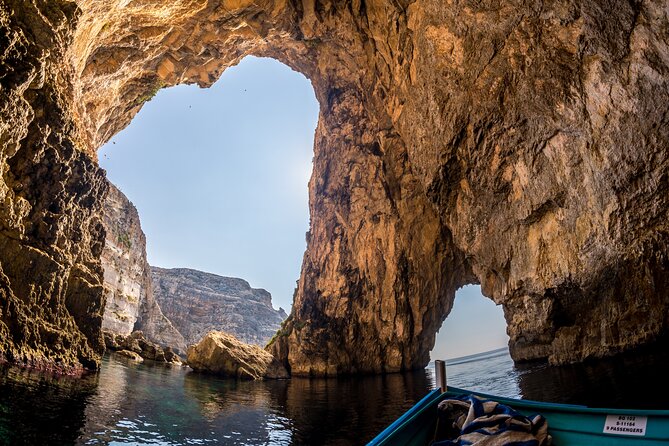
The Blue Grotto viewpoint at Il-Hnejja is one of the day’s scenic highlights. From above, you can look toward the natural arch formed by saltwater erosion and the cliffside caves along the coast.
A traditional boat ride into the caves is available as an optional extra. Tickets are not included, and the service runs only on good-weather days. That makes the boat trip a pleasant possibility, not a guaranteed part of the program.
I like that the choice is yours. If you have already taken a similar cave boat elsewhere, you can skip it and keep the day moving. If the sea is calm and you want a closer look at the rock formations, the ride adds a different view of the coast.
Do not build your whole decision around the boat. Weather can cancel it, and the extra ticket cost is separate. The viewpoint remains part of the day’s sightseeing, so poor conditions do not automatically erase the stop.
Borg in-Nadur adds one more ancient chapter
Borg in-Nadur Prehistoric Complex is a shorter stop, about 30 minutes. The site includes two prehistoric temples with stone carvings and is linked with religious or communal use in ancient Malta.
After Hagar Qim, Mnajdra, and Tarxien, you may feel that you have seen the main type of monument already. Borg in-Nadur is valuable because it broadens the picture. It shows another place where early communities built, gathered, and marked their beliefs in stone.
The shorter visit is also sensible. A half-hour at a smaller complex keeps the schedule from becoming too exhausting, while still giving you another piece of Malta’s prehistoric record. If your interest is archaeology, ask your guide to explain how this site differs from the larger temple complexes.
The exact flow of the day may be adjusted by the guide. Traffic, weather, your lunch timing, and your interest in the sites can all affect the rhythm. That flexibility is one of the better reasons to choose a private experience rather than a fixed large-group excursion.
What the $220.13 price really covers
At $220.13 per person, this is not a budget sightseeing ride. The value depends heavily on the size of your group and how much you value time saved.
The price includes private transportation, an air-conditioned vehicle, WiFi, bottled water, a map, taxes, and entry fees to the included sites. The temple admissions alone would otherwise add planning and payment stops, so having them handled makes the day easier.
You are also paying for direct transport between several sites that are not best handled as one simple walk. A rental car could cost less for some groups, but then you take on driving, parking, directions, and the risk of losing time. Public transport may cost less again, but it is less direct and less suited to fitting seven stops into one day.
For two or more people, compare the per-person total with the cost of separate transport and admissions. For a solo visitor, the price is harder to justify unless private service and expert guidance are important priorities.
The strongest value comes from the human side of the experience. Christopher and the other named guides are praised for personalizing the route, answering questions, suggesting extra sights, and mixing archaeological facts with information about Maltese culture. If you want only transport and a quick look at the monuments, this package may feel expensive. If you want a flexible day with context, it makes more sense.
Who will enjoy this Malta tour most
I would recommend this day to anyone with a short stay in Malta who wants to cover the southern part of the island efficiently. It is also a strong fit for people who love ancient sites but do not want to rent a car.
The private setup suits couples, families, and small groups with different energy levels. One person can spend longer with the audio guide while another takes photographs or rests. Your driver-guide can also shape the conversation around your interests.
This is a good choice for visitors who have already seen Valletta’s Archaeological Museum and want to see the monuments in their original settings. Knowing a little about Malta’s early cultures before arriving may make the stones easier to understand, but the audio guides and personal explanations provide a useful foundation.
I would be more cautious if you dislike full sightseeing days. Seven listed stops create a busy schedule, even with flexible pacing. The tour is not a slow village holiday or a single-site archaeology lesson. It is a broad sampler of southern Malta, with time for lunch and scenery built into the route.
Most people can take part, and service animals are allowed. Pickup is offered, and the experience is private. The main practical issue is weather, since the Blue Grotto boat service depends on sea conditions and the tour itself requires suitable weather.
Practical ways to get more from the day
Wear shoes suited to uneven archaeological grounds. The monuments are ancient sites, not polished indoor museums, and you will get more from them if you are comfortable walking between viewing areas.
Bring sun protection and use the free-flowing cold water provided in the vehicle. Several stops are coastal and exposed, and the bright limestone can make the day feel warmer than expected.
Keep lunch flexible. Wied iz-Zurrieq is the planned place for a meal, but allow for the possibility that timing may shift. Bring a payment method for lunch and for the optional Blue Grotto boat ride.
Ask questions. The strongest part of this experience is not simply reaching each stop. Guides such as Christopher are praised for explaining construction methods, temple purpose, local customs, and Malta’s place in the wider ancient world. A quiet transfer between sites becomes useful time when you engage the guide.
Give your guide a clear priority list at the start. Say if you care most about temple architecture, photography, markets, seafood, coastal views, or a relaxed pace. The private format can accommodate personal interests better than a standard group route.
You can cancel for a full refund up to 24 hours before the start time. Changes made inside that window are not accepted, and poor weather may lead to a new date or a full refund. Since the experience starts at 10:00 am and lasts about six to eight hours, plan your evening with some breathing room.
Should you book this experience?
Book it if you want Malta’s prehistoric monuments, southern fishing villages, and coastal views in one well-managed day. The private car, included admissions, audio guides, cold water, and flexible pacing remove much of the usual friction.
I would especially choose it for a short Malta visit, a first visit to the island, or a group that wants personal attention from a guide such as Christopher. The route is busy, but it covers an extraordinary amount of ground and leaves room for lunch and an optional boat ride.
Skip it if you prefer to spend half a day at one archaeological site, keep costs as low as possible, or make every decision independently. For most people who want to understand Malta’s earliest monuments without self-drive stress, this is a strong and unusually practical full-day choice.
FAQ
How long does the experience last?
The tour lasts approximately six to eight hours and begins at 10:00 am.
Is hotel pickup available?
Yes. Pickup is offered from your accommodation.
Is this a private tour?
Yes. Only your group participates in the activity.
Which prehistoric sites are included?
The route includes Hagar Qim, Mnajdra, the Hal Tarxien Prehistoric Complex, and Borg in-Nadur.
Are admission fees included?
Yes. Entry fees to all listed sites are included in the price.
Is lunch included?
No. Lunch is not included. Wied iz-Zurrieq is the planned stop for a meal, and you pay for lunch separately.
Is the Blue Grotto boat ride included?
No. The boat ride is optional, tickets cost extra, and the service operates only on good-weather days.
Just added around Malta
- Serenity at Sea: Comino Blue Lagoon Exclusive Day Cruise★ 5.0 · 3 reviews
- Malta Chocolate Factory Gin and Truffle Making Experience★ 5.0 · 3 reviews
- Gozo Unveiled: Guided Hiking in Gozo – South East★ 5.0 · 3 reviews
- Gozo Unveiled: Guided Hiking in Gozo – The West★ 5.0 · 3 reviews
- From St. Julian’s: Jet Ski Safari to the South of Malta★ 5.0 · 3 reviews
- St. Julian’s: Comino Blue Lagoon Sunset Cruise by Speedboat★ 3.6 · 3 reviews
- Malta: Around Comino Cruise With Blue Lagoon stop★ 5.0 · 3 reviews
- Private Speedboat Tour: Blue Lagoon & 3 Islands from Split★ 5.0 · 3 reviews