
Reviewed · WORKSHOPS
Workshop: Maltese Souvenir Tile Design Experience
A small hand-painted tile can tell you more about Malta than another shop-bought souvenir. In Clive’s traditional house studio in Marsa, you learn how Maltese tiles are designed and made, then create a 10 x 10cm piece of your own. The finished tile works as a coaster and gives you something personal to take home.
I like two things right away: the activity is genuinely hands-on, and Clive connects the craft to Maltese art and culture rather than treating it as a simple paint-and-go session. I also like the calm indoor setting, especially when Malta’s sun is tiring you out. The main consideration is that the tile is air-dried cement or plaster, not fired ceramic, so it has a different finish from a kiln-baked tile.
Key Points at a Glance
- A real studio setting: You work in Clive’s small art studio, located on the ground floor of a traditional house in Marsa.
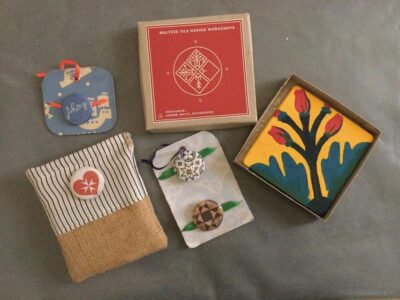
- A souvenir you make yourself: Your 10 x 10cm tile can be used as a coffee coaster and taken home in a box.
- Step-by-step instruction: Clive explains the process from research and pattern design to molding, transferring, and painting.
- Suitable for different skill levels: Beginners receive help throughout, while experienced artists can make more independent choices.
- A useful two-hour break: The session gives you an indoor cultural activity away from the heat and crowds.
- Private participation: Only your own group takes part, with photos included in the price.
Why Making a Tile Feels More Maltese Than Buying One
Marsa is not usually the first place people name when planning a Malta sightseeing day, and that is part of the appeal. You are not being led through a large attraction with a fixed script. You are going to a small art studio in a traditional house and spending time with a local artist.
Clive begins with a short explanation of Maltese tiles. This gives the painting a purpose. You are not simply decorating a blank square. You learn why the patterns matter, how a tile is formed, and how the design moves from an idea to a finished object.
That context is especially useful if you have already seen patterned floors, walls, or decorative details around Malta. You can connect what you make in the studio with the visual style you notice elsewhere on the island. The session does not require a long lecture, which suits the format. Most of the two hours are spent doing the work yourself.
A few more Malta half-days to weigh up
- Malta: First Experience Scuba Diving Lesson
★ 4.6 · 415 reviews - Malta: Chocolate Making Workshop
★ 4.8 · 80 reviews - Malta: Truffle Making Master Class
★ 4.9 · 53 reviews
Entering Clive’s Marsa Art Studio
The meeting point is 23 Gizwiti, Il-Marsa MRS 1562. The activity begins and ends there, so you do not need to work out a separate return point.
The studio is small, eclectic, and part of a traditional house that Clive is gradually refurbishing. That setting gives the session a personal feel. It is closer to visiting an artist’s working space than attending a class in a polished commercial workshop.
One practical warning is worth taking seriously: Google Maps has reportedly directed people to the wrong side of the street. The area has several number 23 addresses, so check the exact location before setting out and allow enough time to find the entrance.
The workshop is offered in English. Clive’s friendly manner is one of the strongest parts of the experience, and his conversations can stretch beyond the tile itself into Maltese art and culture. You can ask questions as you work rather than waiting for a formal talk to end.
From Pattern Research to a Finished Tile
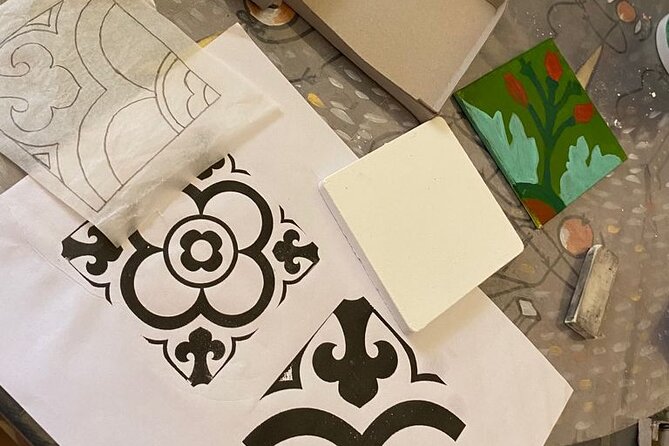
The process is laid out in clear stages. First comes a short introduction to the tile tradition and some research into possible patterns. You can design your own motif, or choose from designs already available in the studio.
That choice matters. If you enjoy drawing, you can create something personal. If you would rather focus on painting, you can use an existing pattern and spend your energy getting the lines and colors right. You do not need to arrive with an artistic plan.
Next, you make the mold using plaster. The tile itself is made with plaster or white cement, depending on the material used during the session. Clive demonstrates how the mold is formed and how the design is transferred to it.
The work is practical but not rushed. You get help at each stage, and Clive can offer an opinion when you want one. That makes the class a good match for someone who wants instruction without having every creative decision made for them.
Once the surface is ready, you paint it with acrylics. Acrylic paint dries quickly, which is useful during a two-hour session. You can see your design take shape without waiting for a kiln or a long curing process.
The finished piece measures about 10 by 10 centimeters. It is small enough to pack and useful enough to serve as a coaster for a coffee cup. It will not have the same ceramic quality as an oven-fired tile, but the handmade nature is the point. Your brushwork remains part of the souvenir.
What the Two Hours Feel Like
The pace is relaxed. You receive an explanation, make design choices, work on the mold, transfer the pattern, and paint the surface. There is enough structure to keep the session moving, but enough breathing room to work at your own speed.
I like this balance because creative activities can go wrong in two ways. Some are too loose, leaving you unsure what to do next. Others feel like production lines, with everyone making the same object in the same way. This workshop sits between those extremes.
You can ask for help when a line goes astray or when you are unsure about color. The class is suitable for beginners, and you do not need previous painting experience. At the same time, an experienced artist can adapt the design rather than simply copying a basic example.
The activity also works well for a family group. A teenager interested in crafts can take part without being talked down to, while adults can enjoy the cultural side and the quiet concentration. Couples can make matching or contrasting tiles, and a parent and child can each choose a different pattern.
Photos are included in the price. That is a small but useful extra, since it records the process as well as the finished tile. You leave with a physical object and a few images of the activity.
Same islands, a completely different day out:
- Malta: Gozo & Comino Islands, Blue Lagoon & Seacaves Tour
★ 4.5 · 15,672 reviews - Comino: Blue Lagoon, Crystal Lagoon, and Seacaves Tour
★ 4.6 · 5,673 reviews - Malta: Blue Lagoon, Beaches & Bays Trip by Catamaran
★ 4.7 · 5,496 reviews - Malta: Gozo, Comino, Blue & Crystal Lagoon, & Caves Cruise
★ 4.6 · 5,092 reviews
A Quiet Alternative to Malta’s Outdoor Sights
Malta is full of outdoor experiences, but the sun can make a sightseeing day feel long. This workshop gives you a shaded, indoor activity that still has a clear connection to the island.
It is not a substitute for seeing Malta’s churches, streets, coast, or archaeological sites. Instead, it works well as a change of pace between those outings. The painting is calming and focused, with enough conversation to keep it social.
The indoor setting is also helpful if your group has mixed interests. Someone who is tired of museums may enjoy making an object. Someone who wants cultural background can talk with Clive about Maltese art. Someone who simply wants a useful souvenir gets two hours to create one.
There is one point to note: although the workshop is indoors, the activity requires good weather according to its booking conditions. If poor weather causes a cancellation, you are offered another date or a full refund. That policy is unusual for an indoor experience, so check the status of your booking if the forecast looks poor.
The Finished Tile and What You Take Home
At the end, you keep the tile you made. The small size makes it practical for luggage, and the tile is provided in a box, which helps protect it on the journey home.
Because the tile is air-dried rather than fired in an oven, you should handle it with reasonable care. It is a handmade plaster or cement object, not a factory-finished ceramic product. That distinction is important if you are expecting a glossy, highly durable tile.
For a coffee coaster, the 10 x 10cm format is well suited. It is also a good size for a shelf, desk, or small wall display. The value comes from the memory attached to it. You chose the pattern, worked through the steps, and painted the final surface yourself.
If you have enough time, you may be able to make an extra tile. The additional piece costs 3 euros, but it depends on the schedule. Do not assume you will have time for one, especially if you are working slowly or creating a detailed design.
Is $35.95 a Fair Price?
The price is $35.95 per person for about two hours. I would judge it as fair if you value personal instruction, a private group setting, and a souvenir you create yourself.
You are paying for more than paint and a square of cement. The fee includes the studio session, instruction through each stage, the tile, acrylic painting materials, and photos. You also receive Clive’s time and local perspective on Maltese art and tile making.
It is less compelling if you only want a quick craft activity or if your main goal is a cheap souvenir. You could buy a ready-made item for less. The reason to book this is the process, not just the object.
The private format improves the value for couples, families, or small groups who want to work at their own pace. You are not sharing the class with a large crowd, and Clive can give individual help. For a two-hour cultural experience with a take-home item, the price is reasonable.
Who Will Enjoy This Most
I would recommend the workshop to:
- Couples looking for a shared activity beyond sightseeing
- Families with older children or teenagers interested in crafts
- First-time painters who want patient instruction
- Experienced artists who enjoy making a personal design
- Visitors seeking an indoor break from Malta’s heat
- Anyone who prefers a handmade souvenir to a mass-produced gift
It is less suitable if you dislike sitting and concentrating for a couple of hours, or if you expect a professionally fired ceramic tile. The finished object is simple, personal, and air-dried. You should book it for the experience of making something, not for a factory-perfect result.
Most people can participate, and service animals are allowed. The meeting point is near public transportation. Wear comfortable clothes, since you will be handling plaster, cement, and paint.
Booking and Cancellation Details
The experience is offered in English and uses a mobile ticket. It is often booked about 20 days ahead, so booking early is sensible if your schedule is tight.
Confirmation is normally provided when you book. If you book within two days of travel, confirmation may take up to 48 hours and depends on availability.
The experience is non-refundable and cannot normally be changed. If you cancel or request an amendment, the amount paid is not refunded. The exceptions are cancellations caused by poor weather or by the minimum group size not being reached. In those cases, you are offered another date or experience, or a full refund.
Should You Book the Maltese Tile Workshop?
Book it if you want a small, personal piece of Malta and enjoy the idea of learning by doing. Clive’s warm instruction, the traditional-house studio, and the chance to talk about Maltese art give the session more character than a standard souvenir-painting class.
I would especially choose it for a couple, family, or small private group with an open afternoon. It is also a smart backup for a hot day when everyone needs time indoors but still wants a cultural activity.
Skip it if you are looking for a major historical attraction, a polished ceramics course, or a kiln-fired product. The tile is air-dried plaster or cement, and the workshop is informal. For most people who appreciate handmade objects and local contact, that informality is exactly what makes the two hours worthwhile.
FAQ
Where does the Maltese tile workshop take place?
The workshop takes place at 23 Gizwiti, Il-Marsa MRS 1562, Malta, in Clive’s small art studio inside a traditional house. The activity ends at the same meeting point.
How long does the activity last?
The session lasts approximately two hours.
What do I make during the workshop?
You make one 10 x 10cm replica tile using plaster or white cement. You design or select a pattern, transfer it to the mold, and paint it with acrylics.
Is the workshop suitable for beginners?
Yes. The activity is suitable for beginners and advanced artists. Clive explains the process from start to finish and provides help during the different stages.
Is the tile fired in an oven?
No. The tile is air-dried and made with cement or plaster. It is not baked in an oven like a traditional ceramic tile.
Can I make an extra tile?
An extra tile may be possible if time allows. It costs 3 euros, but availability depends on how much time remains during your session.
Are photos included?
Yes. Photos are included in the price of the experience.
What happens if the activity is canceled?
If poor weather causes the cancellation, you are offered a different date or a full refund. If the minimum number of participants is not reached, you are offered a different date or experience, or a full refund.
Just added around Malta
- Serenity at Sea: Comino Blue Lagoon Exclusive Day Cruise★ 5.0 · 3 reviews
- Gozo Unveiled: Guided Hiking in Gozo – South East★ 5.0 · 3 reviews
- Gozo Unveiled: Guided Hiking in Gozo – The West★ 5.0 · 3 reviews
- Malta Chocolate Factory Gin and Truffle Making Experience★ 5.0 · 3 reviews
- Malta: Around Comino Cruise With Blue Lagoon stop★ 5.0 · 3 reviews
- From St. Julian’s: Jet Ski Safari to the South of Malta★ 5.0 · 3 reviews
- St. Julian’s: Comino Blue Lagoon Sunset Cruise by Speedboat★ 3.6 · 3 reviews
- Private Speedboat Tour: Blue Lagoon & 3 Islands from Split★ 5.0 · 3 reviews
Workshops, compared.


Maltese Tile – Souvenir painting workshop with local
Read our review →
Browse the lists this tour appears in