
Reviewed · MALTA
Malta Multi Pass
Malta’s oldest story is written in giant limestone blocks. The Malta Multi Pass gives you a practical way to reach prehistoric temples, Knights-era forts, catacombs, museums, and harbour views without buying each ticket separately. I especially like the 90-minute Grand Harbour cruise and the chance to use the pass for both sightseeing buses and major Heritage Malta sites.
I also like the flexibility. You can choose a pass lasting 3, 4, 6, or 7 days, depending on the package available, and the longer options add the best archaeological sites plus a ferry day for Comino and Gozo. The main drawback is the bus service: heavy traffic, long gaps, early final departures, and occasional equipment problems can make it a poor substitute for Malta’s regular public buses.
Key points to know before you buy
- One QR code covers a wide spread of sights: Scan your pass for single entry at included museums, forts, temples, and other sites.
- The Grand Harbour cruise is included with every pass: The 90-minute ride shows Valletta and the Three Cities from the water.
- The best archaeology requires a longer pass: Ħaġar Qim, Mnajdra, Tarxien, Ta’ Ħaġrat, Skorba, and other Heritage Malta sites are included with 6 and 7 day passes.
- Comino and Gozo are not included with every option: The one-day Captain Morgan ferry round trip comes with the 4 and 7 day passes.
- The hop-on-hop-off buses are useful but slow: Treat them as sightseeing rides and occasional links, not as your only transport plan.
- Some advertised sites are closed: The Palace State Rooms and Fortifications Interpretation Centre are temporarily closed until further notice.
What the Malta Multi Pass really covers
This is not a single guided tour with a fixed route. It is a time-limited sightseeing pass that combines transport-style attractions with admission to cultural sites.
All pass options include the CitySightseeing Malta North and South routes and Captain Morgan’s Grand Harbour cruise. The longer passes add more Heritage Malta locations. The 4 and 7 day options include one round trip by Captain Morgan ferry to Comino’s Blue Lagoon and Gozo, while a Gozo Heritage Pass with local sightseeing buses and museums can also be included with those packages.
The pass works on consecutive days once activated. That detail matters. You cannot use it for scattered sightseeing days across a two-week stay. Plan to start it when you are ready to visit several included attractions in a row.
The price provided is $88.72 per person. That can be good value if you use the pass actively. A bus day, several museum admissions, the harbour cruise, and the Comino and Gozo ferry can quickly add up when purchased separately. The pass also encourages you to visit places you might otherwise skip, such as Borġ in-Nadur or Ta’ Bistra Catacombs.
The value drops if you mainly want beach time, use regular public buses, or visit only a few free or low-cost sights. You should count the sites you truly plan to see rather than assuming a long list automatically means savings.
Other Malta days people book alongside this one:
- Malta: Gozo & Comino Islands, Blue Lagoon & Seacaves Tour
★ 4.5 · 15,672 reviews - Comino: Blue Lagoon, Crystal Lagoon, and Seacaves Tour
★ 4.6 · 5,673 reviews - Malta: Blue Lagoon, Beaches & Bays Trip by Catamaran
★ 4.7 · 5,496 reviews
The Grand Harbour cruise gives Malta its best opening view
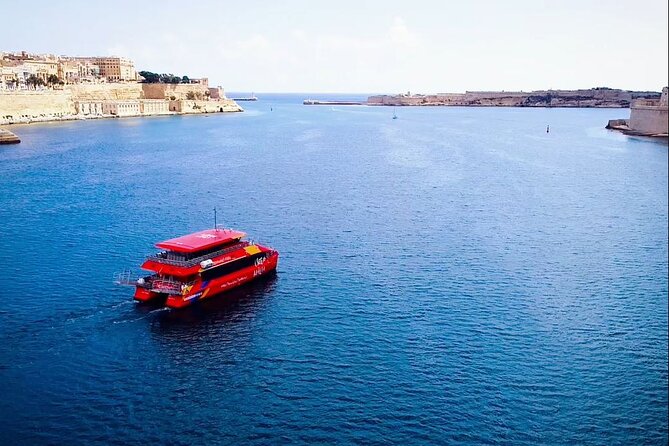
Captain Morgan’s Grand Harbour Cruise is one of the strongest parts of the pass. The 90-minute trip covers Grand Harbour and Marsamxett Harbour, the two natural harbours on either side of Valletta.
From the water, you get views that are difficult to appreciate from city streets: fortified walls, harbour creeks, Valletta’s skyline, and the Three Cities of Vittoriosa, Cospicua, and Senglea. The cruise also gives useful context about the Great Siege of 1565 and the events of 1942 through live commentary in English and German.
You can sit outdoors for photographs or indoors in air-conditioned comfort. There is free WiFi, a restroom, and a vending service for food and drinks. I would schedule this early in your pass period, since it helps you understand how Valletta’s harbours shaped Malta’s military and trading life.
The cruise lasts 90 minutes, so it is easy to fit around a museum or a walk through Valletta. It is also less tiring than another land excursion, which makes it a smart choice during a hot afternoon.
CitySightseeing Malta covers a lot, but not quickly
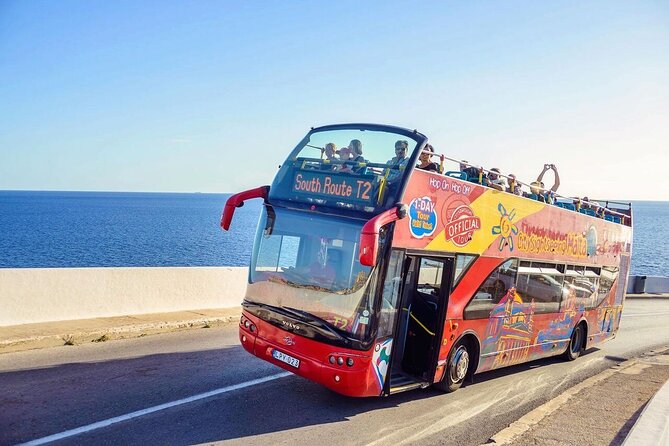
The Malta hop-on-hop-off service has North and South routes, more than 30 stops, and audio commentary in multiple languages. The routes connect Valletta with places such as Mdina, Mosta, San Anton Presidential Gardens, Ta’ Qali Crafts Village, Marsaxlokk, the Three Cities, and the Blue Grotto area during the April to October season.
This sounds like ideal island transport, but you need realistic expectations. Malta’s traffic can be severe, and buses may be about an hour apart. The last service can begin shortly after 4 p.m., depending on the schedule. That creates a real risk of being stranded at an outlying stop if you treat the sightseeing buses like an ordinary city bus network.
I would use the buses for the experience itself and for reaching one or two included sites. For time-sensitive connections, regular public transport may be more dependable. One useful practical tip is to choose accommodation near a CitySightseeing stop if you plan to rely heavily on the pass.
The audio commentary may not work on every bus, and the vehicles can show wear. That does not ruin the ride, but it means you should not build an ambitious schedule around exact arrival times.
Malta’s prehistoric temples are the pass’s great prize
The 6 and 7 day options are the best choice if you care about archaeology. Malta’s megalithic sites are older than the Egyptian pyramids, and their scale is startling when you remember that the builders had only stone, bone, and wooden tools.
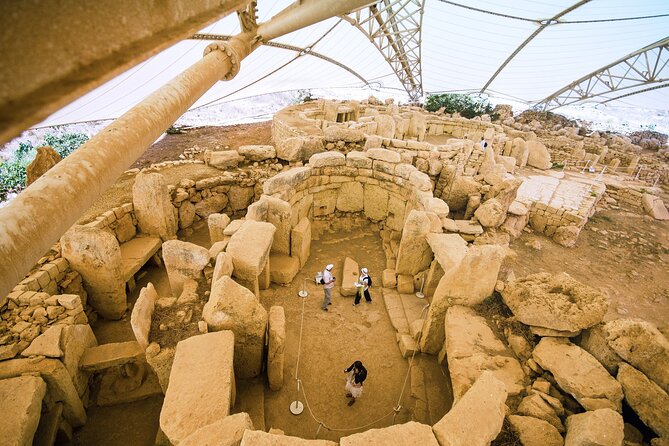
At Ħaġar Qim, a hilltop setting looks toward the sea and Filfla. The site dates mainly from 3800 to 2200 BC and includes enormous limestone blocks, including one about 5.2 metres high and another estimated at nearly 20 tonnes. One chamber has an opening aligned with the summer solstice sunrise.
Nearby Mnajdra has three temple structures around an oval forecourt. The South Temple includes doorways and decorated blocks linked to solstice and equinox sunlight. The visitor centres at both sites make the complicated archaeology easier to follow.
Tarxien Temples offer another important stop. Four structures were built and reused over many centuries, with carved decoration, oracle holes, a colossal statue fragment, and signs of later Bronze Age cremations. An elevated walkway gives you a clear view of the remains.
The smaller Ta’ Ħaġrat and Skorba sites near Mġarr reward patient visitors. Ta’ Ħaġrat is known for its monumental entrance and local limestone construction. Skorba adds domestic evidence, including remains of huts that predate the main Temple Period.
Borġ in-Nadur, near St. George’s Bay, helps explain the shift from temple culture to the Bronze Age. It is not as visually grand as Ħaġar Qim, but it adds meaning to the wider story.
Allow about an hour for the larger temple sites and less for the smaller locations. They are spread around Malta, so attempting all of them in one day by sightseeing bus would be frustrating.
Same islands, a completely different day out:
- Malta: Gozo, Comino, Blue & Crystal Lagoon, & Caves Cruise
★ 4.6 · 5,092 reviews - From Malta: Full-Day Gozo UTV Tour with Lunch and Boat Ride
★ 4.6 · 4,408 reviews - From Sliema: Comino, Crystal Lagoon, and Blue Lagoon Cruise
★ 4.5 · 3,792 reviews - From Sliema: Gozo, Comino and Blue Lagoon Cruise
★ 4.5 · 3,461 reviews
Valletta packs Knights, art, war, and medicine into a small area
The pass is especially useful in Valletta, where many included sites are close enough to combine on foot.
The Palace Armoury presents the Knights of St. John as both soldiers and status-conscious aristocrats. Armour belonging to Grand Masters Alof de Wignacourt and Jean de La Valette is among the important displays, along with Ottoman weapons and artillery from the Great Siege period.
The Palace State Rooms would normally add paintings of the 1565 siege, French Gobelins tapestries, Baroque ceilings, and portraits of Malta’s rulers. However, the State Rooms are temporarily closed until further notice. The Armoury is a separate attraction, so check what is open before planning your visit around the palace.
Fort St. Elmo houses the National War Museum in a star-shaped fort built in 1552. You can see military objects from the Knights and Ottoman periods, Roosevelt’s Jeep Husky, the Gloster Sea Gladiator Faith, and Malta’s George Cross. The fort’s position also gives wide harbour views.
The Malta Experience is a 45-minute audio-visual presentation covering 7,000 years of Maltese history. It runs in 17 languages and makes a useful first stop because it gives you a framework for the other places you will see.
Reliving the Sacra Infermeria adds a more human side to the Knights. The guided English tour explains the Holy Infirmary, including the huge Great Ward, once 155 metres long. By 1787, the hospital could hold 563 beds and expand to 914 during emergencies.
MUŻA, the Malta National Community Art Museum, takes a less traditional approach. It places old masters beside modern work and uses videos and interactive displays. The National Museum of Archaeology, housed in the Baroque Auberge de Provence, fills in Malta’s prehistoric and Phoenician periods, with objects such as the Sleeping Lady, the Venus of Malta, and Bronze Age daggers.
The supplied information appears to mix the heading and description for the National Museum of Natural History and the National Museum of Archaeology. Confirm the exact current museum details when activating your pass.
Mdina and the Roman sites explain Malta before the Knights
Mdina Cathedral and Museum are included with the 7 day option. St. Paul’s Cathedral dates from 1702 and includes an inlaid marble floor, painted ceiling, altarpieces, woodwork, silver objects, and stained glass. The adjacent museum contains coins, silverware, prints by Albrecht Dürer, paintings, and a trompe l’oeil Baroque dome.
The Domus Romana offers a different experience. Its mosaics and household objects show how an upper-class Roman family lived, including clothing, education, food, entertainment, and family roles. The unusual highlight is a set of marble statues of Emperor Claudius and his family found in a private home.
St. Paul’s Catacombs lie outside ancient Melite, since Roman law barred burials inside the city. More than 30 underground burial complexes occupy the area, with interconnected passages, tombs, and circular agape tables once used for memorial meals.
Għar Dalam takes you farther back. The cave contains evidence of Ice Age animals, including small elephants and hippopotamuses, while the Cultural Layer records human presence around 7,400 years ago. Borġ in-Nadur is only about 500 metres away, making these two sites sensible companions if transport allows.
Ta’ Bistra Catacombs are another underground complex, with tombs between ancient Melite and Salina. They are less central than Mdina, so I would visit them only if you have a longer pass and a strong interest in burial sites.
The Three Cities provide forts with fewer crowds and big views
Across the harbour from Valletta, Fort St. Angelo dominates the water from Birgu. Whoever controlled this fort had a powerful position over Malta, and the site played a major role in the Great Siege of 1565.
The fort has served the Knights, the British Royal Navy, and Malta’s wartime defence. Displays combine traditional objects with more modern presentation, and the views over the harbour and fortified towns are excellent.
The Inquisitor’s Palace gives you a more domestic and institutional view of Malta. You can see reconstructed kitchens, private rooms, the tribunal, prison areas, and a torture chamber. The building also houses the National Museum of Ethnography, with displays about religious traditions shaped by the Inquisition.
The Malta Maritime Museum occupies an old naval bakery and traces 7,000 years of seafaring. Its collection includes Roman anchors, ship models, cannons, a Napoleonic figurehead, a working 1950s steam engine, and more than 60 boats. Allow time here rather than rushing through it, especially if you want to understand how much island life depended on the sea.
The Fortifications Interpretation Centre is temporarily closed, so do not count it as a usable stop until that changes.
Comino and Gozo require a full day and careful timing
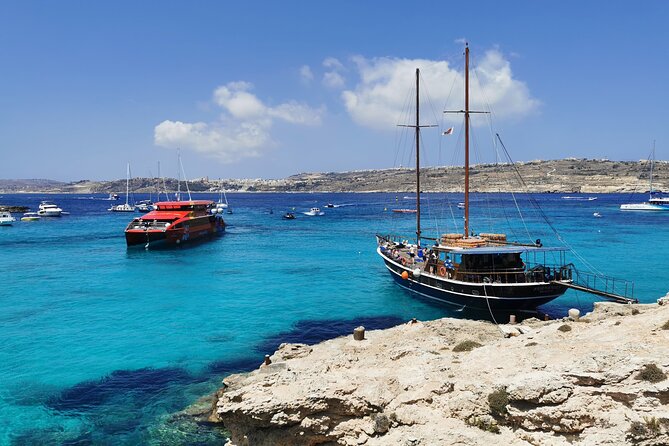
The 4 and 7 day passes include one round trip on Captain Morgan’s ferry to Comino’s Blue Lagoon and Gozo. You can visit Gozo first and Comino second, reverse the order, or spend about four hours on one island only.
The Blue Lagoon is known for clear turquoise water and free time for swimming, sunbathing, or walking around Comino. The ferry also has indoor air-conditioned seating, outdoor seating, toilets, and a cash bar for snacks and drinks.
The important catch is timing. You must return to the embarkation point at least 15 minutes before departure. The crew gives the afternoon ferry times and any changes during the morning crossing, so record them immediately. Missing the return boat would turn a pleasant day into a serious problem.
If you add the one-day Gozo Heritage Pass, you can use the Gozo CitySightseeing buses on two routes. Together they reach Victoria, Dwejra, Ta’ Pinu, Xlendi, Marsalforn, the Ġgantija Temples, Ramla, and Nadur.
The Gozo Heritage sites are compact but worthwhile. The Gozo Museum of Archaeology covers prehistory through the early modern period. The Gozo Nature Museum includes fossils, minerals, insects, marine life, local ecosystems, and four moonstone particles collected by the Apollo 11 crew.
At the Gran Castello Historic House, reconstructed rooms show domestic life, crafts, lace-making, weaving, and a beast-driven mill. The Cittadella Visitors’ Centre explains the fortress through touch screens and an eight-minute film.
The Ġgantija Archaeological Park is the day’s major ancient site. More than 5,500 years old, its two temples are among the earliest large religious structures still standing. Ta’ Kola Windmill shows how flour was produced in village life, while the Old Prison preserves graffiti, ship drawings, names, dates, and marks scratched by inmates.
Gozo is worth adding, but do not expect to see every included site thoroughly in one ferry day. Pick two or three priorities and use the buses as a framework.
Who gets the best value from this pass
I would consider the Malta Multi Pass if you plan to visit at least four or five paid museums or archaeological sites, take the harbour cruise, and use the Comino and Gozo ferry. The 6 or 7 day options suit people who want Malta’s prehistoric sites without rushing.
The 3 day option makes more sense for a short stay focused on Valletta, the harbour cruise, the Malta Experience, the aquarium, Esplora, and perhaps one sightseeing bus route. The 4 day option adds the island ferry and optional Gozo heritage visits.
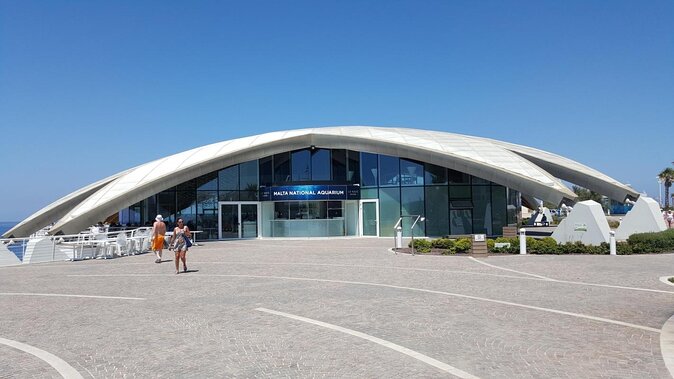
Families may appreciate the Malta National Aquarium and Esplora Interactive Science Centre. Esplora has more than 200 exhibits, outdoor spaces, hands-on activities, science shows, and a 10.7 metre planetarium. It gives children a break from forts and archaeology.
The pass is less suitable if reliable transport is your top priority. Regular public buses and a separate Heritage Malta pass may be cheaper or more practical for some plans. Also remember that the QR code must be activated correctly. Keep a screenshot of your tickets on your phone, since repeatedly searching through email can waste time at entry points.
The experience is offered in English, while the sightseeing buses provide multiple commentary channels. The harbour cruise commentary is in English and German. Confirmation is provided at booking, service animals are allowed, and most people can participate.
Should you book the Malta Multi Pass?
Book it if you want a busy, culture-heavy Malta visit and will use the included admissions. The strongest combination is a 6 or 7 day pass, the Grand Harbour cruise, several Valletta museums, at least two prehistoric temple sites, and the ferry day to Comino and Gozo.
Skip it if you mainly want swimming, relaxed meals, or dependable point-to-point transport. The bus network is the weak link, and temporarily closed sites reduce the real value.
My practical choice would be to activate the pass on a day when you can immediately use it at a central attraction, save the QR code as a phone image, and plan each bus outing with extra time. Used as an admission-and-cruise pass, it can save money. Used as your only island transport, it can test your patience.
FAQ
How long can I use the Malta Multi Pass?
The available options include 3, 4, 6, or 7 consecutive days, depending on the selected package. The pass becomes valid once activated.
Is the Grand Harbour cruise included?
Yes. Captain Morgan’s 90-minute Grand Harbour Cruise is included with all pass options.
Does the pass include Comino and Gozo?
The one round trip to Comino and Gozo is included with the 4 and 7 day passes. The 3 and 6 day inclusions shown here do not include that ferry trip.
Can I visit the Blue Lagoon with the pass?
Yes, the 4 and 7 day passes include one round trip to Comino’s Blue Lagoon and Gozo from Malta.
Are the CitySightseeing Malta buses included?
Yes. All passes include the CitySightseeing Malta North and South routes, with hop-on and hop-off access at the listed stops.
Are Malta’s prehistoric temples included?
The 6 and 7 day passes include sites such as Ħaġar Qim, Mnajdra, Tarxien, Ta’ Ħaġrat, Skorba, and Borġ in-Nadur.
Is the Mdina Cathedral Museum included?
Mdina Cathedral and its adjacent museum are included with the 7 day pass.
Are the Palace State Rooms open?
The Palace State Rooms are temporarily closed until further notice. The Palace Armoury is listed separately as an included attraction with the 6 and 7 day passes.
What is the cancellation policy?
You can cancel for a full refund at least 24 hours before the experience start time. Changes or cancellations made less than 24 hours before the start time are not accepted, and poor weather cancellations may result in another date or a full refund.
Just added around Malta
- Serenity at Sea: Comino Blue Lagoon Exclusive Day Cruise★ 5.0 · 3 reviews
- Gozo Unveiled: Guided Hiking in Gozo – South East★ 5.0 · 3 reviews
- Gozo Unveiled: Guided Hiking in Gozo – The West★ 5.0 · 3 reviews
- Malta Chocolate Factory Gin and Truffle Making Experience★ 5.0 · 3 reviews
- From St. Julian’s: Jet Ski Safari to the South of Malta★ 5.0 · 3 reviews
- St. Julian’s: Comino Blue Lagoon Sunset Cruise by Speedboat★ 3.6 · 3 reviews
- Malta: Around Comino Cruise With Blue Lagoon stop★ 5.0 · 3 reviews
- Private Speedboat Tour: Blue Lagoon & 3 Islands from Split★ 5.0 · 3 reviews