
Reviewed · VALLETTA TOURS
Valletta: Guided City Walking Tour
Valletta is compact, but its streets carry a lot of Malta’s story. This 2.5-hour walking tour gives you the basic map first, then fills it with Knights, churches, palaces, wartime change, local customs, and views across the Grand Harbour. Guides such as Marisa, Angela, Nadine, and John are praised for mixing clear history with humor and personal memories.
I like the easy pace, with pauses and short comfort breaks rather than a nonstop march. I also like the practical finish at St. George’s Square, where your guide helps you decide what to see next and where to eat. The main caution is simple: you will walk over some steps and uneven streets, and two and a half hours can feel long in hot weather.
Key points to know before booking
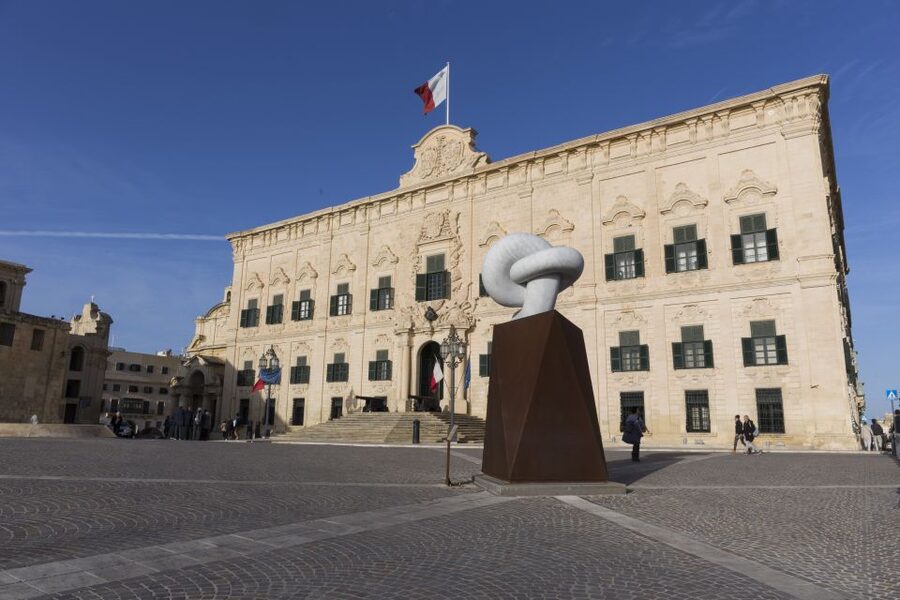
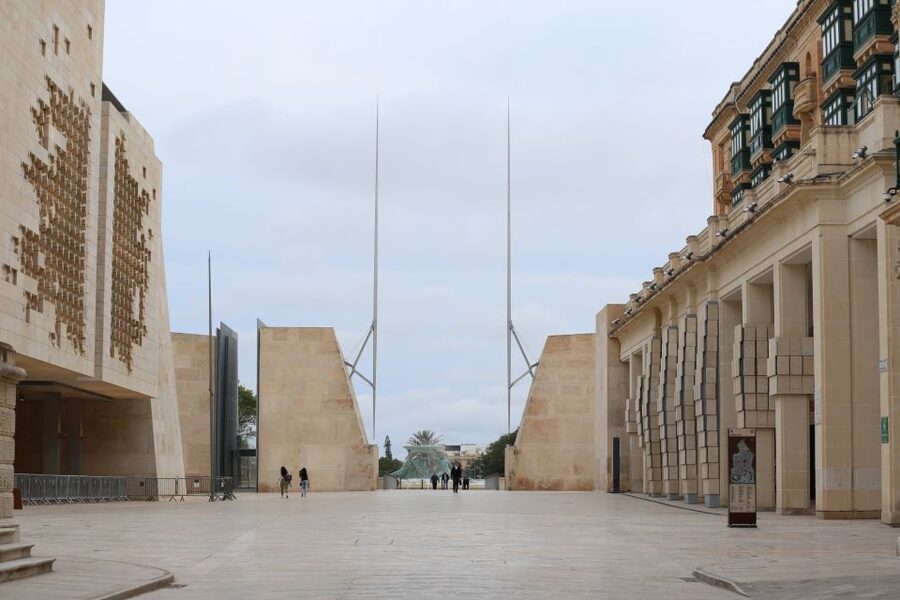
- Start by the New Parliament Building: Meet just past Valletta’s City Gate, near the red City Walking Tours umbrella.
- See the city’s major landmarks from the outside: The route includes Barracca Gardens, squares, palaces, churches, Knights’ auberges, and characteristic streets.
- Expect local storytelling: Guides add family memories, old photographs, humor, food advice, and details about present-day Malta.
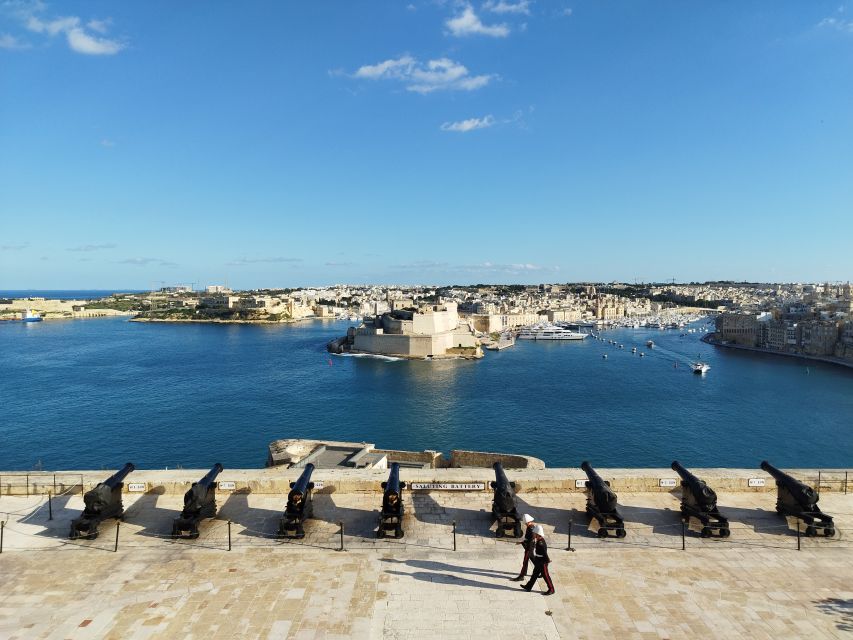
- Grand Harbour views are part of the appeal: The gardens provide some of the best pauses for looking across the water.
- The pace is manageable but not effortless: There are a few steps, and comfortable shoes are essential.
- The $24 price is fair for a first look: A licensed English-speaking guide helps you understand what you are seeing before you explore independently.
Starting at Valletta’s City Gate
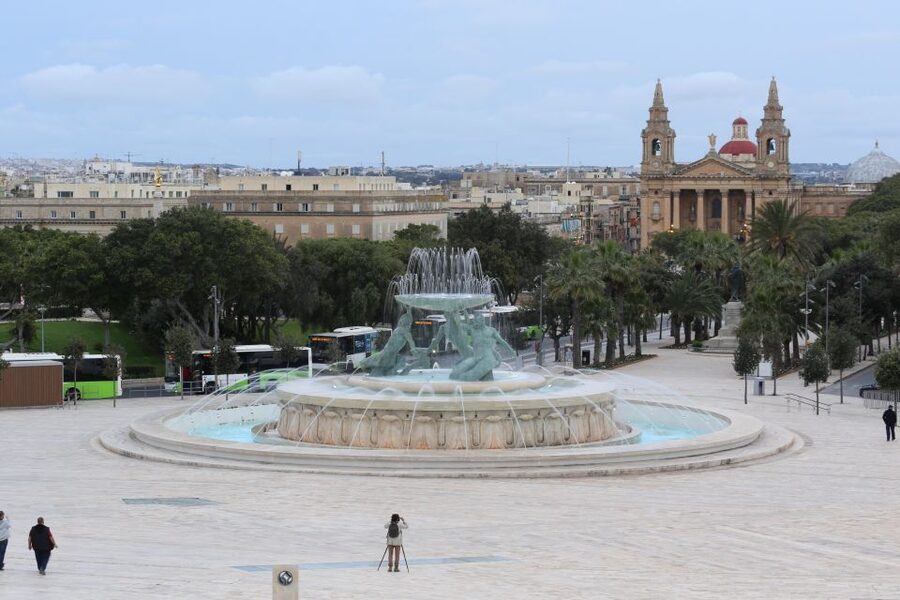
The meeting point is easy to identify once you know the landmarks. Pass through or just beyond Valletta’s City Gate, with the New Parliament Building nearby, and look for the red City Walking Tours umbrella. If you arrive by taxi, the closest practical drop-off is the Phoenicia Hotel at Triton’s Square, only a short walk from the gate.
I would arrive at least 10 minutes early. The entrance area can be busy, and finding the guide is much easier before the group sets off. The opening talk gives you a basic sense of how Valletta began, why it was built as a fortress city, and how its role changed over the centuries.
That introduction matters. Valletta can look like a handsome grid of honey-colored stone if you do not know what you are seeing. With a guide, the streets become part of a plan, not just a backdrop. You begin to understand the city as a planned stronghold shaped by military needs, religion, politics, and daily life.
The city’s entrance has also changed over time, and the modern New Parliament Building provides a sharp contrast to the historic core. That mix of old and new is one of the useful themes of the walk. You are not being shown a frozen museum. You are seeing a working capital that keeps adapting.
More Walking Tours in Valletta
- The Original Valletta Walking Tour
★ 5.0 · 2,719 reviews - Valletta: 3-Hour Walking Tour
★ 4.7 · 1,605 reviews - Valletta: Street Food and Culture Walking Tour
★ 4.8 · 1,251 reviews
Main squares and the city’s grand addresses
From the entrance, the route moves into Valletta’s historic center. The exact order can vary, but you can expect to pass through the main squares and along streets lined with palaces, churches, and buildings linked to the Knights of St. John.
The squares give the walk breathing room. They also help you understand Valletta’s layout. Rather than racing from one sight to the next, the guide can point out how civic buildings, religious institutions, and grand residences were placed around the city’s central routes.
The auberges are especially useful stops. These were the residences and headquarters associated with the Knights’ different language groups. Their grand façades tell you about status and organization, while the guide’s explanation adds the human side: who lived there, how power worked, and how the city functioned when the Knights controlled Malta.
I appreciate this kind of explanation because architecture alone can become a parade of names. A good guide turns a building into a clue. You begin to see why a palace looks formal, why a church dominates a corner, or why certain streets feel more important than others.
Several guides have been praised for explaining difficult historical subjects in plain English. Marisa is known for balancing facts with family memories and old photographs. Angela and Angele have been praised for clear, humorous storytelling, while John brings particular enthusiasm for Malta’s cultural heritage. Your guide will vary, but the format favors a personal, conversational style rather than a dry lecture.
Barracca Gardens and Grand Harbour views
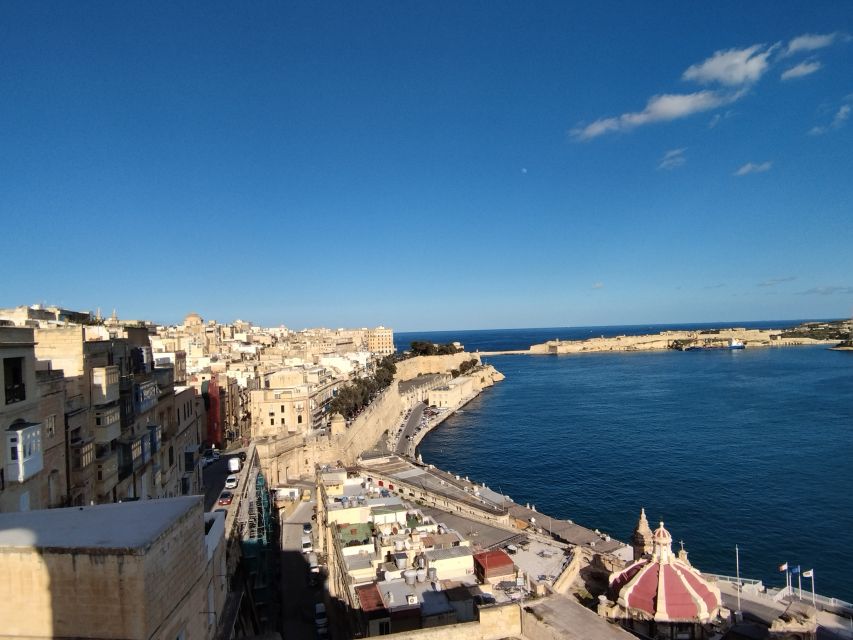
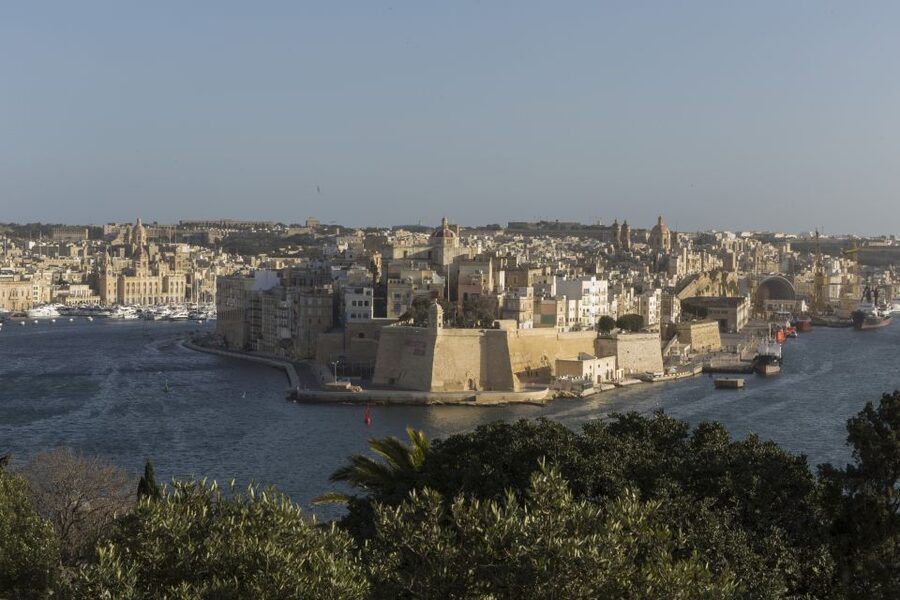
The Barracca Gardens are one of the route’s most rewarding pauses. From here, you get broad views over Malta’s Grand Harbour, giving you a chance to stop, take photographs, and see the city in relation to its surrounding forts and waterfront.
The gardens also provide a useful break from narrow streets. Valletta’s center can feel dense, with buildings close together and plenty to look up at. A viewpoint lets you step back and understand the setting that made this part of Malta so important.
Do not treat this stop as only a photo opportunity. Listen for the guide’s explanation of how the harbor shaped Valletta’s military and commercial life. The view helps connect the city’s walls and buildings to the wider island.
The weather makes a difference here. On a warm, sunny day, the open viewpoint can feel exposed, and the full two and a half hours may seem lengthy. On a windy day, as one winter tour demonstrated, a strong guide can still keep the group engaged, but you should bring a light layer. In summer, water, sun protection, and a hat are sensible additions to the comfortable shoes listed for the tour.
Churches, palaces, and the value of outside explanations
The tour passes churches and palaces, but entrance fees are not included. That distinction is important. You are getting an orientation walk, not a ticketed visit inside each landmark.
For many people, that is the right first step. You can learn which buildings deserve a return visit, then decide where to spend your entrance fees later. If you already know you want a long interior visit, such as a museum or church tour, plan that separately after the walk.
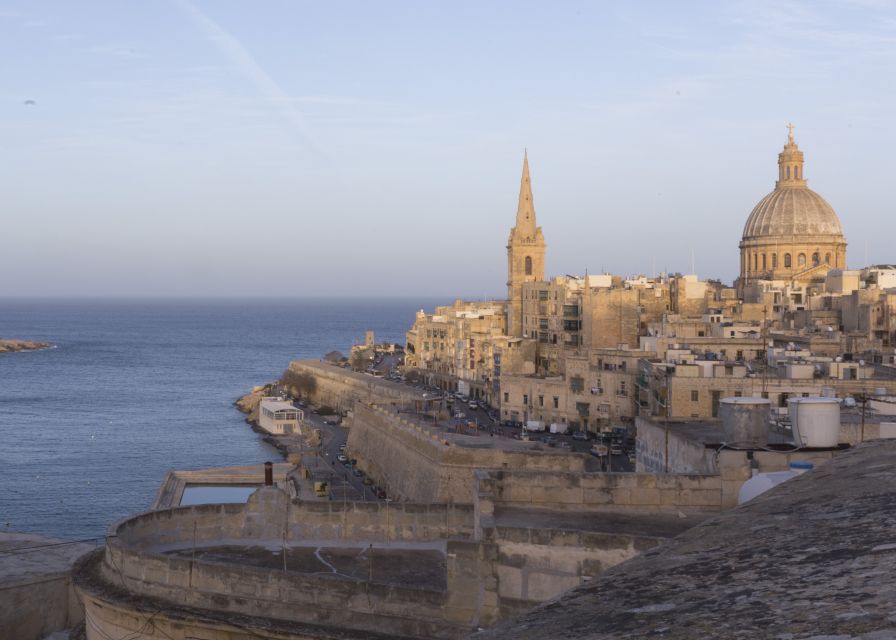
Outside, your guide can still explain the building’s role, appearance, and place in Valletta’s story. You may also hear about architectural details that are easy to miss when walking alone. Guides have been praised for pointing out art, design, and changes to the city over time.
One particularly useful feature is the use of historical photographs. Seeing an old image beside the present-day street helps you notice what has changed and what has survived. It also keeps the tour from treating the past as something sealed away. Valletta’s buildings have been used, repaired, altered, and reinterpreted.
If you are interested in arts and architecture, this tour should suit you well. If your main goal is to enter every major church or museum, it will feel more like a preview. That is not a weakness, as long as you book it for the right purpose.
Same islands, a completely different day out:
- From Malta: Full-Day Gozo UTV Tour with Lunch and Boat Ride
★ 4.6 · 4,408 reviews - From Malta: Full-Day Gozo Quad Tour with Lunch and Boat Ride
★ 4.8 · 1,419 reviews - Gozo Full-Day Jeep Tour with Private Boat to Gozo & return
★ 4.5 · 1,048 reviews - Valletta: City Walking Tour in a Small Group
★ 4.9 · 957 reviews
Side streets and the stories you miss alone
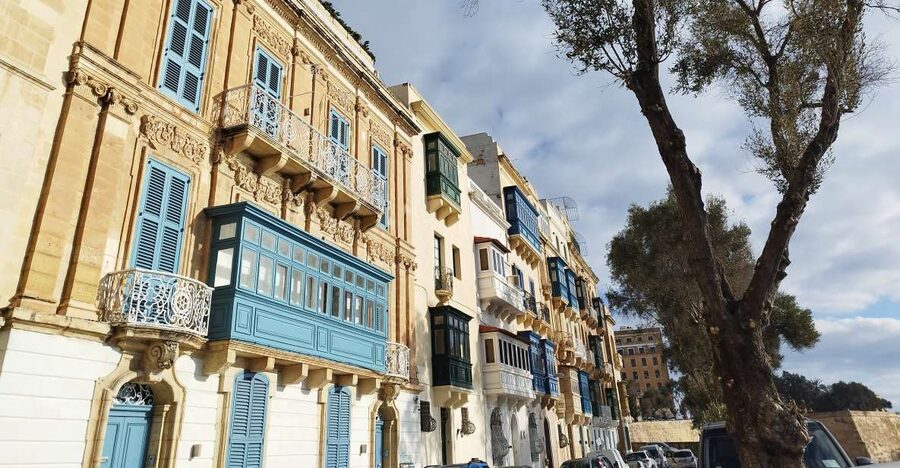
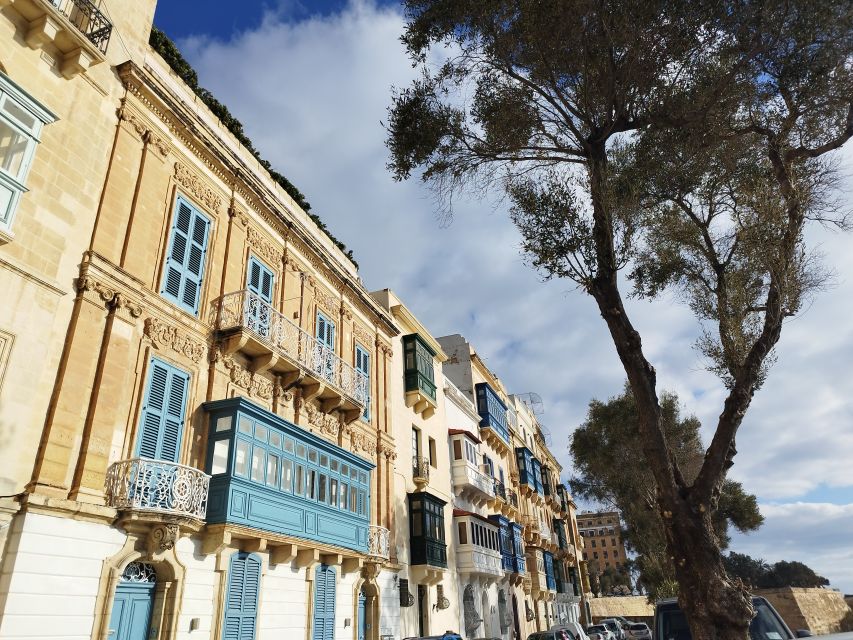
The route includes characteristic streets and less obvious corners, not only the city’s headline sights. This is where the tour earns its keep. A map can lead you to a square, but it will not necessarily explain why a side street looks the way it does or what kind of life once filled it.
The guides add small details about local culture, food, daily routines, and Valletta today. Marisa, in particular, has shared stories connected to growing up in Malta, while other guides have brought personal memories and local examples into the historical account.
These details help keep the walk grounded. You are not only hearing about rulers and fortifications. You are also getting a sense of how the city changed for ordinary people and how its past still affects modern Malta.
The food advice at the end can be useful too. Guides have suggested cafés, restaurants, and places where a drink may come with complimentary tapas or appetizers. Treat these as starting points rather than a formal food tour. The value is knowing what area to explore after the walk and having a local perspective before you choose.
Pace, group comfort, and the physical effort
This is a city walk, not a strenuous hike. The route includes regular pauses, and several guides have built in opportunities to sit or take a comfort break. The pace is generally described as casual and manageable, with time to take photographs and ask questions.
Still, do not confuse manageable with completely flat. Valletta has changes in level, steps, and streets that can be tiring after a long day of sightseeing. Comfortable shoes are a must. Wheelchair users should not book this activity because it is specifically listed as unsuitable for wheelchairs.
The group may be large enough that hearing matters. One useful feature mentioned by a participant was an audio system that made the guide easier to follow in a sizable group. This is worth noting if you have trouble hearing outdoors or in crowded streets.
A two and a half hour walk is best scheduled early in your stay. You get a clear map of the city, learn which sights deserve more time, and finish with advice on what to do next. It also helps you avoid spending your first day wandering without context.
In hot weather, I would choose the coolest available starting time and carry water. One guide was described as keeping the pace comfortable despite warm conditions, but there is only so much a guide can do when the sun is strong and the stone streets reflect heat.
What the $24 price really buys you
At $24 per person, the tour is priced as an affordable introduction rather than a full sightseeing package. You receive 2.5 hours with a licensed English-speaking guide, but no museum or church admissions.
The value comes from saving time and gaining context. Valletta’s center is walkable, yet its history is not always obvious. A guide helps you connect the fortress, harbor, Knights’ buildings, churches, gardens, and modern city in one coherent outing.
I would consider the price especially fair if you are visiting Malta for the first time, arriving on a cruise stop, or staying only a few days. It gives you a useful overview without committing half a day or paying for a private guide.
It may be less attractive if you prefer to wander alone, read at your own pace, or spend most of your time inside museums. In that case, use the route as a free-map exercise and spend the $24 on an admission or meal instead.
The reserve-now-and-pay-later option keeps your plans flexible, and cancellation is free up to 24 hours before the activity for a full refund. Starting times vary, so check availability when booking.
Ending at St. George’s Square
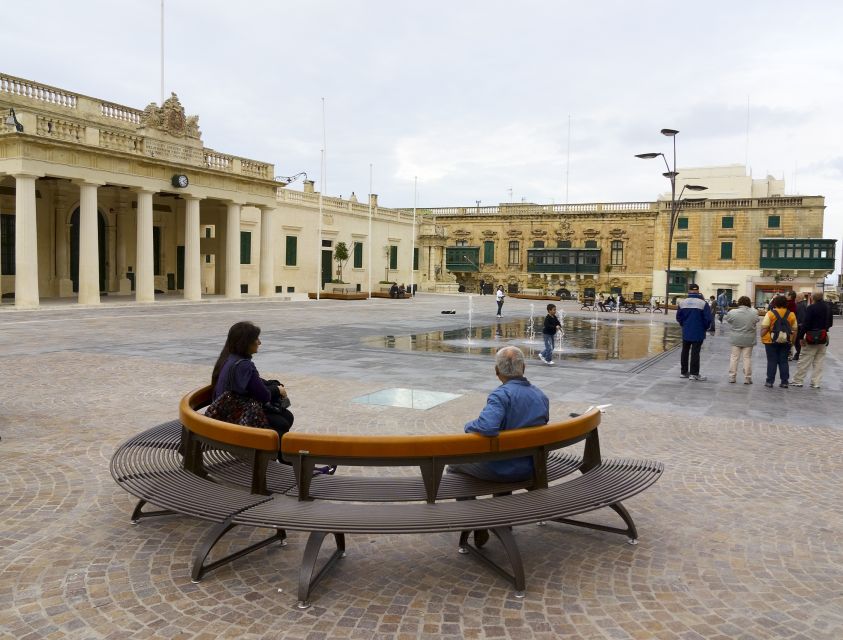
The tour ends at St. George’s Square beside the Grandmaster’s Palace. This is a good finishing point because you are left in the center of Valletta rather than at an isolated transport stop.
Your guide can help you get oriented from there and suggest how to continue. You might choose to visit a church or museum, return to a garden, find lunch, or simply retrace a street that caught your eye.
That final orientation is more useful than it sounds. After two and a half hours, you should know the main routes through the city and have a short list of places worth seeing at your own speed. You also have a chance to ask last-minute questions about food, weather plans, or other parts of Malta.
The walk does not include transport, meals, or entry tickets, so think of it as the first chapter of your Valletta visit. It gives you the framework. You decide how much more to add.
Who will enjoy this Valletta walk most
I would recommend it to first-time visitors who want an informed start without a demanding schedule. It also suits people who like history but prefer stories and local examples to a long academic lecture.
Architecture fans should find plenty to enjoy in the palaces, auberges, churches, and changing streetscapes. Families and mixed-age groups may appreciate the pauses and moderate pace, though anyone with mobility limits should consider the steps and the stated wheelchair restriction.
It is also a good choice for independent visitors. You are not locked into a full-day program. After the walk, you can continue alone and use the guide’s suggestions to shape the rest of your day.
The strongest guides appear to combine facts, humor, personal memories, and practical advice. Names associated with this tour include Marisa, Angela, Angele, Nadine, John, Melissa, and others. You cannot select a particular guide from the information provided, but the repeated emphasis on clear English, energy, and personal storytelling is encouraging.
Should you book the Valletta Guided City Walking Tour?
Book it if you want to understand Valletta before exploring it on your own. The combination of major landmarks, Barracca Gardens, harbor views, local stories, and practical advice makes $24 a sensible first-day expense.
Skip it if you strongly dislike guided groups, need a fully step-free route, or want interior visits included. For most first-time visitors, though, this is a well-priced way to get your bearings, learn the city’s story, and find the places you will want to revisit at leisure.
FAQ
Where does the Valletta walking tour meet?
Meet at the entrance to Valletta, in front of the New Parliament Building. Pass the City Gate and look for the red City Walking Tours umbrella.
How long does the tour last?
The walking tour lasts 2.5 hours.
What language is the tour conducted in?
The live tour guide speaks English.
What landmarks does the route include?
You will pass main squares, the Barracca Gardens, palaces, churches, the auberges of the Knights, and characteristic Valletta streets. The route also includes views of the Grand Harbour.
Does the price include church or museum entrance fees?
No. Entrance fees to churches and museums are not included.
How much does the tour cost?
The listed price is $24 per person.
What should I bring?
Bring comfortable shoes. Water, sun protection, and a light layer may also be useful depending on the weather, particularly because parts of the route are outdoors.
Is the tour suitable for wheelchair users?
No. The activity is listed as unsuitable for wheelchair users, and the route includes a few steps.
What happens if I need to cancel?
You can cancel up to 24 hours in advance for a full refund. You can also reserve now and pay later, which keeps your plans flexible.
Just added around Valletta
- Tour of Malta (Private Driver) Including Lunch Platter & Wine in the countryside★ 4.5 · 3 reviews
- Private Tour in Malta Prehistoric Temples & Mdina★ 5.0 · 4 reviews
- Private Tour of the Maltese Island (Private Driver)★ 5.0 · 4 reviews
- Valletta: Express Walk with a Local in 60 minutes★ 4.9 · 4 reviews
- Valletta Private Historical and Cultural Walking Tour★ 5.0 · 4 reviews
- Shore Excursion: Private Full-Day Tour of Valletta & Mdina★ 5.0 · 4 reviews
- Leisure Pass in Malta★ 4.0 · 4 reviews
- Malta tour 3Cities , Marsaxlok ,Blue grotto Hagar qim★ 4.9 · 4 reviews
Valletta Tours, compared.

Full-Day Gozo UTV Tour with Lunch and Boat Ride
Read our review →
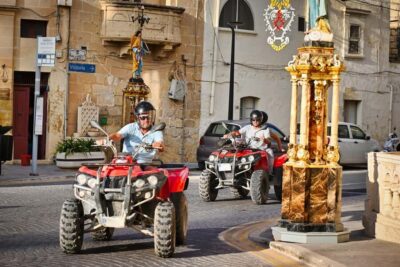
Full-Day Gozo Quad Tour with Lunch and Boat Ride
Read our review →
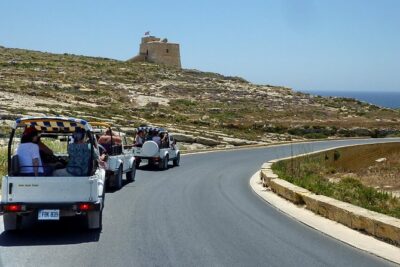
Gozo Full-Day Jeep Tour with Private Boat to Gozo & return
Read our review →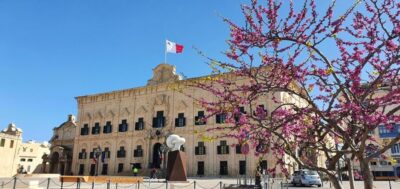
Browse the lists this tour appears in