
Reviewed · VALLETTA TOURS
The Original Valletta Walking Tour
Valletta was built by the Knights of St John after the Great Siege of 1565, and this tour gives you a useful way to read the city before you wander off on your own. You’ll move from the modern City Gate to grand Baroque buildings, military memorials, and the Upper Barrakka Gardens, where the Grand Harbour opens below you.
I like the small-group limit of 25, which keeps questions possible without turning every stop into a crowd scene. I also like the guides’ range, from Matthew’s practical tips to Mario’s detailed talks on art, architecture, and geography. The main drawback is that three major interiors have admission fees that are not part of the $26.60 price, and some stops involve standing while the guide gives a long explanation.
Key points at a glance
- A three-hour introduction to Valletta: You see the city’s main streets, squares, churches, memorials, and viewpoints without trying to cover the whole island.
- The route mixes old and new: The New Parliament and Royal Opera House ruins frame the entrance, while the Knights’ auberges and palaces explain Valletta’s older character.
- The Upper Barrakka Gardens provide the best pause: Allow about 30 minutes for the Grand Harbour views and a breather from the streets.
- Several guides receive especially strong praise: Matthew, Carmel, Mario, and Giulia are singled out for clear English, humor, patience, and strong command of Maltese history.
- Paid entries are extra: St. John’s Co-Cathedral, the Grand Master’s Palace, and the Museum of Fine Arts at Auberge d’Italie are not included.
- Cruise passengers need a little planning: From the port, the city elevator and gardens offer a much quicker approach than following a bad map pin toward the meeting point.
Why this tour works well as a first look at Valletta
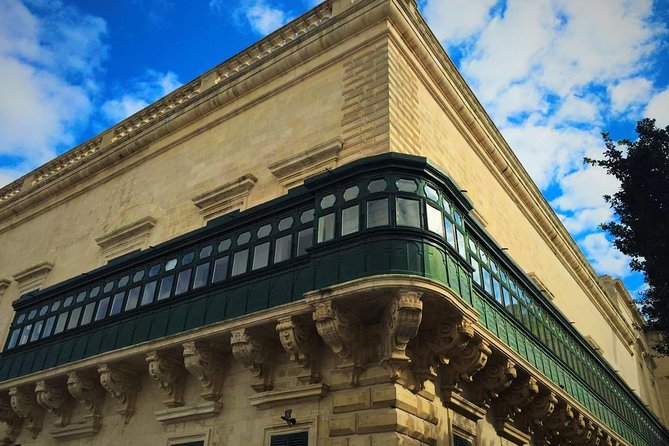
Valletta is compact, but it is not simple. One street may show a modern Parliament building, a bomb-damaged opera house, a church tied to Malta’s military past, and a palace used by rulers for centuries. Without some context, you can admire the honey-colored stone and move on without understanding what you are seeing.
This walk supplies that context in a steady three-hour route. You begin at the central entrance, then work through the city’s public squares and grand buildings before ending near St. George’s Square. That direction makes sense for a first visit because you get a broad framework for Valletta rather than spending the whole morning inside one monument.
The tour is offered in English, with a maximum of 25 people. That is not a private tour, but it is small enough to feel more manageable than a large flag-following procession. At $26.60 per person, I see the price as fair if you want a local guide to connect the sites and answer questions. It is less compelling if you prefer to read plaques, walk at your own pace, and enter every major building.
The strongest value comes from the guide. Mario, a former professor according to one description, is known for detailed explanations of geography, art, architecture, and history. Matthew is praised for answering questions and offering useful advice about booking attractions. Carmel is described as good at balancing facts with anecdotes, while Giulia brings a clear, personal account of her homeland.
Guide quality can vary from one departure to another, but the repeated pattern is clear: this tour is built around explanation, not just a route through pretty streets.
More Walking Tours in Valletta
- Valletta: 3-Hour Walking Tour
★ 4.7 · 1,605 reviews - Valletta: Guided City Walking Tour
★ 4.8 · 1,256 reviews - Valletta: Street Food and Culture Walking Tour
★ 4.8 · 1,251 reviews
Starting beneath Valletta’s modern entrance
Meet at the New Parliament Building on Republic Street. The first few minutes introduce Valletta and its founding by the Knights of St John in 1565. You then look at the modern entrance to the city, where Renzo Piano’s Parliament building and the open City Gate area create a sharp contrast with the fortified capital beyond.
The nearby Pjazza Teatru Rjal is a particularly useful early stop. The ruined Royal Opera House was damaged during the Second World War and later adapted as an open-air performance space. The point is not simply to photograph the broken columns. Your guide explains how the ruins fit into Valletta’s more recent story and why the entrance feels deliberately open rather than sealed behind another grand gate.
If you are arriving from a cruise ship, do not treat the meeting point as a casual five-minute walk until you have checked your route carefully. A direct map pin can sometimes send you far away. The practical approach described for cruise arrivals is to turn right from the port, walk roughly 200 meters, cross at the crosswalk, and use the elevator up to Valletta. The elevator costs €1 for a return trip. From the top, walk through the gardens and toward the square, then look for the modern building before the bridge. If you reach the bridge, you have gone too far.
That advice matters because the tour does not include hotel or port pickup. You need to make your own way to the start.
Churches, auberges, and the Knights’ working city
The next section explains how Valletta was organized around the Knights of St John. At Our Lady of Victories Church, you hear about a major figure connected with Malta’s past and see one of the city’s early religious landmarks.
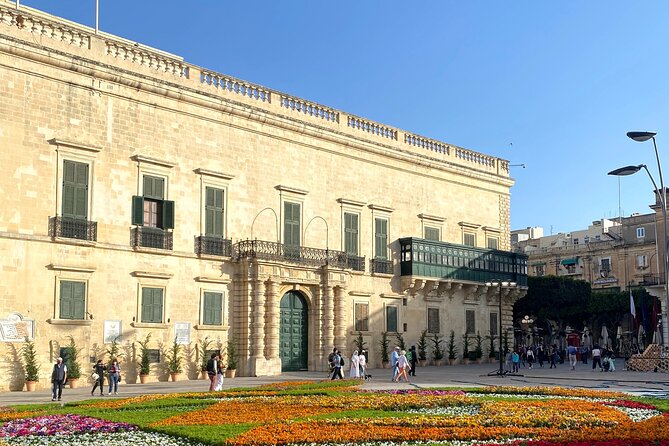
Il-Berga ta’ Kastilja, better known as the Auberge de Castille, gives you one of the finest exterior views of the Knights’ former headquarters. The facade is grand, formal, and easy to appreciate from the square, but the guide’s explanation helps you understand that these auberges were not just decorative residences. They were tied to the separate langues, or regional divisions, of the Order.
Auberge d’Italie brings the route into the city’s art side. It now houses the Museum of Fine Arts, but admission is not included. This is one of the tour’s small decisions for you: listen to the outside explanation and continue with the group, or return later and pay to visit the collection at your own pace.
The walk does not try to turn every stop into a full museum visit. That keeps the route moving, but it also means you should not expect extended time inside each paid attraction. If the interior of St. John’s or the palace is high on your list, make a separate plan.
A long look across the Grand Harbour
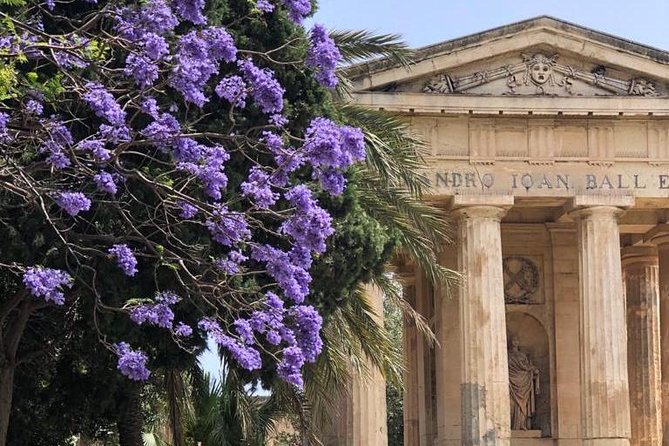
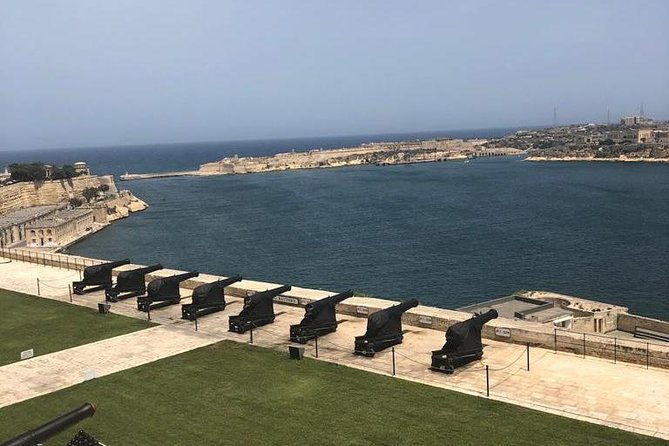
The Upper Barrakka Gardens receive about 30 minutes, making them the longest stop on the route. This is welcome. After several urban squares and facades, you get space, benches, greenery, and wide views over the Grand Harbour.
The gardens are also a good place to connect Malta’s geography with its history. Valletta was chosen and fortified because of its position above the harbor. From here, your guide can point out the relationship between the city walls, the water, and the defensive sites beyond.
You should treat this as more than a quick photo stop. It is the natural midpoint of the morning, and several descriptions note a short break around this part of the tour. Bring water, especially in warmer weather, but do not expect a formal meal break. One person had time for coffee during a pause, while another noted that the walking pace was gentle.
The gardens were part of Valletta’s role as European Capital of Culture in 2018, a detail that adds a modern chapter to the older military story. The result is a useful change of rhythm: fortifications and sieges give way to public space, views, and present-day city life.
Same islands, a completely different day out:
- From Malta: Full-Day Gozo UTV Tour with Lunch and Boat Ride
★ 4.6 · 4,408 reviews - From Malta: Full-Day Gozo Quad Tour with Lunch and Boat Ride
★ 4.8 · 1,419 reviews - Gozo Full-Day Jeep Tour with Private Boat to Gozo & return
★ 4.5 · 1,048 reviews - Valletta: City Walking Tour in a Small Group
★ 4.9 · 957 reviews
St. John’s Co-Cathedral and the art inside
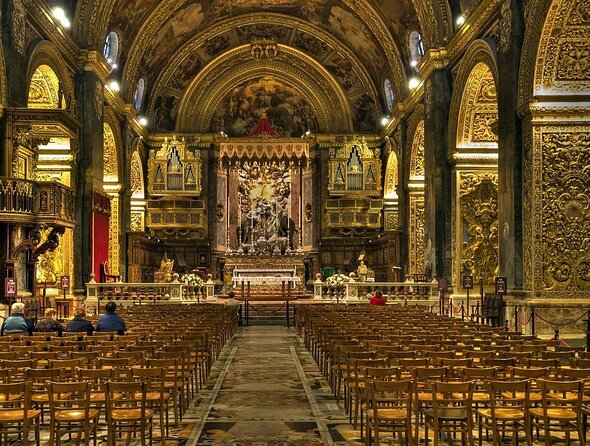
St. John’s Co-Cathedral is one of the essential landmarks in Valletta. The guide explains the famous artists represented inside and places the church within the world of the Knights of St John. Admission is not included, so the tour may focus on the building and its artistic importance rather than giving you a full interior visit.
That distinction is important. You should not assume the tour price covers entry simply because the cathedral is listed as a stop. The same applies to the Grand Master’s Palace and the Museum of Fine Arts. Check the current admission arrangements before booking if you want to see all three interiors on the same morning.
One useful feature of a guided visit is that you get a reason to enter. A guide’s strong recommendation led one visitor to try St. John’s when it unexpectedly opened for a service after being closed for a holiday. You may not have the same timing, but the advice is sound: if the cathedral is open and you have enough time, it deserves more than a glance from the street.
The art discussion can become detailed. Mario, in particular, is praised for going far beyond basic dates and names. That will suit you if you enjoy close attention to painting, architecture, and the links between them. If you prefer a brisk sightseeing walk, you may find some explanations longer than necessary.
Palazzo Parisio, St. George’s Square, and the Grand Master
The route continues past Palazzo Parisio, where you hear about a famous historical figure who once lived there. This stop is short, but it adds a personal story to the grand buildings. Valletta is easier to remember when you connect the facades with the people who used them.
St. George’s Square is the final major public space. It is a good place to understand Valletta as a civic center rather than only a fortress. The square also gives the guide a natural setting for discussing the Grand Master’s Palace, one of the city’s key buildings.
The palace has served important roles across several centuries, and the commentary explains why it mattered under the Knights and later administrations. Entry is not included. You can still learn a useful amount from the exterior and the guide’s talk, then decide if you want to return for the inside.
The tour ends in central Valletta near St. George’s Square. That is convenient for continuing on foot, finding lunch, returning to St. John’s, or exploring streets the tour did not cover. It also avoids sending you back to the original starting point when you may already have a plan for the rest of the day.
How much walking and standing should you expect?
The route is not described as physically demanding, and the pace is generally gentle. Valletta itself is compact, so three hours does not mean nonstop marching across a large area. You stop often, and the gardens provide a useful pause.
The catch is that a walking tour includes standing. One guide, Mario, is noted for giving very detailed talks, and one person found the amount of standing noticeable. You should wear comfortable shoes and be ready to pause in streets and squares while the explanation finishes.
Most people can participate, and service animals are allowed. The tour is near public transportation, but hotel pickup and drop-off are not included. If you have limited mobility, confirm that the pace and route suit you before booking, since the supplied details do not describe step-free access at every point.
Weather also affects the experience. One January morning was sunny despite a poor forecast, but the useful lesson is to prepare for change. Bring water and protection from sun or rain, since the tour is outdoors and weather can alter your comfort even when the route itself is moderate.
The guide makes or breaks the morning
The tour’s strongest praise goes to the people leading it. Matthew is described as clear, attentive, and ready with practical tips for booking attractions. Carmel is praised for an excellent mix of facts and stories. Giulia is noted for easy-to-follow English, enthusiasm, and a personal connection to Malta.
Mario appeals to a different kind of history fan. His talks can cover geography, architecture, art, and national history at length. If you enjoy a proper lecture in the open air, he may be exactly the guide you want. If you prefer short comments followed by more independent time, you may want to stay near the back and treat the route as an orientation rather than trying to absorb every detail.
The English is generally described as easy to follow, and guides are praised for answering questions. That matters in Valletta because names, dates, religious orders, and military events can quickly blur together. A good explanation gives you a framework you can use during the rest of your Malta visit.
There is one practical wrinkle at the meeting point. A separate shorter tour may use similar clothing and a yellow umbrella, which caused confusion for one departure. The operator disputed the exact timing and said it carries out check-ins, but the useful advice for you is simple: confirm the tour length and start time when you arrive, and have WhatsApp available if the operator needs to contact you. One late arrival was helped with updated meeting instructions.
Is $26.60 good value?
At $26.60, this is not the cheapest way to walk through Valletta, since you can see many exteriors on your own. The price pays for the links between them: why the city was founded, how the Knights organized it, what the sieges changed, and how the harbor shaped its defenses.
The value is strongest for a first visit, a cruise stop, or a short stay. Three hours gives you a usable map of the capital without taking your entire day. It also helps you choose where to spend your own admission money afterward.
The value is weaker if you plan to visit only the interiors. Since St. John’s Co-Cathedral, the Grand Master’s Palace, and the Museum of Fine Arts require separate admission, you should add those costs to your budget. The tour itself is primarily an outdoor guided overview with selected stops and commentary.
A 98 percent recommendation rate and a 4.9 rating from 2,719 reviews suggest a very dependable experience overall, especially for first-time visitors. I would still read the format honestly: the morning succeeds because of the guide’s storytelling and local explanation, not because it grants special access or includes entrance tickets.
Who should book this Valletta walk?
I would book it if you are new to Malta, have only one morning in Valletta, or want to understand the city before exploring alone. It also suits cruise passengers who want a structured introduction close to the port, provided they plan the elevator route and meeting point in advance.
It is a good match for history and architecture fans, particularly if you enjoy detailed talks. The tour also works for people who want a moderate pace with regular stops rather than a fast march through every street.
I would be more cautious if you dislike standing, want a private guide, or expect entry to every major building. Families and older visitors may find the pace manageable, but the available information does not promise special accommodations beyond most people being able to participate.
Final call: book it if you want the story, not just the sights
Book The Original Valletta Walking Tour if you want a clear three-hour orientation led by an English-speaking guide who can explain the city’s churches, auberges, palaces, defenses, and harbor views. The Upper Barrakka Gardens, central route, compact group, and strong guide record make it a sensible first-day choice.
Skip it if you prefer complete freedom or plan to spend the morning inside paid attractions. For everyone else, $26.60 is a reasonable fee for turning Valletta’s impressive stone streets into a connected story. Cancel at least 24 hours before the start for a full refund. Inside 24 hours, the payment is not refunded, and the experience can be changed or canceled if its minimum group size is not met.
FAQ
Where does the tour start?
It starts at the New Parliament Building on Republic Street in central Valletta, Malta.
Where does the tour end?
The tour ends in central Valletta at St. George’s Square on Republic Street.
How long does the walking tour last?
The tour lasts approximately three hours.
How much does the tour cost?
The listed price is $26.60 per person.
What language is the tour offered in?
The tour is offered in English.
How large is the group?
The group has a maximum of 25 people.
Are attraction admission fees included?
No. Admission to the Museum of Fine Arts at Auberge d’Italie, St. John’s Co-Cathedral, and the Grand Master’s Palace is not included.
Is hotel pickup and drop-off provided?
No. Hotel pickup and drop-off are not included, so you must reach the meeting point yourself.
Can service animals join the tour?
Yes. Service animals are allowed.
What is the cancellation policy?
You can cancel at least 24 hours before the start time for a full refund. Cancellations or changes made less than 24 hours before the start time are not accepted for a refund.
Just added around Valletta
- Tour of Malta (Private Driver) Including Lunch Platter & Wine in the countryside★ 4.5 · 3 reviews
- Private Tour in Malta Prehistoric Temples & Mdina★ 5.0 · 4 reviews
- Private Tour of the Maltese Island (Private Driver)★ 5.0 · 4 reviews
- Valletta: Express Walk with a Local in 60 minutes★ 4.9 · 4 reviews
- Valletta Private Historical and Cultural Walking Tour★ 5.0 · 4 reviews
- Shore Excursion: Private Full-Day Tour of Valletta & Mdina★ 5.0 · 4 reviews
- Leisure Pass in Malta★ 4.0 · 4 reviews
- Malta tour 3Cities , Marsaxlok ,Blue grotto Hagar qim★ 4.9 · 4 reviews
Valletta Tours, compared.

Full-Day Gozo UTV Tour with Lunch and Boat Ride
Read our review →
Full-Day Gozo Quad Tour with Lunch and Boat Ride
Read our review →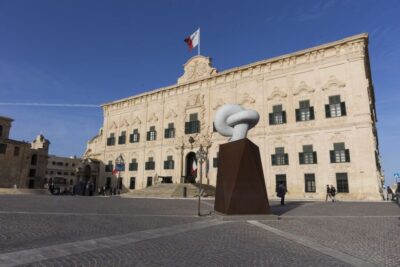

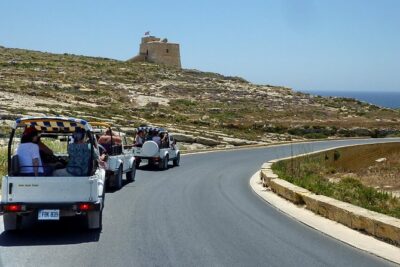
Gozo Full-Day Jeep Tour with Private Boat to Gozo & return
Read our review →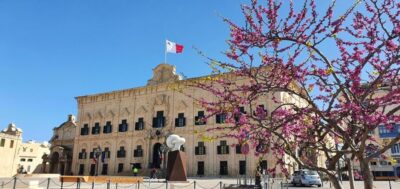
Browse the lists this tour appears in