
Reviewed · SCUBA DIVING
First scuba diving experience with instructor – Malta
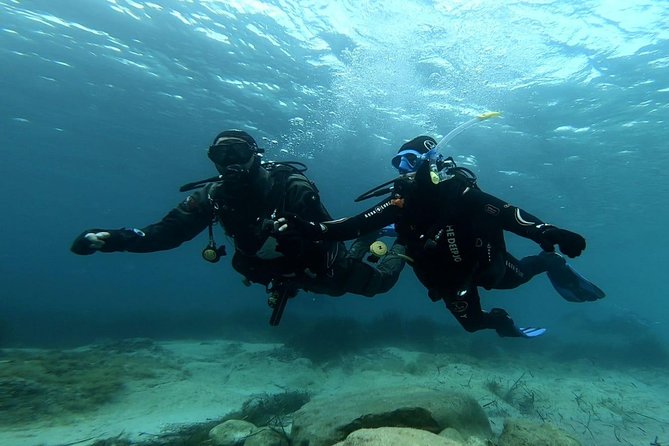
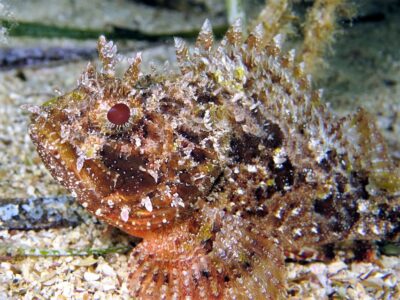
Malta’s best scenery may be below the surface. This three-hour introduction from St. Paul’s Bay gives you a careful first taste of scuba, beginning with equipment and safety instruction before moving into shallow water and then the open sea. You may see local fish, unusual sea life, and, if conditions cooperate, an octopus.
I like the private or very small-group setting, which gives an instructor more time to help you manage the odd feeling of breathing underwater. I also like that the session teaches useful basics, including ear equalization, fin technique, and hand signals, rather than simply putting you in the water and hoping for the best.
The main consideration is that this is an actual water-sports lesson, not a casual boat outing. You need reasonable swimming ability, good health, and enough patience to learn at your own pace. English is important unless you have arranged another language, and anyone with certain medical conditions may need a doctor’s statement.
Key points before you book
- Three hours at DiveBase Malta: The session starts and ends at 25 Islet Promenade in St. Paul’s Bay.
- A genuine first lesson: You learn to use scuba equipment, breathe underwater, equalize your ears, swim with fins, and communicate by hand signals.
- Personal instruction: The maximum group size is eight, with several strong reports of calm, encouraging instruction from Antonio, Davide, and Georgia.
- Two stages in the water: Expect practice in shallow water before moving into open water when you are ready.
- Sea life at close range: Fish and, on at least one reported outing, an octopus have been seen during the underwater session.
- Plan around flying: Wait at least 12 hours after the session before taking a flight.
Why this Malta scuba introduction works for beginners
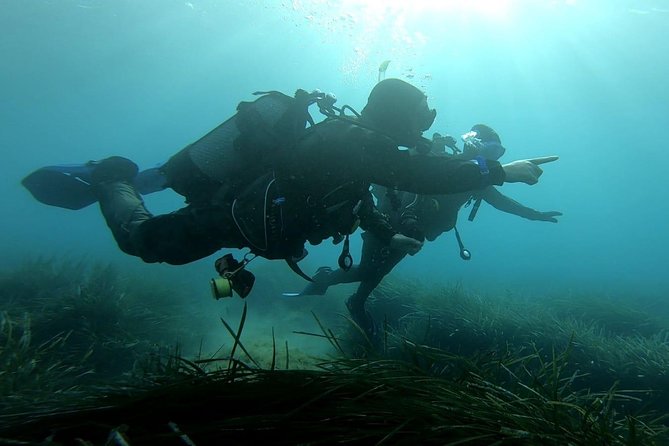
Breathing underwater feels strange at first. Even confident swimmers can tense up when they put their face below the surface and hear only the regulator’s steady hiss. That is why the first part of this experience matters so much.
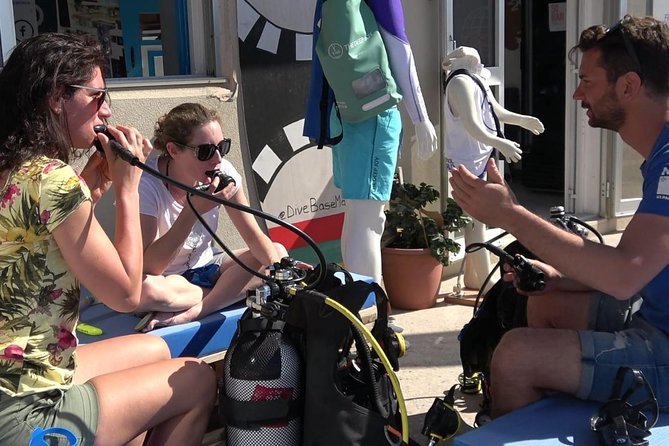
At DiveBase Malta, you begin with a short training course in a calm setting. The instructor explains how the equipment works and shows you how to use it before you enter the sea. You are not expected to have previous scuba experience, but you do need sufficient swimming skills and good general health.
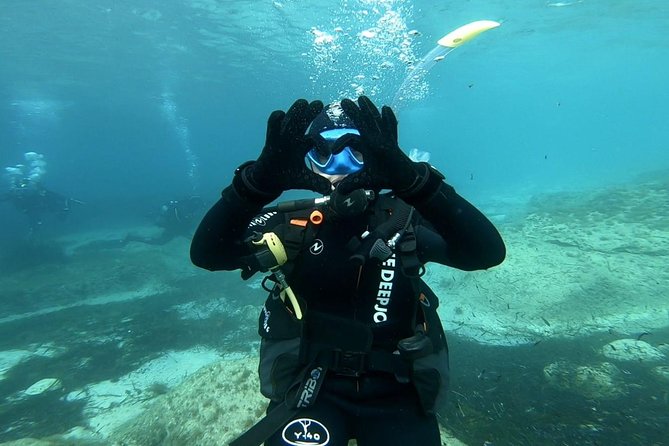
The lesson covers the small skills that make underwater time comfortable. You learn how to equalize pressure in your ears, how to move with fins without fighting them, and how to use hand signals when you cannot speak. You also practice feeling at ease with the regulator, the mouthpiece that supplies your air.
I especially value the focus on calm breathing. Several people found the first moments difficult, particularly the sensation of breathing underwater, but patient instruction helped them settle. A first session should give you time to stop, reset, and try again. That is more useful than rushing you toward deeper water.
The experience is described as private, although the maximum group size is eight. Group arrangements can vary, so ask about the expected number of participants when you book if personal attention is your main reason for choosing it. The strongest feedback came from small groups, including one session with only four people present.
More dive trips off Malta:
- Malta: First Experience Scuba Diving Lesson
★ 4.6 · 415 reviews - St Julians: Discover Scuba Diving Experience
★ 4.8 · 93 reviews - Malta, Scuba diving with instructor
★ 4.8 · 52 reviews
Starting at St. Paul’s Bay
You meet at DiveBase Malta, 25 Islet Promenade, St. Paul’s Bay, Malta. The activity finishes at the same place, so you do not need to arrange a separate return transfer.
The meeting point is near public transportation, which helps if you are staying in or around St. Paul’s Bay. The practical setup is simple: arrive ready for a water activity, complete the required medical information, and allow the staff to prepare the equipment.
Bring your own bathing suit, bikini, or shorts, along with a towel. Scuba equipment, diving insurance, and a PADI instructor are included. The supplied information does not list hotel pickup, meals, photographs, or personal swimwear among the inclusions, so plan on making your own way to the meeting point and carrying what you need.
Arrive on time and complete the medical form before the appointment if possible. The full three hours includes briefing, equipment preparation, and the water sessions. Late arrival or incomplete paperwork can reduce the time available for the lesson and may hold up the rest of the group.
Learning the equipment before entering the sea
The equipment can look intimidating when you first see it laid out. The instructor’s job is to turn it into a set of manageable parts: mask, fins, buoyancy equipment, air supply, and the pieces that help you control your position in the water.
You learn how to use the equipment correctly rather than simply putting it on for a photograph. That distinction matters. A mask that leaks, fins that feel awkward, or a regulator that seems unfamiliar can make a new participant anxious. The lesson gives you a chance to ask questions before the water session begins.
You also learn the hand signals used underwater. This is essential because normal conversation is not possible below the surface. Simple signals let you communicate that you are fine, need help, want to stop, or have a problem with your ears or equipment.
The instructor-led format is useful here. Reports about Antonio, Davide, and Georgia repeatedly describe clear explanations, encouragement, and attention to safety. One person who had already tried scuba once still found the instruction a strong introduction. That suggests the session can also suit someone who is rusty, not only a complete beginner.
Still, you should not expect the same pace for everyone. Some people adapt to the regulator quickly. Others need repeated practice before they can breathe calmly underwater. The experience is best approached as a lesson with an ocean setting, not as an amusement ride with a fixed schedule of underwater sights.
Shallow water practice comes first
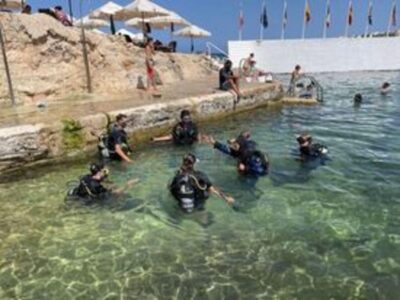
The water work begins in a shallow area. This gives you a safer place to get used to the equipment, breathing, and basic movement before attempting the open-water portion.
You practice the skills introduced on land. Equalizing pressure is especially important. As you move lower in the water, pressure changes can affect your ears, so you need to learn how to equalize early and often. If your ears hurt, tell the instructor and stop descending. Do not try to force the process.
The shallow session also helps you discover how much effort finning requires. New scuba participants often kick too hard, use their arms, or try to swim as they would at the surface. Fins work best with controlled movement. The instructor can help you find a more relaxed rhythm.
This is also where the experience reveals its limits. You might need more time than expected before you feel ready for open water. That is not a failure. The stated goal is to introduce you to scuba safely, and the instructor may decide that staying shallow is the better choice if you are uncomfortable or cannot follow instructions.
Two lower-rated accounts highlight the importance of communication and patience. A language barrier made instruction harder for one group, while another participant felt rushed when a family member struggled to breathe underwater. The operator’s response emphasized that the group had arrived late, lacked completed forms, and required extensive extra instruction. The practical lesson for you is clear: arrive prepared, confirm the teaching language, and be honest about your comfort level.
Same islands, a completely different day out:
- Malta: Gozo & Comino Islands, Blue Lagoon & Seacaves Tour
★ 4.5 · 15,672 reviews - Comino: Blue Lagoon, Crystal Lagoon, and Seacaves Tour
★ 4.6 · 5,673 reviews - Malta: Blue Lagoon, Beaches & Bays Trip by Catamaran
★ 4.7 · 5,496 reviews - Malta: Gozo, Comino, Blue & Crystal Lagoon, & Caves Cruise
★ 4.6 · 5,092 reviews
Moving into open water near Malta
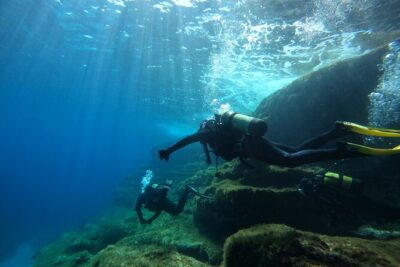
Once you meet the basic requirements, the instructor guides you into open water. This is the moment when the lesson becomes a real introduction to Malta’s marine environment.
The exact route and depth are not specified, and sea conditions affect what is possible. One participant reached seven meters, while another reported spending about an hour underwater and seeing a good amount of sea life. Treat those details as examples, not promises. Your depth and time depend on your ability, conditions, air supply, and the instructor’s judgment.
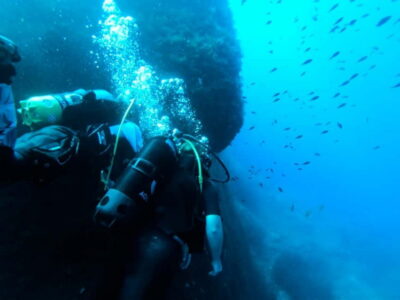
The appeal is the close view of Malta’s marine flora and fauna. Fish look different when you are moving quietly at their level instead of watching from above. One reported session included an octopus nearby, an encounter that can make a first underwater experience especially memorable.
Keep expectations sensible. This is not presented as a specialized marine-life excursion, and there is no guaranteed animal sighting or fixed list of species. You are learning basic scuba skills while exploring the water, so the sea life is an added reward rather than the entire purpose.
There is also no standard photo service included. If you want photographs, confirm the arrangement before booking. The operator explains that photography requires an additional instructor in the water and must be booked separately. Do not assume that bringing your own camera means someone else will use it for you.
The instructors make the biggest difference
Instruction is the strongest part of this experience. Antonio receives repeated praise for clear explanations, patience, humor, and steady encouragement. Davide is also described as informative and reassuring, while Georgia helped a beginner understand the process and reach seven meters.
Those names are useful when you book, but staff assignments can change. The more important point is the teaching style the experience aims for: explain the equipment, build confidence in shallow water, and move forward only when you are ready.
A good instructor watches more than your swimming technique. They notice whether you are breathing calmly, whether you understand the hand signals, and whether you are responding to instructions. That is particularly important in a small group where different people may progress at different speeds.
You should also understand your own responsibility. Follow instructions, disclose medical issues, and tell the instructor immediately if you feel pain, panic, or discomfort. One poor experience involved participants who could not fully understand the instructions, while another included a problem with loose weights. Clear communication and immediate reporting help prevent small problems from becoming serious ones.
The operator’s requirement that you rinse wetsuits, fins, and masks after use may surprise you. It is a normal equipment-care and hygiene task, but it is worth knowing in advance. This is a hands-on lesson in scuba, not a fully serviced luxury outing.
Health rules and practical safety
You must be in good health and able to swim sufficiently to participate. The experience is not suitable for people with respiratory problems, including active asthma, or for those with blood or heart conditions. It is also not suitable if you have had any kind of surgery in the past year, according to the supplied conditions.
In some cases, a doctor’s statement may be requested. A medical form is part of the preparation, and the operator says the form is sent after booking. Read it carefully before your appointment, particularly if you have a chronic condition or take regular medication.
If a medical concern applies to you, contact DiveBase Malta before booking rather than waiting until the meeting point. A doctor’s clearance may allow participation in some cases, but you should not assume it will be accepted automatically. The operator’s cancellation terms are strict inside 24 hours, so sorting this out early protects your money and your time.
After the session, wait at least 12 hours before flying. Build that gap into your Malta plans. Do not schedule this activity on the morning of a flight, and avoid placing it immediately before a flight if a weather change could force a later session.
The activity requires suitable weather. If poor conditions cause cancellation, you are offered another date or a full refund. For your own flexibility, place it early enough in your holiday to allow a change of day.
How much value do you get?
The supplied price is shown as $0.00, which is almost certainly a display or booking-data issue rather than a reliable indication that the experience is free. Confirm the actual price before making plans.
Value depends on what you want. If your goal is to test scuba without committing to a full certification course, the three-hour format gives you a useful first step. Equipment, insurance, and a PADI instructor are included, so you are not paying separately for the core setup.
The value is especially strong when you receive patient one-to-one or small-group attention. A larger group can still have a maximum of eight, but the instructor’s time is shared. Ask about the group size and whether the session will be private if that matters to you.
You also receive a PADI Discover Scuba Certificate of Achievement after meeting the requirements. This is not the same as completing a full scuba certification, but it can help you continue your training toward becoming a certified diver. The certificate is described as valid and recognized worldwide.
That makes the experience more than a single afternoon in the sea. You can use it to decide whether further training appeals to you. Just remember that the certificate itself does not replace a full certification for independent scuba activities.
Who should book this experience?
I would choose this session if you are curious about scuba, comfortable in the water, and interested in learning rather than simply posing underwater. It suits couples, friends, and solo participants who want a guided first attempt in Malta.
It also works for a nervous beginner, provided you are willing to say when you need more time. The most useful reports describe instructors taking fear away through clear explanations and encouragement. That is exactly what a first session should provide.
I would be cautious if you dislike being told to clean shared equipment, need instruction in a language other than English or Italian, or expect guaranteed photographs and a particular marine animal. Those expectations do not match the stated arrangement.
The experience may also be a poor fit if you have a relevant medical condition, recent surgery, active asthma, or heart and blood-related problems. Get medical advice and contact the operator first.
Should you book the Malta scuba experience?
Book it if you want a structured, instructor-led introduction to Malta’s underwater world and you are prepared for a real lesson. The clearest strengths are the small-group potential, the careful progression from shallow practice to open water, and instructors such as Antonio, Davide, and Georgia, who are repeatedly praised for clear and encouraging teaching.
Before paying, confirm the actual price, expected group size, teaching language, photography options, and any medical documentation. Bring swimwear and a towel, arrive with paperwork completed, and leave at least 12 hours between the session and any flight.
For a first taste of scuba, this is a sensible choice. It gives you enough training to judge whether you want to continue, while still leaving room for the thrill of seeing Malta’s fish and sea life at close range.
FAQ
Do I need previous scuba experience?
No. Previous scuba experience is not required. The session is designed for first-time or inexperienced participants.
What swimming ability do I need?
You need sufficient swimming skills to take part. The supplied information does not state a specific test or distance.
How long does the experience last?
The activity lasts approximately three hours, including the briefing, equipment preparation, and water sessions.
Where do I meet the instructor?
You meet at DiveBase Malta, 25 Islet Promenade, St. Paul’s Bay SPB 2506, Malta.
Where does the activity finish?
The experience ends back at the meeting point in St. Paul’s Bay.
What is included?
Scuba equipment, diving insurance, and a PADI instructor are included.
What should I bring?
Bring your own bathing suit, bikini, or shorts and a towel. Personal swimwear and towels are not included.
Is the experience suitable for people with medical conditions?
It is not suitable for people with respiratory problems, including active asthma, or for people with blood and heart conditions. It is also not suitable after any surgery within the past year. A doctor’s statement may be requested in some cases.
How many people can join?
The maximum group size is eight participants. The exact group size for your booking should be confirmed in advance if personal attention is important to you.
How long should I wait before flying?
You should wait at least 12 hours after the session before taking a flight.
What happens if the weather is poor?
If the experience is canceled because of poor weather, you can choose another date or receive a full refund.
Can I cancel for a full refund?
Yes, if you cancel at least 24 hours before the local start time. Cancellations or changes made less than 24 hours before the experience are not refunded or accepted.
Just added around Malta
- Serenity at Sea: Comino Blue Lagoon Exclusive Day Cruise★ 5.0 · 3 reviews
- Gozo Unveiled: Guided Hiking in Gozo – South East★ 5.0 · 3 reviews
- Gozo Unveiled: Guided Hiking in Gozo – The West★ 5.0 · 3 reviews
- Malta Chocolate Factory Gin and Truffle Making Experience★ 5.0 · 3 reviews
- From St. Julian’s: Jet Ski Safari to the South of Malta★ 5.0 · 3 reviews
- St. Julian’s: Comino Blue Lagoon Sunset Cruise by Speedboat★ 3.6 · 3 reviews
- Malta: Around Comino Cruise With Blue Lagoon stop★ 5.0 · 3 reviews
- Private Speedboat Tour: Blue Lagoon & 3 Islands from Split★ 5.0 · 3 reviews
Scuba Diving, compared.
Browse the lists this tour appears in