
Reviewed · VALLETTA TOURS
Heritage Pass in Malta
Malta’s best stories are carved in limestone, hidden below ground, and guarded by huge fortifications. This pass brings those pieces together, from the 1565 siege at Fort St. Elmo to the Neolithic temples at Ħaġar Qim and Mnajdra.
I like the chance to pair major sights with lesser-known stops such as Għar Dalam and Borġ in-Nadur. I also like having the buses and cruises included, since Malta’s attractions are spread across the island. The catch is that you must plan carefully: several sites in three days is possible, but seeing enough to cover the pass price takes work.
Key points to know before you buy
- More than 20 heritage sites: Visit forts, museums, catacombs, Roman remains, and prehistoric temples with one pass.
- Transport is part of the deal: Unlimited hop-on hop-off bus use helps connect Valletta, Mdina, Birgu, and the southern temple sites.
- Two water-based options: The pass includes a Valletta and Three Cities harbor cruise, plus a coastal route to Comino and Gozo.
- The dates need checking: The experience is presented as a three-day pass, while operator information in the supplied material also describes a six-day validity period.
- Site hours matter: Listed opening hours are 8 a.m. to 6 p.m., but individual attractions can close, including the State Rooms at short notice.
- Best for active sightseers: You get the most value by visiting several paid sites and using the transport regularly.
What the Malta Heritage Pass actually gives you
The Malta Heritage Pass is a sightseeing bundle built around three parts: heritage admission, bus transport, and boat trips. You pay $92.69 per person and receive access to more than 20 attractions, with named sites including Fort St. Elmo, Fort St. Angelo, Ħaġar Qim, Mnajdra, and St. Paul’s Catacombs.
The pass is advertised here for three days, approximately. Yet the operator’s response to one customer describes the Heritage Pass as valid for six days, not three. That is not a small detail. Before paying, confirm the validity printed on your actual pass or booking confirmation. If you receive a three-day product, plan around three consecutive sightseeing days unless the ticket clearly says otherwise.
The transport can be as valuable as the admissions. Malta is compact, but roads can be slow, and the attractions are not all clustered in Valletta. A hop-on hop-off bus can connect the capital with Mdina, Birgu, the temple sites, and other stops without forcing you to work out every connection yourself.
The pass also includes a harbor cruise around Valletta and the Three Cities, along with a coastal route to Comino and Gozo. Both cruises include free Wi-Fi. These are useful additions, but remember that boat and bus schedules control your day. A stop that looks close on a map may still consume a large part of your afternoon once you include waiting and travel time.
More history walks around Valletta:
- Valletta: Self-Guided Historical Walking Tour (Audio Guide)
★ 3.7 · 251 reviews - Hagar Qim temple (UNESCO) and Limestone Heritage guided tour
★ 3.5 · 11 reviews - Hagar Qim temple (UNESCO), Limestone Heritage & Marsaxlokk Market guided tour
★ 4.0 · 10 reviews
Valletta forts and museums: begin with Malta’s military story
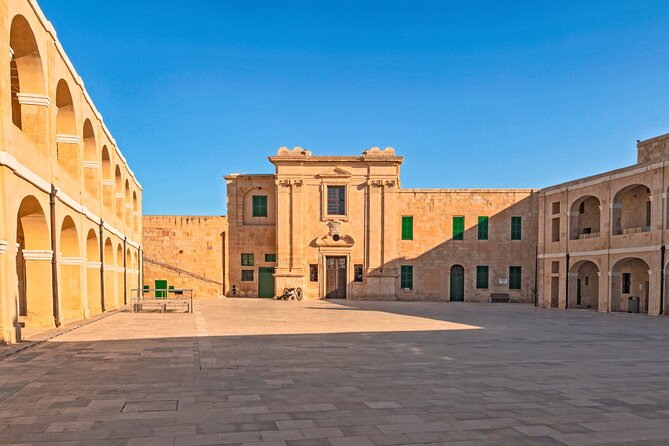
Start in Valletta with the National War Museum at Fort St. Elmo. The star-shaped fort sits at the end of the Sciberras Peninsula, between Marsamxett Harbour and Grand Harbour. Its position explains its importance: it helped control the entrances to both waterways.
Fort St. Elmo is closely linked with the Great Siege of Malta in 1565. Give yourself about an hour for the fort and museum. You will get the strongest sense of Malta’s military past here, especially if you enjoy old defenses, weapons, and views across the harbor.
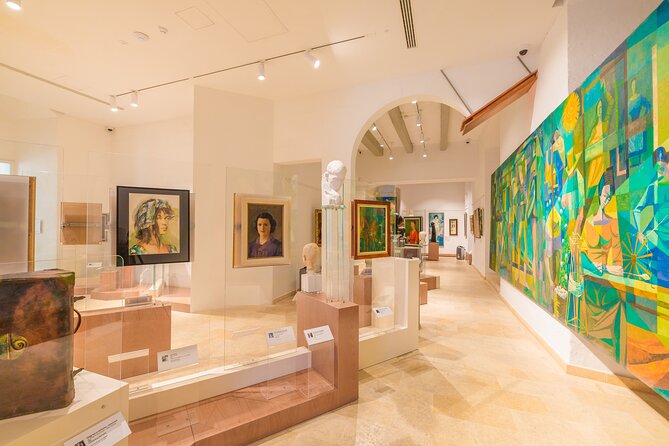
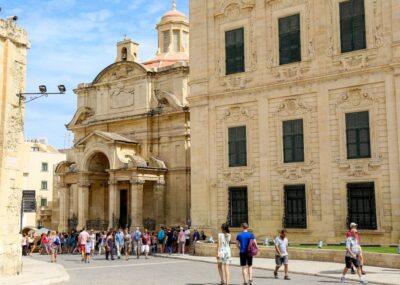
Nearby, MUŻA offers a different side of the capital. Housed in the Auberge d’Italie, the museum presents Maltese and foreign art across major European styles. It was formerly the National Museum of Fine Arts, and its move into the historic auberge gave the national collection a new setting.
I would use MUŻA as a change of pace after Fort St. Elmo. An hour is enough for a purposeful visit, though the value depends on your taste. If painting and sculpture are not high on your list, you may prefer to spend that time at another pass site.
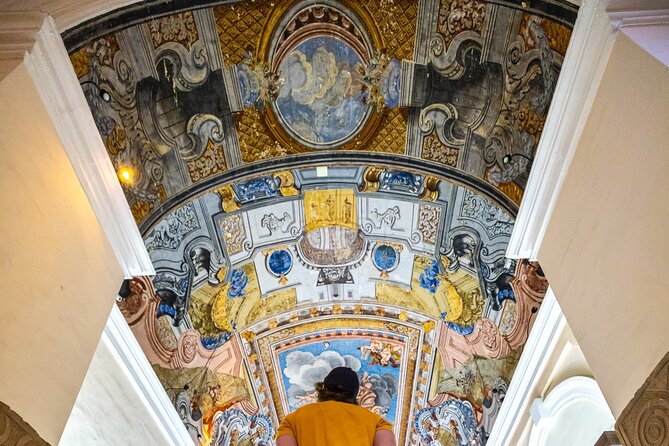
The State Rooms are another worthwhile Valletta stop, but they come with a warning. They occupy the Presidential Palace, a building developed from the early city founded after the 1565 siege. The palace served Grand Masters, British governors, and Malta’s first constitutional parliament before becoming the seat of the President and House of Parliament.
The State Rooms can close at short notice by presidential order. Check before walking across town with the pass in hand. If they are open, allow about an hour.
The Palace Armoury sits in the same broad historical orbit and focuses on the Order of St. John. You can see armor linked with Grand Masters Alof de Wignacourt and Jean de Valette, along with Ottoman armor, weapons, and artillery.
For many people, the Armoury is a better fit than an art museum because the objects connect directly to Malta’s fortresses and siege story. It also helps you understand who built and defended the island’s grand public spaces.
Mdina and Rabat: natural history, Roman life, and underground tombs
The National Museum of Natural History is in Mdina’s Palazzo Vilhena, a French Baroque palace rebuilt in 1726. The collection covers Maltese ecosystems on land and under water, with specimens ranging from minerals and fossils to insects, birds, reptiles, mammals, and fish.
The museum’s focus on local plants and birds gives it a clear sense of place. Look for material on the Maltese Centaury and the Blue Rock Thrush. Allow about an hour, then use your time in Mdina and nearby Rabat for the Roman and early Christian sites.
At the Domvs Romana, you get a glimpse into the private life of a Roman aristocrat. The house itself is not fully preserved, but its mosaics and surviving objects show how refined the original home was.
This is a compact stop, and an hour should be enough. It works well for anyone who wants more than military history and church architecture. The site is also a useful bridge between Malta’s prehistoric temples and its later Roman period.
St. Paul’s Catacombs offers a more unusual visit. The underground galleries and tombs date from the third to the eighth centuries CE. More than 30 hypogea form the wider St. Paul’s and St. Agatha’s complex, with over 20 open to the public.
Expect a visit that is atmospheric but not heavily staged. The underground spaces are the attraction. Some sections may feel bare, so come for the carved chambers, burial layout, and early Christian setting rather than a large display of objects.
One practical point matters here: site admission depends on the correct pass and current opening arrangements. Have your pass details ready, and check the QR code for each attraction’s hours before setting out. That simple step can prevent a long bus ride ending at a closed door.
The Three Cities: Fort St. Angelo and Malta’s seafaring past
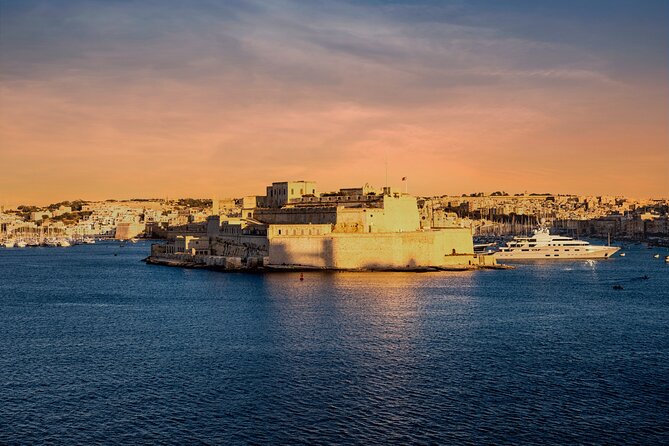
Across the Grand Harbour, Fort St. Angelo anchors the old city of Birgu. Its origins reach back to a medieval castle called Castrum Maris. The Order of St. John rebuilt it as a bastioned fort during the sixteenth century, and it served as the Order’s headquarters during the Great Siege.
A later reconstruction in the 1690s gave the fort much of its present form. Allow an hour, though you may want longer if you enjoy military architecture and harbor views.
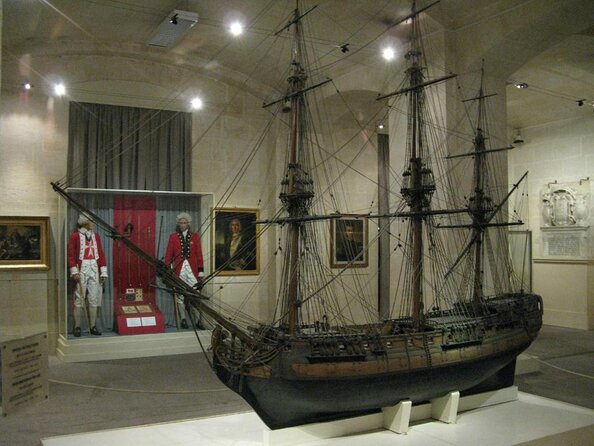
The Malta Maritime Museum is nearby in the former Royal Naval Bakery. The building was constructed in the 1840s as the main bakery for the Mediterranean Fleet. Inside, the collection covers Malta’s maritime story from prehistory to modern times and contains more than 20,000 artifacts.
This is one of the pass’s strongest pairings. Fort St. Angelo explains how Malta defended its harbors, while the Maritime Museum shows how ships, trade, naval power, and daily work shaped those same waters.
The harbor cruise adds a welcome change from museums and stone corridors. From the water, you see Valletta, the Three Cities, and the defensive relationship between the two sides of Grand Harbour. Free Wi-Fi is included on the cruise, though the real reason to take it is the view and the wider sense of geography.
Do not treat the cruise as a quick shuttle unless the schedule specifically says so. It is a sightseeing ride, and it may use a sizeable piece of your day. Check departure times before visiting Birgu so you are not left choosing between a boat trip and a final museum.
A few more Valletta half-days to weigh up
- From Malta: Full-Day Gozo UTV Tour with Lunch and Boat Ride
★ 4.6 · 4,408 reviews - The Original Valletta Walking Tour
★ 5.0 · 2,719 reviews - Valletta: 3-Hour Walking Tour
★ 4.7 · 1,605 reviews - From Malta: Full-Day Gozo Quad Tour with Lunch and Boat Ride
★ 4.8 · 1,419 reviews
Malta’s prehistoric temples: why these sites deserve time
Malta’s megalithic temples are the pass’s most distinctive sights. They are not minor ruins. Several are UNESCO World Heritage Sites, and some date to the fourth millennium BCE.
At Ta’ Ħaġrat in Mġarr, the larger temple dates to roughly 3600 to 3200 BCE, while the smaller temple dates to about 3300 to 3000 BCE. The scale is modest compared with later monuments, but the age is astonishing. You are looking at religious architecture created long before the pyramids of Giza.
Skorba Temples offer another look at Malta’s earliest Neolithic culture. Excavation began relatively late, in the 1960s, and the site has helped scholars understand the first periods of temple building on the islands.
Skorba is a good choice for travelers who prefer a quiet archaeological site to a polished museum. It may feel less immediately dramatic than Ħaġar Qim, so use the time to study the layout and imagine how the temple complex fitted into early village life.
The Ħaġar Qim and Mnajdra Archaeological Park is the major southern-coast visit. Ħaġar Qim sits on a ridge of globigerina limestone, the same local stone used throughout the temple architecture. The exposed setting helps you see the relationship between the stone, the coast, and the builders’ choice of material.
Mnajdra is about 497 meters from Ħaġar Qim. Built around the fourth millennium BCE, it is recognized as one of Malta’s ancient religious sites and has a protective tent completed in 2009.
Treat Ħaġar Qim and Mnajdra as one extended outing, not two quick tick marks. Each site is listed as about an hour, and the short distance between them still requires time on foot. Bring patience and plan around the southern bus route. This is exactly the kind of day where transport timing can determine how much you actually see.
Għar Dalam, Borġ in-Nadur, and Tarxien: the quieter archaeology
Għar Dalam Cave and Museum sits near Birżebbuġa. The cave is a 144-meter phreatic tube containing animal bones from species that became extinct in Malta at the end of the last glacial period.
The cave also gave its name to a phase of Maltese prehistory. The museum adds archaeological context, including pottery connected with early settlement. This stop suits you if you like geology, fossils, and the evidence of animals that once lived on the islands.
Nearby Borġ in-Nadur combines a Tarxien-phase megalithic temple with a Bronze Age village. It also includes Malta’s earliest fortification, while nearby fields contain Bronze Age cart ruts and silos.
The site is in open fields overlooking St. George’s Bay. That setting is part of its appeal, but it also means you should not expect the same enclosed museum experience you get in Valletta. Give it an hour and use it to connect the temple period with the later Bronze Age settlement.
The Ħal Tarxien Prehistoric Complex gives you a denser archaeological stop. Three attached temples were built in stages, beginning around 3100 BCE. The first is the most decorated, the middle temple has three pairs of apses rather than the usual two, and another smaller temple lies farther east.
Some decorated slabs were moved indoors to the Museum of Archaeology in Valletta for protection. The present entrance is a 1956 reconstruction, and the whole site was restored at that time. That does not make the visit worthless, but it helps you read the ruins with realistic expectations. You are seeing both ancient remains and modern conservation work.
How to fit the pass into three days
You should resist the urge to visit every listed site. The pass becomes tiring if you treat each one as a required hour-long appointment.
A sensible first day focuses on Valletta and the harbor:
- Fort St. Elmo
- MUŻA
- The State Rooms, if open
- Palace Armoury
- Harbor cruise
A second day can cover Mdina, Rabat, and the Three Cities:
- National Museum of Natural History
- Domvs Romana
- St. Paul’s Catacombs
- Fort St. Angelo
- Malta Maritime Museum
The third day belongs to the southern and northern archaeological sites. Choose a group rather than trying to conquer them all. Ħaġar Qim and Mnajdra make the strongest pair. Tarxien, Għar Dalam, and Borġ in-Nadur can form another full day, but adding Ta’ Ħaġrat and Skorba may be too ambitious once bus travel is included.
The pass also offers the coastal route to Comino and Gozo. That can be a fine use of a day, but it competes directly with the heritage sites. If your main goal is temples and museums, do not assume you can take the coastal route and still visit half the island afterward.
The hop-on hop-off buses run on two routes, according to the supplied details. One complete route can take up to six hours, depending on conditions and stops. That is useful for seeing the island, but it is not a fast urban bus. Leave room for delays, missed stops, and the walk from a stop to the attraction.
A repeated practical problem is finding the correct bus stop after getting off. Save the stop information, check the route map, and ask the driver where to rejoin the service before you leave. Pickups may be less dependable in the north, especially when only a few people are waiting.
Is $92.69 good value?
At $92.69 per person, the pass is not automatically a bargain. Its value depends on your habits.
If you visit only two or three low-cost sites, pay as you go may be cheaper. Malta’s individual admission fees can be modest, and one customer who visited a small number of attractions felt the pass required too much effort to justify the price.
The calculation changes if you visit several major sites, take the harbor cruise, use the buses for long cross-island journeys, and add the Comino and Gozo route. The pass is most useful when you want variety and would otherwise pay separately for transport and boat trips.
I would count your intended visits before buying. List the forts, catacombs, temples, and museums you genuinely want, then compare their separate prices with $92.69. Do not count a site that is closed on your only available day.
The pass also saves decision-making time. That has value if you are visiting Malta for a short break and want a ready-made framework. It does not remove the need to plan. In fact, the more you want from the pass, the more carefully you must check hours and routes.
Who will get the most from this pass
I would recommend it to an active first-time visitor who wants Malta’s major historical themes in one package. It suits you especially well if you enjoy forts, archaeology, museums, and boat rides more than a slow beach holiday.
Families may appreciate having transport and several indoor stops available, though young children may not want an hour at every museum or temple. History-minded couples and solo visitors can get strong value if they start early and group sites by area.
You may want to skip it if you dislike fixed transport schedules, prefer to linger at just a few sights, or are staying far north and plan to make only short excursions. The pass is also a poor fit if your three days include substantial free time for beaches, restaurants, and independent wandering.
The human help can make a difference at the point of purchase. Sandra Fenech, Monalisa, Gabriella, Diane Zammit, Giancarlo, and Allen are named in supplied customer comments as representatives who explained routes and options. Staff names and availability can change, so do not assume a particular person will be on hand, but ask for a clear explanation of validity, bus stops, cruise times, and closed sites before you leave the sales desk.
Final verdict: buy it only with a working plan
The Malta Heritage Pass gives you an unusually broad look at the islands. Forts explain the battles, catacombs show early Christian burial customs, Roman mosaics reveal private life, and the temples reach back thousands of years before recorded Maltese history.
I like the combination of admission and transport, and the harbor cruise adds a useful view of Valletta and the Three Cities. But the pass can become expensive if you visit only a few attractions, and bus schedules, closures, and unclear validity terms can spoil the value.
Buy it if you will visit several paid sites, use the buses for long routes, and take at least one cruise. Before booking, confirm whether your product lasts three days or six, scan the QR code for current opening hours, and build each day around nearby attractions. If you will only see two or three places, pay as you go.
FAQ
How much does the Malta Heritage Pass cost?
The listed price is $92.69 per person.
How long is the pass valid?
The experience is described as a three-day pass, approximately. However, operator information supplied with the experience also describes the Heritage Pass as valid for six days. Check the validity printed on your booking confirmation or ticket before planning.
How many attractions are included?
The pass provides access to more than 20 attractions. Named sites include Fort St. Elmo, Fort St. Angelo, Ħaġar Qim, Mnajdra, Ta’ Ħaġrat, Skorba, Tarxien, Għar Dalam, and St. Paul’s Catacombs.
Is transportation included?
Yes. The pass includes unlimited use of the hop-on hop-off bus, a Valletta and Three Cities harbor cruise, and a coastal pass route to Comino and Gozo.
Is Wi-Fi available on the cruises?
Yes. Both cruises include free Wi-Fi on board.
What are the listed opening hours?
The listed opening hours are Monday through Sunday, 8 a.m. to 6 p.m. Individual sites can have different conditions, and the State Rooms can close at short notice.
Is the pass suitable for most people?
The supplied information says most people can participate, and the experience is near public transportation.
Can I cancel for a full refund?
Yes, if you cancel at least 24 hours before the experience start time. Cancellations made within 24 hours are not refunded, and changes within that period are not accepted. If poor weather causes the experience to be canceled, you will be offered another date or a full refund.
Just added around Valletta
- Tour of Malta (Private Driver) Including Lunch Platter & Wine in the countryside★ 4.5 · 3 reviews
- Private Tour in Malta Prehistoric Temples & Mdina★ 5.0 · 4 reviews
- Private Tour of the Maltese Island (Private Driver)★ 5.0 · 4 reviews
- Valletta: Express Walk with a Local in 60 minutes★ 4.9 · 4 reviews
- Valletta Private Historical and Cultural Walking Tour★ 5.0 · 4 reviews
- Shore Excursion: Private Full-Day Tour of Valletta & Mdina★ 5.0 · 4 reviews
- Leisure Pass in Malta★ 4.0 · 4 reviews
- Malta tour 3Cities , Marsaxlok ,Blue grotto Hagar qim★ 4.9 · 4 reviews
Valletta Tours, compared.

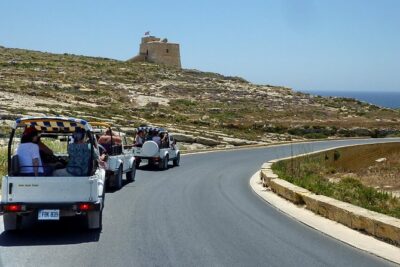
Full-Day Gozo UTV Tour with Lunch and Boat Ride
Read our review →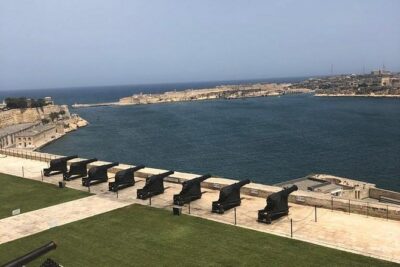
Full-Day Gozo Quad Tour with Lunch and Boat Ride
Read our review →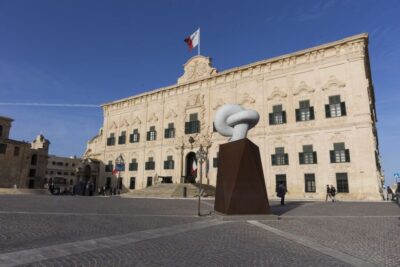

Gozo Full-Day Jeep Tour with Private Boat to Gozo & return
Read our review →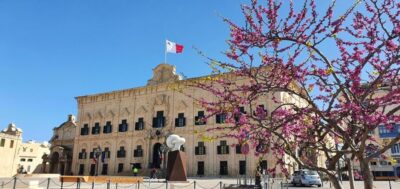
Browse the lists this tour appears in