
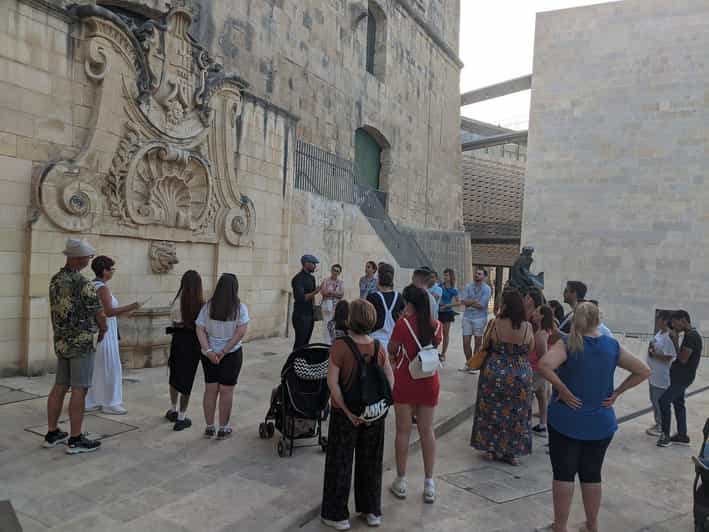
Reviewed · VALLETTA TOURS
The Grand Tour of Valletta: A walking tour of Valletta.
Valletta was built for war, but its story is full of odd human details: lavish knights, strict vows of chastity, dramatic sieges, and a city nearly torn apart in World War II. This two-hour walk gives you that story while leading you from Triton Fountain to the Upper Barrakka Gardens and central Valletta.
I like the theatrical storytelling, especially if your guide has the acting background noted by Kathryn. I also like the small-group approach, which should make it easier to ask about the Knights, Malta’s culture, or any building that catches your eye. Guides such as Rafa, Leila, Layla, and Leyla have earned especially warm praise for their clear explanations and friendly manner.
The main consideration is pace. The tour covers a lot of history in two hours, and one recent participant preferred more walking and shorter information stops. This is a strong introduction to Valletta, but it is not a quiet, leisurely exploration of every lane.
Key points to know before you book
- The Knights of Malta are the main thread: You’ll connect the crusades, the Great Siege of 1565, the order’s unusual rules, and its lasting influence.
- Upper Barrakka Gardens brings the best pause: Expect about 15 minutes for views, photographs, and explanation.
- The guides make or break the experience: Rafa, Leila, Layla, and Leyla have been praised for warmth, clear history, and lively presentation.
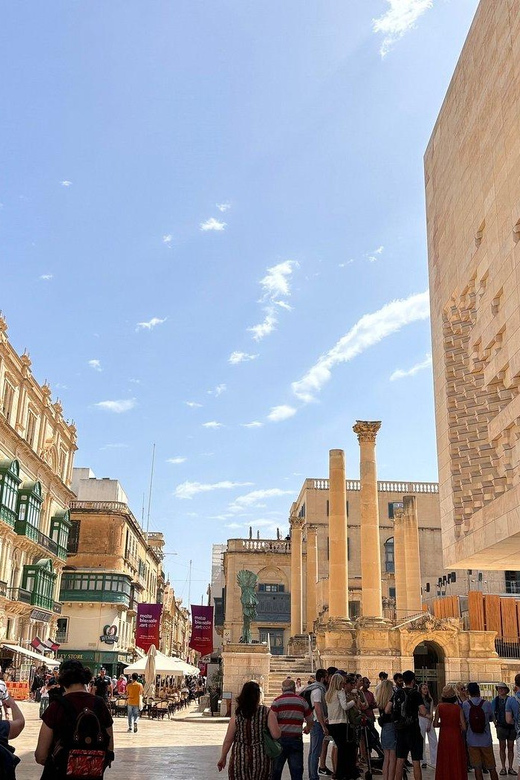
- You see major landmarks from the outside: The walk includes the Royal Opera House, Auberge de Castille, and views toward famous Valletta sights, but museum entry is not included.
- The price is modest for a city orientation: At $24, you’re paying for a focused two-hour introduction, not a full museum tour.
- The format suits first-time visitors: You finish at Misraħ San Ġwann with a useful sense of Valletta’s layout and past.
Why Valletta’s story works well on foot
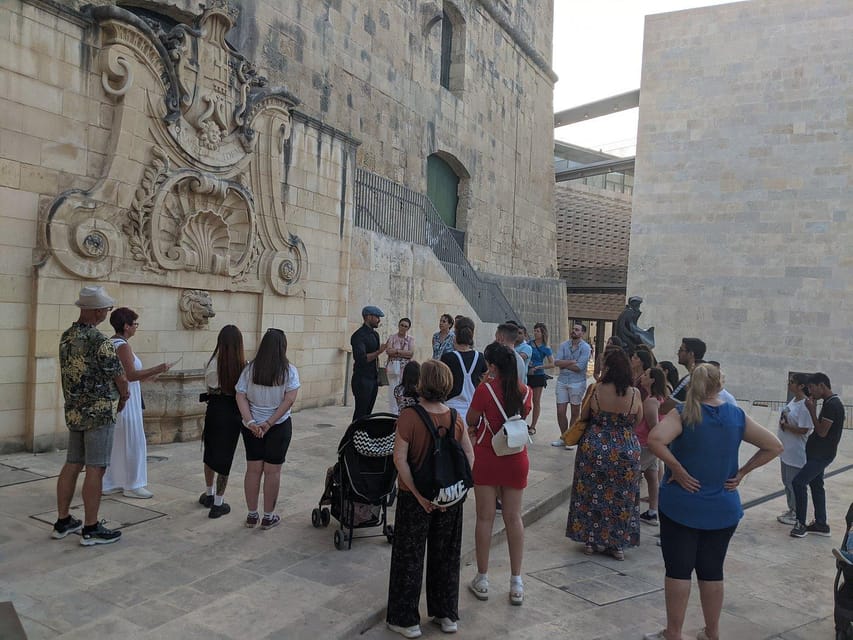
Valletta is compact, fortified, and packed with political and religious drama. That makes it a good city for a walking tour because the buildings are not just decoration. Their positions, facades, and views tell you how the Knights of Malta wanted to defend, govern, and display their power.
The guide connects the city to the Great Siege of 1565, remembered as one of the bloodiest battles of the 16th century. You’ll hear how the Knights faced the Ottoman forces and how the victory shaped the fortified city that followed.
I like this approach more than a simple list of dates. You get a reason for the walls, the broad streets, the grand residences, and the formal squares. The best guides also add the human details: how a knight lived, how much luxury sat beside religious duty, and how a vow of chastity fitted into the order’s public image.
That contrast gives the tour its character. The Knights were religious warriors, but they also lived in impressive residences and followed a polished social code. The stories about their lavish lifestyle and strict vows help you see them as people, not just stone statues from a textbook.
More Walking Tours in Valletta
- The Original Valletta Walking Tour
★ 5.0 · 2,719 reviews - Valletta: 3-Hour Walking Tour
★ 4.7 · 1,605 reviews - Valletta: Guided City Walking Tour
★ 4.8 · 1,256 reviews
Starting at Triton Fountain
The meeting point is around Triton Fountain, where you’ll look for a guide holding a House of Tours board. This is a practical starting point because it places you just outside Valletta’s main entrance and gives the guide a natural place to explain the city’s setting.
Arrive with enough time to find the board. The supplied information does not give a precise meeting time beyond the selected start time, so checking availability when you book matters.
From here, the walk moves into the fortified city. You’ll begin forming a mental map of Valletta instead of seeing its sights as disconnected stops. That is useful on a first day, especially if you plan to return later for St. John’s Co-Cathedral, the Grandmaster’s Palace, or the city’s museums.
The tour is in English, and the guide is live rather than audio-recorded. That makes a real difference in Valletta, where a quick question can clarify a name, a symbol, or a bit of Knights-era terminology before you lose the thread.
The Royal Opera House and the marks of war
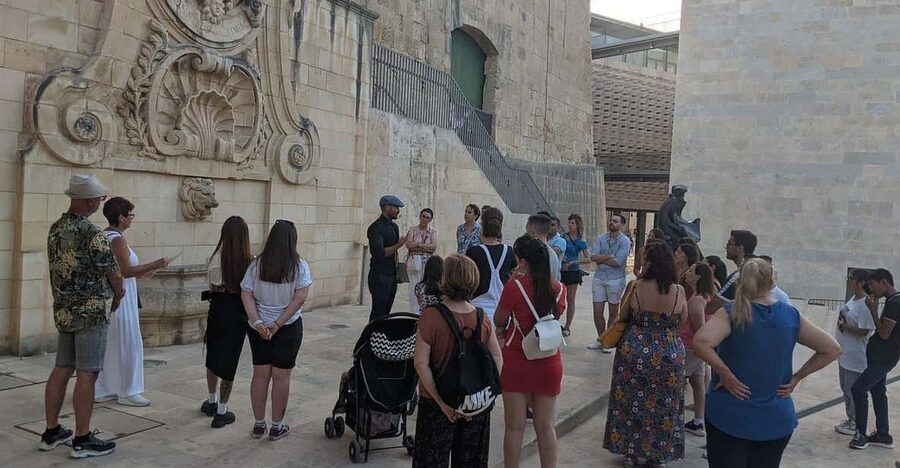
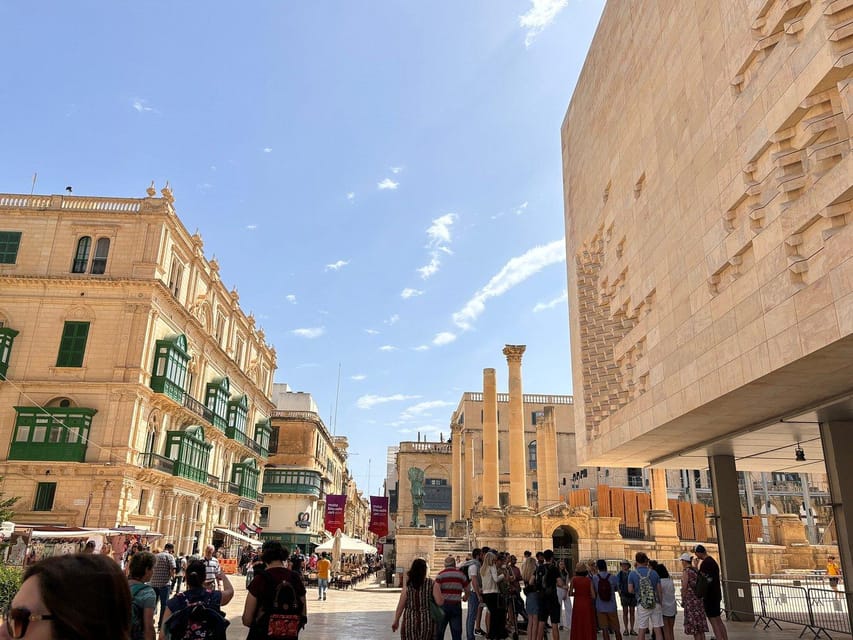
The Royal Opera House receives about eight minutes of guided attention. The stop helps bring the story forward into more recent times, particularly Valletta’s experience during the Second World War.
The city was almost destroyed in the conflict, so the opera house is a useful reminder that Valletta’s past is not limited to the Knights. Its story runs from crusading orders and fortified walls to modern war and rebuilding.
Eight minutes is not enough for a full architectural study, but that is not the point here. You get a concise explanation and then keep moving. I’d treat this stop as a prompt to return if the building or wartime history catches your interest.
The short stop can also help keep the tour moving. If you prefer a slow architectural walk with long pauses, you may find the format brisk. If you want a clear overview before exploring alone, the timing works well.
Auberge de Castille and the Knights’ power
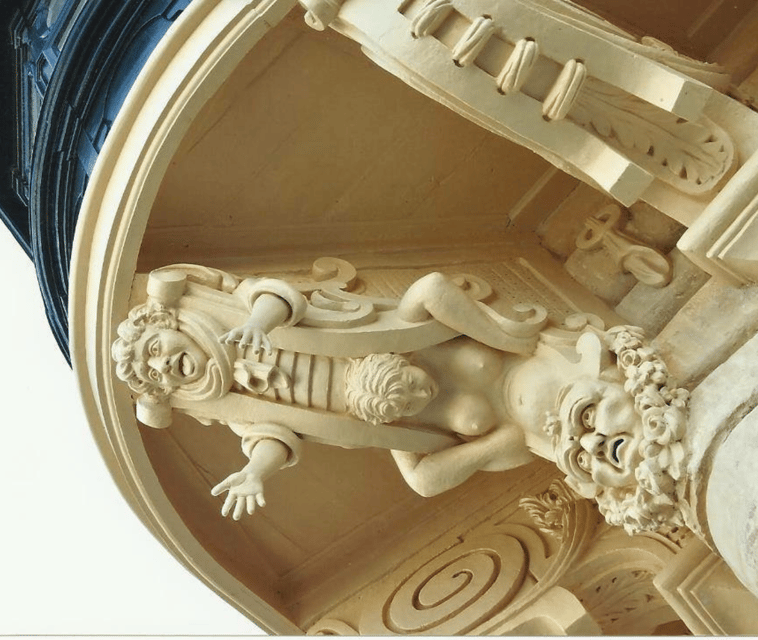
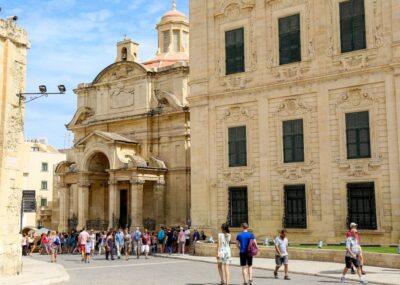
The next major stop is Auberge de Castille, with about eight minutes of guided explanation. This is one of the places where the order’s hierarchy and international structure become easier to understand.
The word auberge refers to the residences associated with different groups within the Knights of St. John. The Castile connection points to the order’s wider European reach, and the building gives the guide a solid setting for explaining how the Knights organized themselves.
This is also where the tour’s focus on status and ceremony comes into view. Valletta was not only a military outpost. It was a seat of power, and the grand buildings helped express that power to residents, foreign visitors, and rival states.
You’ll likely hear anecdotes and gossip alongside the formal history. That mix is one reason the theatrical style works. A bare explanation of rank and architecture can feel dry, while a story about the lives and habits of the Knights gives the building a pulse.
The tour does not include museum entrance tickets. That keeps the cost down, but it also means the value lies in the guide’s interpretation and the city streets themselves. If you want to see interiors, plan and pay for those separately.
Same islands, a completely different day out:
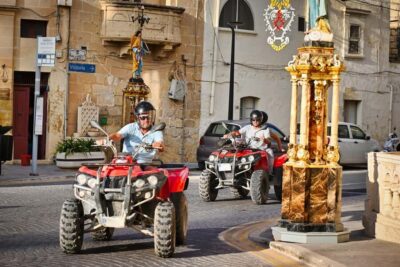
- From Malta: Full-Day Gozo UTV Tour with Lunch and Boat Ride
★ 4.6 · 4,408 reviews - From Malta: Full-Day Gozo Quad Tour with Lunch and Boat Ride
★ 4.8 · 1,419 reviews - Valletta: Street Food and Culture Walking Tour
★ 4.8 · 1,251 reviews - Gozo Full-Day Jeep Tour with Private Boat to Gozo & return
★ 4.5 · 1,048 reviews
Upper Barrakka Gardens and the best photo stop
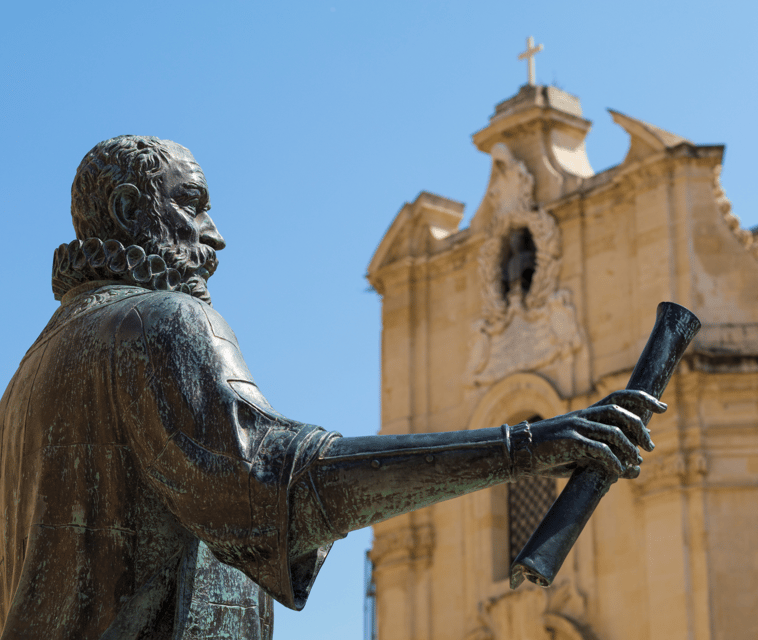
Upper Barrakka Gardens gets the longest listed pause, about 15 minutes. It is the natural place to stop, take photographs, and look across Valletta’s wider setting.
The gardens offer a break from the flow of facts. You can listen, look, and ask questions without feeling that you are missing the next corner. Bring your camera, but also use the pause to get your bearings. A good view can make the city’s defensive position easier to understand than a paragraph of explanation.
This is one of the tour’s most useful stops for first-time visitors. After hearing about sieges, fortifications, and the Knights’ military role, you can connect those ideas to the city’s elevated position and surrounding views.
The information provided does not promise a long garden visit or time to explore every part. Think of it as a guided photo stop rather than a full garden tour. I would return on my own if you want more time for the views.
The gardens also give you a natural chance to ask questions. The guides praised by past participants, including Rafa and Leila, were especially good at handling questions and explaining Malta’s origins, culture, and links to the Knights.
The famous sights and the stories between them
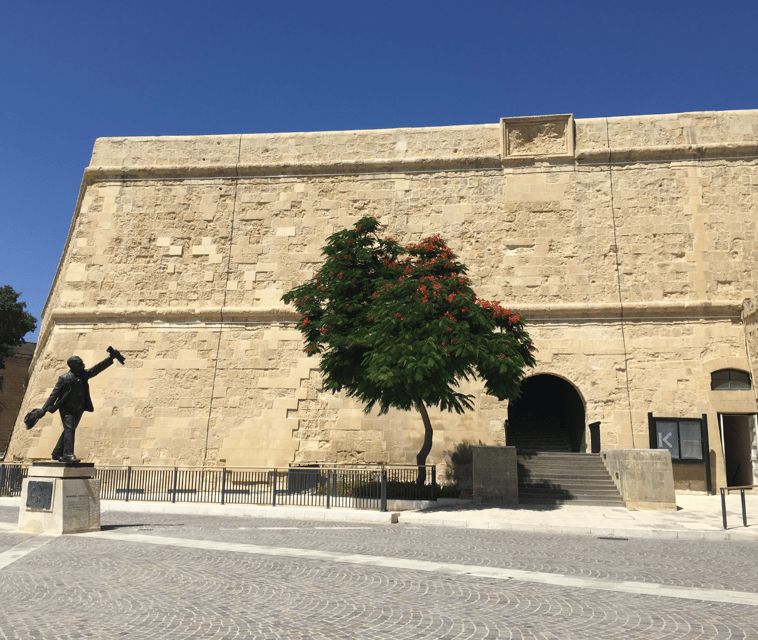
The experience is billed as an exploration of Valletta’s major attractions, including St. John’s Co-Cathedral and the Grandmaster’s Palace. The specific guided stops listed are the Royal Opera House, Auberge de Castille, and Upper Barrakka Gardens, so you should not assume that every famous sight includes a full exterior explanation or interior visit.
That distinction matters. This is a city orientation, not an admission-based sightseeing package. You will hear about the places that define Valletta and see important parts of the city, but museum tickets and other entrance fees are not included.
The short walks between stops are where the guide can add smaller tales, local anecdotes, and gossip. These details often make the difference between remembering a street and simply passing through it.
I particularly like the promise of stories that reach from the crusades to the present day. It gives Malta a longer timeline than the usual Knights-only presentation. You get the order’s rise, its life in Valletta, the city’s wartime damage, and its continuing cultural presence.
Still, ask questions early if a subject interests you. Two hours passes quickly, and a guide has to balance the group’s interests with the planned route.
What the guide’s style adds
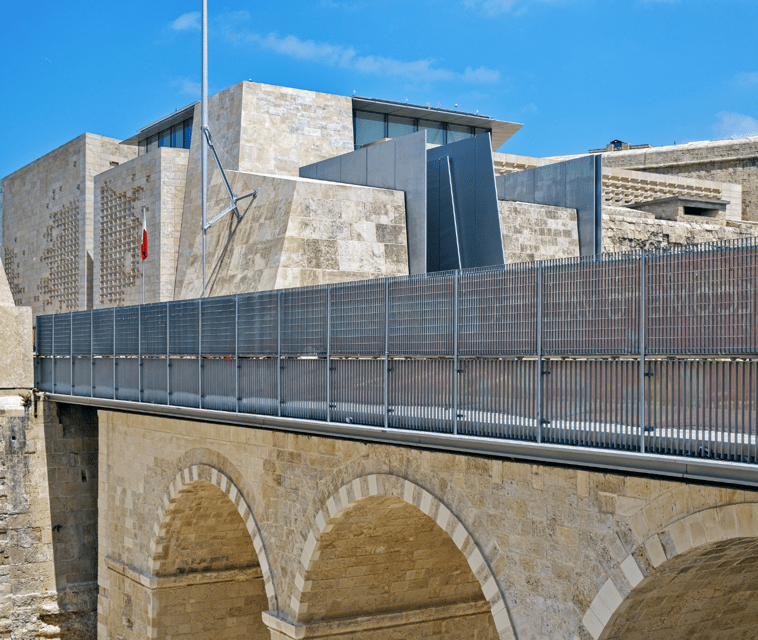
The strongest feature of this walk is the guide. The tour company calls for professional guides, but the personal reports point to a wide range of individual strengths.
Rafa is described as making the subject fun and interesting while handling questions well. Leila, Layla, and Leyla are praised for clear explanations, friendly conversation, and detailed accounts of Valletta’s past. One guide had a background in arts and acting, which fits the promise of theatrical storytelling.
That style should suit you if you like history delivered through characters and scenes rather than a formal lecture. A guide who can shift voice, build suspense, and explain an odd custom can make the Knights easier to remember.
It is also worth keeping expectations sensible. The experience has a set two-hour length, so theatrical presentation does not mean a full performance at every stop. The stories support the walking tour rather than replace it.
I would choose this walk for a first visit, then use what you learn to decide which interiors deserve your own time. You’ll have a better idea of how the city fits together and which historical threads you want to follow.
Price, pace, and practical value
At $24 per person, the tour is fairly priced for a two-hour guided introduction to Valletta. You are not paying for transport, a meal, or entry tickets. You are paying for a live English-speaking guide, route planning, historical context, and the chance to ask questions.
That is good value if you are new to Valletta or want a clear beginning before exploring alone. It is less compelling if you already know the city well and prefer to read plaques or wander without a set pace.
The tour is designed to avoid large groups, which should make the experience more personal than a crowded city walk. No exact group size is given, so I would not book it expecting a private tour.
The walk lasts two hours. Wear comfortable shoes and bring water, especially in warm weather. The supplied information confirms that the tour is wheelchair accessible, which is important when choosing a city walk, though the details of surfaces and exact access conditions are not provided.
You can cancel up to 24 hours ahead for a full refund, and the reserve-now, pay-later option lets you hold a place without paying immediately. Those terms are useful when your Malta plans are still changing.
Who should take this Valletta walk?
I would recommend it most strongly to:
- First-time visitors who want historical context before independent sightseeing
- People interested in the Knights of Malta, military history, and religious orders
- Cruise or short-stay visitors with only a small amount of time in Valletta
- Families and mixed-age groups who prefer stories to long museum lectures
- Visitors who want an English tour with time for questions
- Anyone who likes a guide with energy and a touch of performance
I would be more cautious if you want extended time inside St. John’s Co-Cathedral, the Grandmaster’s Palace, or museums. Those admissions are not included, and the walk focuses on orientation, stories, and selected outdoor locations.
I would also look elsewhere if your ideal tour means constant walking with very short talks. The stop at Upper Barrakka Gardens lasts around 15 minutes, while the Royal Opera House and Auberge de Castille receive about eight minutes each. One participant found the information stops a little long and wanted more movement.
Should you book the Grand Tour of Valletta?
Book it if you want Valletta’s main story explained in plain English, with enough anecdotes to keep the Knights from becoming a blur of dates and titles. The price is reasonable, the route covers useful landmarks, and the guides have shown a clear ability to answer questions and make the past feel personal.
I would book it early in your stay, then return to the places that interest you most. Choose it especially if you enjoy theatrical history and want an introduction rather than a museum-heavy tour.
Skip it if you already have a strong grasp of Valletta or want a deep visit to specific interiors. For most first-time visitors, though, this is a sensible way to get oriented, understand why the city looks the way it does, and begin exploring with better questions.
FAQ
How long does the Grand Tour of Valletta last?
The walking tour lasts two hours. Starting times vary, so you need to check availability for the date you want.
Where does the tour begin?
The meeting point is Triton Fountain. Look for the guides holding a House of Tours board.
Where does the tour finish?
The walk finishes at Misraħ San Ġwann.
What language is the tour conducted in?
The live tour guide speaks English, and English is the listed tour language.
Are museum entrance tickets included?
No. Museum entrance tickets are not included in the $24 price.
Can I cancel the booking?
Yes. You can cancel up to 24 hours in advance for a full refund. You can also reserve now and pay later.
Just added around Valletta
- Tour of Malta (Private Driver) Including Lunch Platter & Wine in the countryside★ 4.5 · 3 reviews
- Private Tour in Malta Prehistoric Temples & Mdina★ 5.0 · 4 reviews
- Private Tour of the Maltese Island (Private Driver)★ 5.0 · 4 reviews
- Valletta: Express Walk with a Local in 60 minutes★ 4.9 · 4 reviews
- Valletta Private Historical and Cultural Walking Tour★ 5.0 · 4 reviews
- Shore Excursion: Private Full-Day Tour of Valletta & Mdina★ 5.0 · 4 reviews
- Leisure Pass in Malta★ 4.0 · 4 reviews
- Malta tour 3Cities , Marsaxlok ,Blue grotto Hagar qim★ 4.9 · 4 reviews
Valletta Tours, compared.

Full-Day Gozo UTV Tour with Lunch and Boat Ride
Read our review →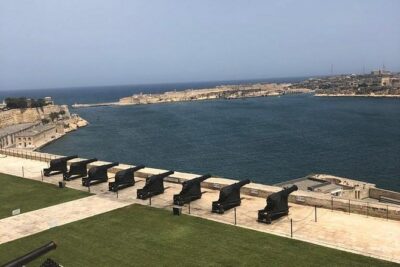
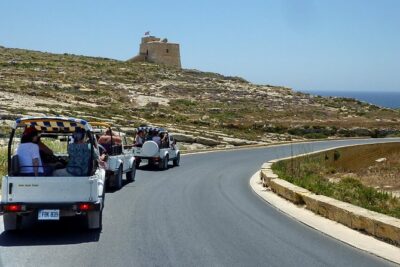
Full-Day Gozo Quad Tour with Lunch and Boat Ride
Read our review →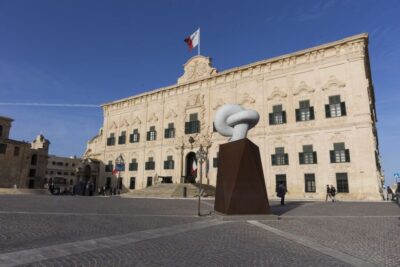

Gozo Full-Day Jeep Tour with Private Boat to Gozo & return
Read our review →
Browse the lists this tour appears in