
Reviewed · BLUE GROTTO TOURS
Malta: Prehistoric Temples, Limestone Heritage & Blue Grotto
Malta’s oldest stonework and most famous coastal view fit into one busy morning here. You’ll see Ħaġar Qim, a 5,000-year-old temple complex, then connect Malta’s pale limestone to the quarries that shaped its towns and churches before finishing at the Blue Grotto.
I like the way the tour joins archaeology with geology, rather than treating the sites as unrelated photo stops. I also like the price: at $41, hotel pickup, transport, a guide, and two admission fees are included. The tradeoff is time. Four hours covers a lot, but some people find the temple and Blue Grotto stops feel rushed.
Key points to know before booking
- See megaliths older than the Egyptian pyramids: Ħaġar Qim dates to about 3600 to 3200 BC.
- Learn why Malta is built from limestone: The Limestone Heritage Park explains the island’s 22-million-year stone story inside an old quarry.
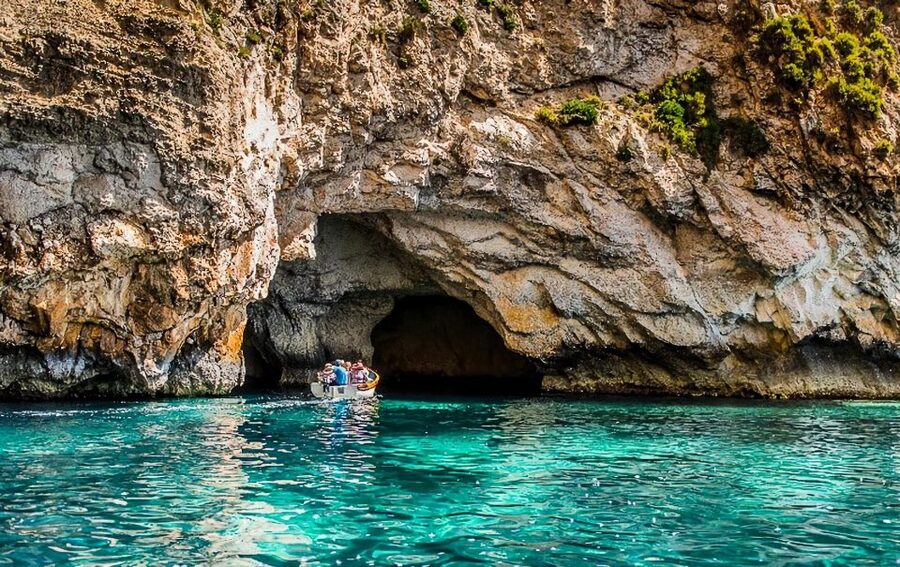
- Finish at the Blue Grotto: The sea caves and bright blue water are the visual high point, especially when the boat service is running.
- Expect an early pickup window: Hotel collection can fall between 8:30 and 9:10 AM, and the exact time must be confirmed with the operator.
- Keep cash ready: The optional Blue Grotto boat costs about €10 for adults and €5 for children.
- Plan for a brisk pace: The tour is best for fitting in major southern Malta sights, not for lingering at each one.
A smart half-day introduction to southern Malta
This tour works because the three stops tell different parts of the Maltese story. At the quarry, you learn about the material. At Ħaġar Qim, you see what prehistoric builders did with it. At the Blue Grotto, you get the coastal setting that makes southern Malta so memorable.
The route lasts four hours, including transportation and hotel pickup and drop-off from mainland Malta. That makes it useful if you have only a few days in Malta, or if you want someone else to handle the roads, parking, admissions, and timing.
The $41 price is fair for what is included. You are not paying separately for the two main entries or the bus, and the guide adds context that is easy to miss when visiting archaeological sites alone. The price does not include food, drinks, or the Blue Grotto boat, so budget another €10 if you want to go on the water.
The main weakness is the tight schedule. One person found 30 minutes at the Blue Grotto too short after taking the boat, since there was little time left for photos. Another wished for more time at Ħaġar Qim and the nearby museum. If you want a slow, detailed visit, choose a full-day outing instead.
More Blue Grotto trips:
- Blue Grotto & Sunday Market at Marsaxlokk Fishing Village
★ 3.6 · 803 reviews - Malta: Marsaxlokk, Blue Grotto, and Qrendi Guided Tour
★ 4.1 · 547 reviews - Malta: Blue Grotto, Dingli, Rabat, Mdina, Ta Qali & Mosta
★ 4.2 · 75 reviews
The Limestone Heritage Park puts Malta’s stone in context
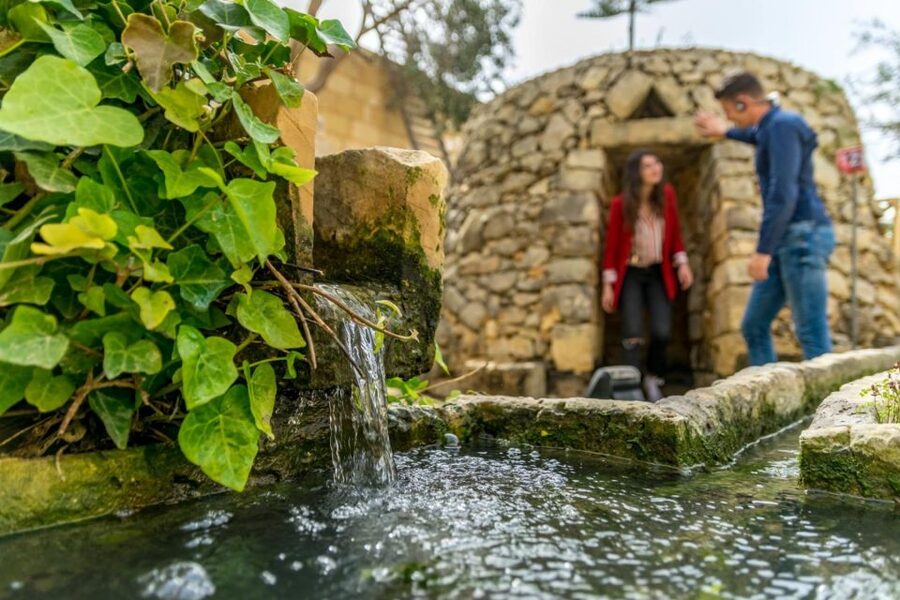
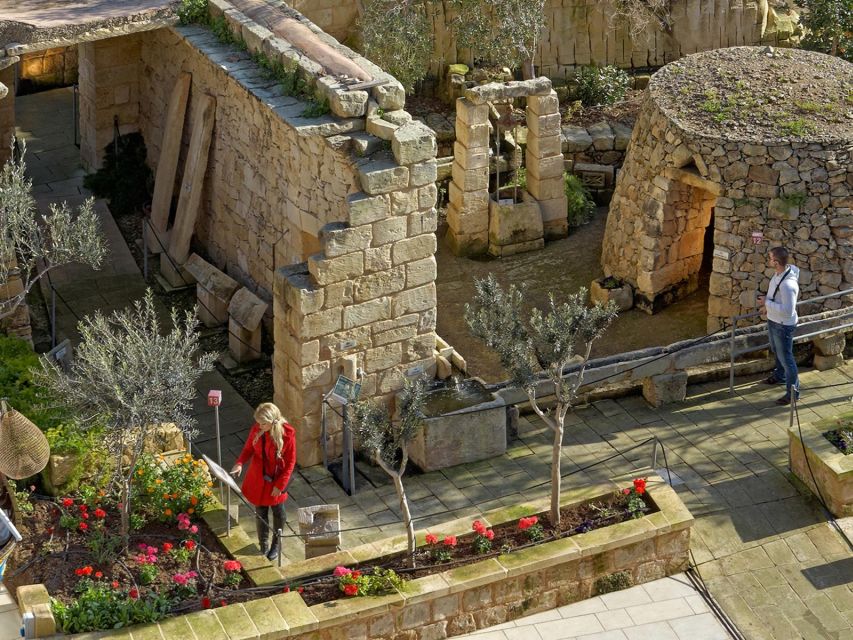
Your first stop is usually the Limestone Heritage Park and Gardens in Siġġiewi, a traditional Maltese village. The attraction occupies one of Malta’s old quarries and explains the stone that has shaped the island’s buildings, streets, churches, walls, and monuments.
The site presents limestone as more than a building material. The stone records about 22 million years of Malta’s geological past, and the park connects that story to local work and culture. You get an audio-visual presentation followed by an informative walk-through, giving you a useful base before seeing the prehistoric temples.
I especially like this stop because it answers a simple question: why does Malta look the way it does? The pale stone is everywhere, but without this explanation it can blur into background scenery. Here, you begin to notice its color, texture, and use.
The audio presentation is available in several languages, and one visitor was pleased to find Danish among the choices. The format can be helpful if your live tour language is not your first language. Still, the stop is not designed for endless wandering. The group schedule keeps everyone moving.
Some people arrive unsure what to expect and find the quarry center more engaging than anticipated. That is partly because it gives physical meaning to the rest of the morning. Once you see the quarry, Ħaġar Qim feels less like an isolated ruin and more like part of Malta’s long relationship with stone.
Ħaġar Qim reveals Malta’s prehistoric scale

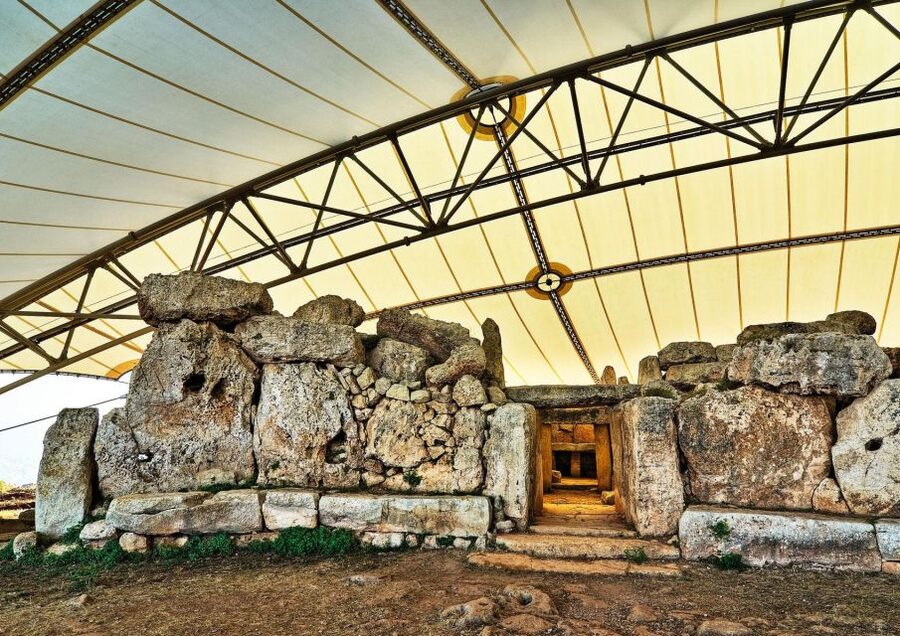
The megalithic temples of Ħaġar Qim are the tour’s strongest historical stop. The complex dates from roughly 3600 to 3200 BC, making it more than 5,000 years old and about a thousand years older than the pyramids of Egypt.
That age alone is impressive, but the stones make the place real. The main building and the remains of at least two other structures sit on a hill above Malta’s southern coast. Along the outer wall, one megalith rises about 5.2 meters, while another is estimated to weigh close to 20 tons.
Your guide is important here. Without explanation, the site can look like a collection of huge weathered blocks. A good guide points out the layout, the building methods, and the importance of the surviving pieces. Guides such as Maria, Anna, Mary, Phillip, and Novka have been praised for clear explanations and a strong interest in archaeology. Your guide may be someone else, but the activity is offered in English, German, Spanish, French, or Italian.
The setting adds to the experience. The temple stands on the southern edge of Malta, looking toward the sea and the islet of Filfla. You get open coastal views from the hilltop, with the ancient stonework placed against a wide horizon.
Allow for some walking on uneven ground. The tour is not suitable for wheelchair users or people with mobility impairments, and comfortable shoes are a must. The site is exposed, so practical clothing and protection from the sun make sense, though the supplied information does not specify any required dress code.
The schedule may not allow time for every nearby feature. A visitor specifically wished to see the Mnajdra temple beside Ħaġar Qim but found there was not enough time. That is a useful warning: this tour gives you the main Ħaġar Qim visit, not a complete tour of every archaeological site in the area.
Blue Grotto is the scenic finale
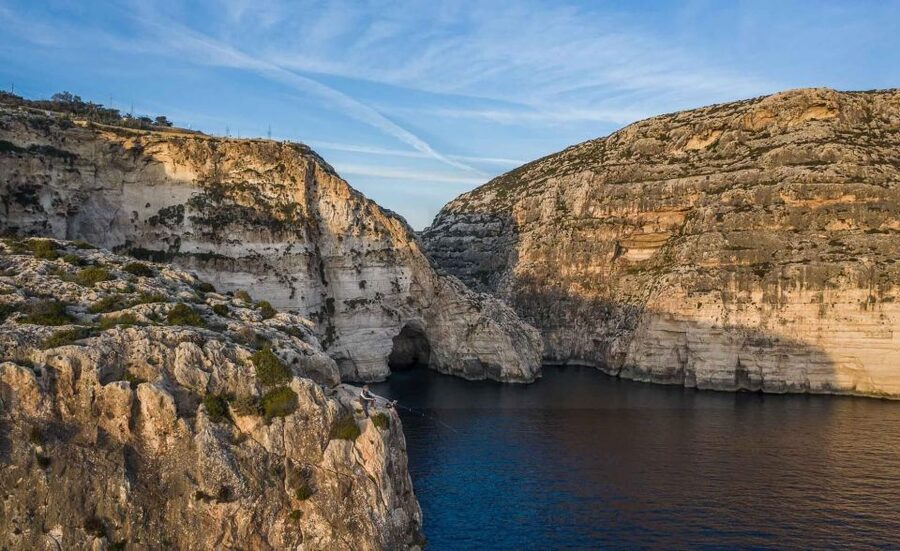
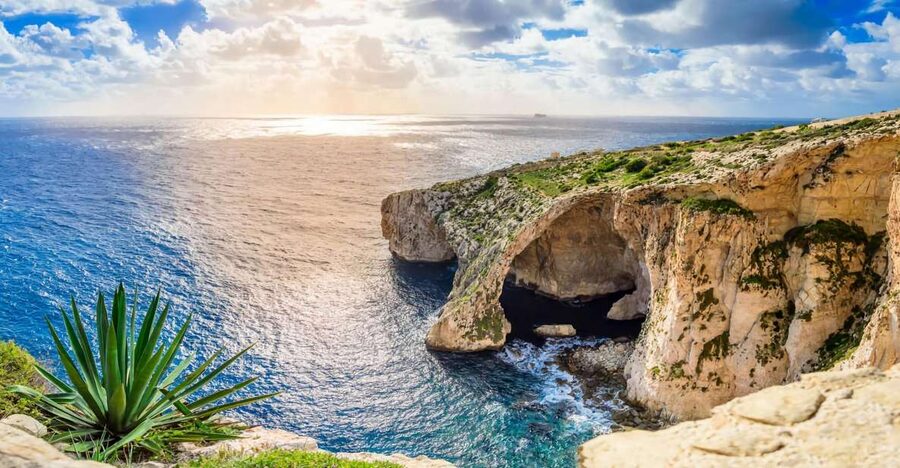
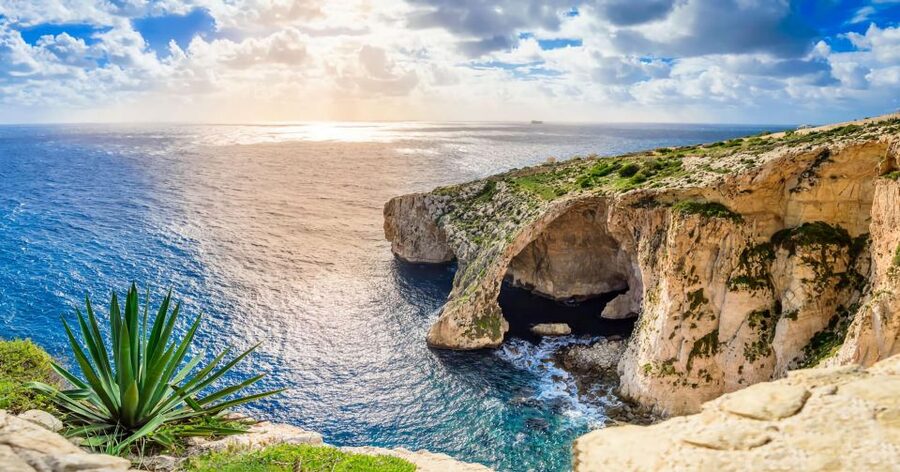
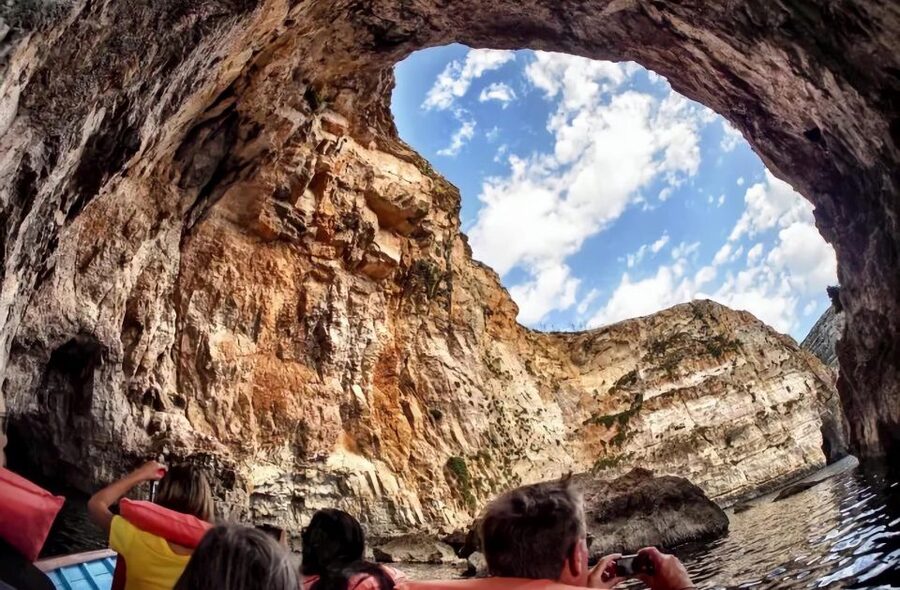
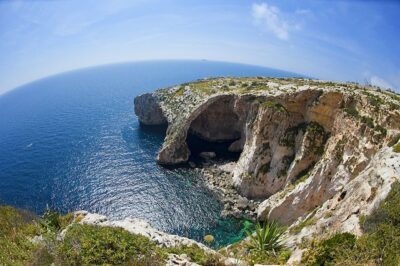
The Blue Grotto is the most immediately dramatic stop. From the coast, you can look across a group of seven sea caves, steep rock formations, and water that can appear intensely blue in the right conditions.
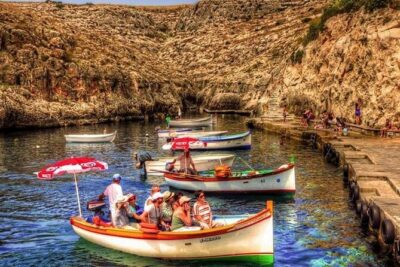
The view is free of extra charge once you reach the stopping point, but the optional boat ride costs about €10 for adults and €5 for children. You pay locally, and the boat only runs when the weather and sea conditions allow.
I would treat the boat as a bonus, not as a guarantee. Wind has stopped the service on some outings, and that is outside the operator’s control. Even when boats are not operating, you can still see the caves and coastal rock from land. Still, the boat makes the caves easier to appreciate from below and can be the high point of the morning on a calm day.
Timing matters here. The stop may give you about 30 minutes for the boat and the viewpoint, depending on the day’s exact schedule. If you take the boat, you may have little time for photographs, shops, or a drink afterward. If you skip the boat, the area can feel less substantial, since some of the nearby time is spent around shops and bars.
I would choose the boat if the sea is calm and the line is moving quickly. I would skip it if conditions look doubtful or if your priority is taking photographs from the viewpoint. Keep cash with you, since the boat fee is paid on location and can change without notice.
More history walks around Malta:
- Maltese Islands History Audio-Visual Show and La Sacra Infermeria Tour
★ 4.0 · 344 reviews - Valletta: Self-Guided Historical Walking Tour (Audio Guide)
★ 3.7 · 251 reviews - Wonderful Valletta, gastronomy, art, and history in the Mediterranean
★ 4.5 · 72 reviews - The Dark History of Valletta – Walking Tour
★ 5.0 · 50 reviews
Guides make the archaeology easier to understand
The strongest part of this experience is often the live guiding. Names that appear in the guide team include Anna, Maria, Phillip, Donna, Mary, Novka, Antoinette, Jennifer, and Chantell. The exact guide is not guaranteed, but the pattern is clear: the tour depends heavily on someone explaining what you are seeing.
At Ħaġar Qim, that matters most. A guide can turn a wall, chamber, or standing stone into evidence of an organized prehistoric society. At the Limestone Heritage, the guide links quarrying to Maltese culture. At the Blue Grotto, the commentary helps place the coastal formations within the wider southern route.
The tour language is the language selected at booking, although a multilingual guide may sometimes give commentary in up to two languages. That can make the explanations slightly slower or less detailed than a single-language tour, so confirm your language choice before paying.
Group size and crowding can affect how much you hear. One person found the museum audio moving faster than the group could walk and felt that a smaller group would have helped. Stay close to the guide, especially at Ħaġar Qim, and ask questions when the group stops rather than trying to catch every word while walking.
A deaf visitor found the guide willing to answer questions and adjust when spoken commentary was difficult to hear. That is encouraging, but the tour is not listed as suitable for people with mobility impairments, and no formal accessibility service is promised. If you have hearing or movement needs, contact the operator before booking.
Pickup works, but allow patience
Hotel pickup is included from mainland Malta, with Gozo excluded. The time shown when you book is the approximate activity start, not your hotel collection time. You must contact the operator a few days ahead to confirm both the pickup point and the exact time.
Collection can take place anytime between 8:30 and 9:10 AM, depending on your accommodation. Wait outside near the main entrance, not inside the lobby. The driver or guide will have a list of names and will ask people outside to identify themselves.
This system can involve transfers. Some outings have used a van to collect people, followed by a change to a minibus or coach. The coordination may look untidy at first, but it generally gets people assembled for the route. One person reported a 50-minute delay in the heat, while another found the pickup and transport prompt. Build in patience, and do not schedule a tight appointment immediately after the tour.
The vehicles are air-conditioned, though minibuses may feel cramped. Late arrivals cannot be held for, so missing the morning pickup means you cannot join later in the day. On the return, check exactly where you are being dropped off. One person was left several blocks from the stated Sliema Marina Hotel, so it is sensible to confirm the final stop before getting out.
No pets, oversize luggage, or large bags are allowed. Bring comfortable shoes and cash, and leave suitcases at your accommodation.
Is four hours enough?
Four hours is enough to see the three headline sights, but not enough to explore them at a relaxed pace. That is the central decision.
You can expect transportation between stops, a guided visit at the quarry and temple, and a short coastal stop at the Blue Grotto. The advantage is efficiency. You avoid piecing together buses or taxis and get a useful introduction in one morning.
The cost is depth. You probably will not have time to visit Mnajdra, linger over every display at the museum, sit down for coffee, and take a leisurely boat ride with plenty of photographs. Delays during pickup can make the later stops feel even tighter.
I see this as a sampler for first-time visitors. It covers Malta’s stone, prehistoric past, and southern coast in a clear package. If you later want more archaeology, you can return independently to Ħaġar Qim and Mnajdra. If you want more time and lunch included, the full-day southern Malta version is the better fit.
Who should book this Malta tour?
This outing suits you if you want a guided introduction without renting a car. It is especially useful for people staying in mainland Malta who want hotel pickup and a simple half-day plan.
I would recommend it to first-time visitors, history fans, cruise or short-stay visitors with limited time, and anyone who likes a guide to explain archaeological sites. It also works well if you want a morning activity that combines indoor interpretation with outdoor views.
I would hesitate if you dislike fixed schedules, need step-free access, or want to spend a long time at one site. Independent visitors who already know Malta’s southern temples may prefer a slower day focused on Ħaġar Qim and Mnajdra.
FAQ
How long does the tour last?
The tour lasts four hours.
What attractions are included?
The tour visits the Limestone Heritage Park and Gardens, Ħaġar Qim megalithic temples, and the Blue Grotto.
Is hotel pickup included?
Yes. Hotel pickup and drop-off are included from mainland Malta. Gozo is not included.
What time is pickup?
Pickup can take place between 8:30 and 9:10 AM, depending on where you stay. The exact pickup time and location must be confirmed with the operator.
Is the Blue Grotto boat ride included?
No. The boat ride is optional and paid for locally.
How much does the Blue Grotto boat ride cost?
The listed price is about €10 for adults and €5 for children. The fee can change without notice.
Does the boat operate in all weather?
No. The boat trip depends on favorable weather and sea conditions.
Which languages are available?
The tour is offered in German, Spanish, English, French, and Italian. Commentary may sometimes be given by a multilingual guide in up to two languages.
Is the tour suitable for wheelchair users?
No. The activity is not suitable for wheelchair users or people with mobility impairments.
What should I bring?
Bring comfortable shoes and cash. Food and drinks are not included, and large bags or oversize luggage are not allowed.
Should you book it?
Book this tour if you want Malta’s southern highlights organized into one efficient morning, with admissions and transport included for $41. The Limestone Heritage adds useful context, Ħaġar Qim supplies the serious historical weight, and the Blue Grotto gives you the big coastal view.
Just keep your expectations practical. This is a brisk introduction, not a slow archaeological study. Confirm pickup early, arrive outside on time, wear sensible shoes, and regard the boat as weather-dependent extra. If those limits suit your plans, this is a good-value way to meet three very different sides of Malta.
Just added around Malta
- Serenity at Sea: Comino Blue Lagoon Exclusive Day Cruise★ 5.0 · 3 reviews
- Malta Chocolate Factory Gin and Truffle Making Experience★ 5.0 · 3 reviews
- Gozo Unveiled: Guided Hiking in Gozo – South East★ 5.0 · 3 reviews
- Gozo Unveiled: Guided Hiking in Gozo – The West★ 5.0 · 3 reviews
- From St. Julian’s: Jet Ski Safari to the South of Malta★ 5.0 · 3 reviews
- St. Julian’s: Comino Blue Lagoon Sunset Cruise by Speedboat★ 3.6 · 3 reviews
- Malta: Around Comino Cruise With Blue Lagoon stop★ 5.0 · 3 reviews
- Private Speedboat Tour: Blue Lagoon & 3 Islands from Split★ 5.0 · 3 reviews
Blue Grotto Tours, compared.
Blue Grotto & Sunday Market at Marsaxlokk Fishing Village
Read our review →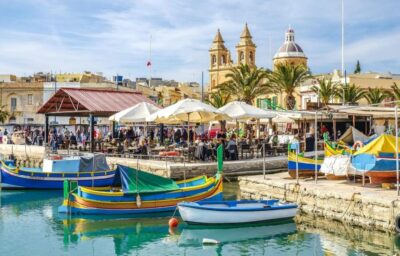
Marsaxlokk, Blue Grotto, and Qrendi Guided Tour
Read our review →
Blue Grotto and Sunday Market at Marsaxlokk Fishing Village Tour
Read our review →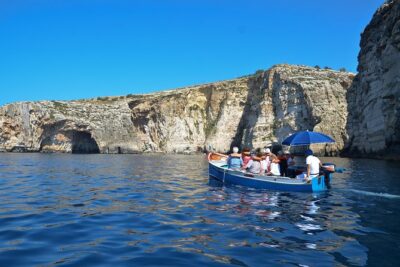
Blue Grotto and Marsaxlokk Half-Day Tour from Valletta
Read our review →
Malta Private tour: 5hr Mosta Dome, Mdina, Dingli Cliff’s & Blue Grotto
Read our review →
Southern Malta: Blue Grotto, Hagar Qim, and Marsaxlokk Tour
Read our review →
Valletta, Marsaslokk, Blue Grotto, Hagar Qim & Mdina
Read our review →Browse the lists this tour appears in