
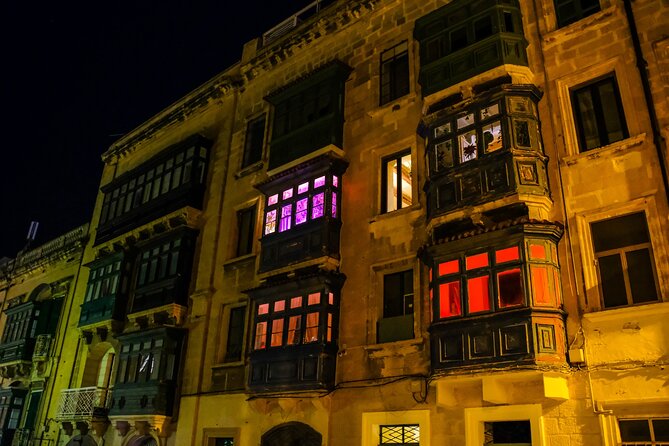
Reviewed · HISTORICAL TOURS
The Dark History of Valletta – Walking Tour
Valletta’s beauty can make you forget how much violence, fear, and strange behavior sits beneath its polished stone streets. This two-hour walking tour brings that darker side forward with tales of a ghostly knight, a murderous love letter, missing boys, and a grotesque statue watching from above.
I like the story-first approach, which links each tale to a real place rather than treating Valletta as a backdrop. I also like the guide’s ability to keep the group moving while saving the final detail of a story for the next stop. Guide Mario even helped a late-arriving family catch up after traffic delays, a small but useful sign of thoughtful tour management.
The main drawback is physical: Valletta is hilly, and this route goes down toward the bottom of the city before climbing back up. At $24.03 per person, the price is fair for a guided evening activity, but you should choose it for the storytelling rather than for formal monument entry.
Key points to know before you book
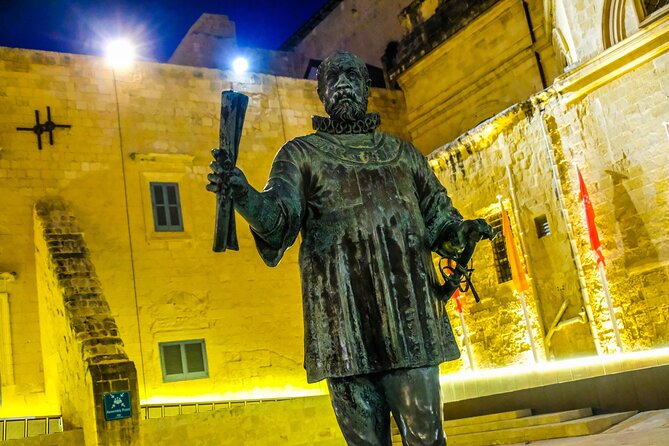
- Ghost stories with a local setting: Hear how the ghost of 16th-century knight Oliver Starkey supposedly held parties in the 1990s before finally leaving his neighbors in peace.
- A murder story told through a letter: One stop centers on a disturbing message sent by a lovesick man shortly before he killed his lover.
- A mystery involving more than 100 boys: The tour asks why a large group entered a church and never came out.
- A closer look at Valletta’s founder: You will hear the truth behind Jean de Valette, the man who gave the city its name.
- A route through central Valletta: Begin at Tritons’ Fountain in Floriana and finish by the Grand Master’s Palace.
- A small enough group to follow the guide: The maximum group size is 35 people, with the tour offered in English.
Why Valletta works so well for a dark-history walk
Valletta is compact, dramatic, and full of old stone streets. That makes it a good setting for stories that depend on atmosphere. You are not sitting in a theater hearing a list of legends. You are walking through the city while the guide points out the places connected to its darker tales.
The route begins at Tritons’ Fountain in Floriana, just outside Valletta. From there, you make your way into the capital and through its streets before finishing near the Grand Master’s Palace. The end point puts you in the center of the city, with bars and restaurants nearby for a drink or meal afterward.
The setting matters because the stories are tied to specific corners, buildings, and public spaces. A strange statue means more when you are looking up at it. A story about a church becomes more immediate when you are standing near the church itself. That connection between place and tale is the tour’s main strength.
This is not a standard introduction to Malta’s capital. You will not get a full survey of museums, architecture, or major sights. Instead, you get a selective look at the city through crime, superstition, death, and unsettling local stories.
More history walks around Malta:
- Malta: Prehistoric Temples, Limestone Heritage & Blue Grotto
★ 4.2 · 412 reviews - Maltese Islands History Audio-Visual Show and La Sacra Infermeria Tour
★ 4.0 · 344 reviews - Valletta: Self-Guided Historical Walking Tour (Audio Guide)
★ 3.7 · 251 reviews
From Tritons’ Fountain into Valletta
The meeting point is Tritons’ Fountain, at Vjal Nelson in Floriana. You should arrive with enough time to find the group, since the tour begins outside the main city center rather than at the Grand Master’s Palace.
The tour ends in Valletta, so the route has a useful one-way shape. You are not required to return to the starting point after the walk. That is handy if you plan to continue your evening in Valletta, especially since the final stop is close to places to eat and drink.
The walking distance is not described in exact terms, but the route includes a descent toward the bottom of Valletta and a climb back up. That detail deserves attention. You do not need to be an athlete, yet you should be comfortable walking uphill and downhill for about two hours.
Wear shoes with a good grip and bring water, especially if the weather is warm. The experience requires good weather, so a poor forecast can affect the schedule. If the tour is canceled because of weather, you are offered another date or a full refund.
Oliver Starkey and the city’s ghostly side
One of the most memorable tales concerns Oliver Starkey, a 16th-century knight whose ghost is said to have thrown parties in the 1990s. The odd detail is not simply that a ghost appeared. It is that the spirit allegedly disturbed neighbors so much that someone eventually persuaded him to stop.
That story gives the tour an amusing edge. Dark-history walks can become grim if every stop focuses on murder and death. A ghost causing late-night trouble adds a touch of local humor and keeps the mood from becoming too heavy.
You should expect storytelling rather than proof of the supernatural. The value is in hearing how a place gathers legends and how those legends are passed along. If you enjoy ghost stories but prefer them connected to real streets and buildings, this part of the walk should suit you.
The guide’s timing is important here. A good storyteller can make an unusual tale feel like a small mystery, then move you to the next location before the mood fades. Mario, one of the guides associated with the tour, is praised for holding back parts of stories until the group reaches the next spot. That style gives the route a sense of progression.
The murder letter and Valletta’s more disturbing tales
The tour also covers a shocking letter written by a lovesick man shortly before he murdered his lover. This is likely to be one of the more serious parts of the evening, and it changes the tone from playful ghost story to real human tragedy.
The letter gives the story a personal detail. Instead of hearing only that a murder happened, you are shown how emotion, obsession, and violence can appear in someone’s own words before a crime. That makes the tale unsettling in a way that a simple date and name never could.
If you prefer light sightseeing, this material may feel too grim. The tour is openly built around dark subjects, so you should expect murder stories and disturbing details. Families can decide for themselves if the tone suits their children, since the supplied information does not give a specific age recommendation.
The benefit is that the walk does not reduce Valletta to pretty streets and grand buildings. It shows how a city can hold painful stories alongside its churches, palaces, and public squares. That is useful context if you have already seen the main sights and want something less familiar.
More walking tours in Malta:
- The Original Valletta Walking Tour
★ 5.0 · 2,719 reviews - Valletta: 3-Hour Walking Tour
★ 4.7 · 1,605 reviews - Valletta: Guided City Walking Tour
★ 4.8 · 1,256 reviews - Valletta: Street Food and Culture Walking Tour
★ 4.8 · 1,251 reviews
The church mystery involving more than 100 boys
Another story asks why more than a hundred boys entered a church but never came out. The supplied details do not reveal the explanation, and that is part of the way the tour is structured.
You are given a question, then led onward. The guide may hold the answer until the group reaches the next point, creating a cliffhanger instead of delivering every fact at once. This approach helped one family find that the two hours passed quickly and did not feel tiring, even though the route includes hills.
The story also shows how the tour uses mystery to make buildings feel different. A church that might otherwise be just another stop on a sightseeing route becomes a place connected with a troubling unanswered question. You are encouraged to look more closely at the setting and listen for details.
Still, keep your expectations realistic. This is a guided story walk, not an archive visit or a formal historical lecture. The tour’s purpose is to make Valletta’s past vivid and memorable, not to provide a complete academic account of every event.
Jean de Valette and the truth behind the founder
The tour turns from crime and ghosts to Jean de Valette, the founder of Valletta. His name is familiar to anyone who spends time in Malta, but the walk promises to separate the man from the simplified version often attached to the city.
That is a useful part of the experience because place names can hide complicated people. A city may honor a founder while leaving out parts of his life, motives, or reputation. Hearing a more complete account gives you a better sense of what the city’s name means.
This segment should appeal to you if you want more than supernatural tales. It adds a historical backbone to the evening and helps balance the stranger stories. You still get the dark angle, but you also gain context about the person linked directly to Valletta’s creation.
The exact details of the interpretation are not provided, so I would not book this expecting a full biography. Think of it as one focused chapter in a larger story about the city.
The grotesque statue above your head
A particularly visual stop concerns a grotesque statue that watches over people in Valletta. The guide explains its hidden meanings and why it was placed where it is.
This is the kind of detail that can change the way you walk through the city afterward. Once someone points out a face, figure, or symbol above street level, you begin to look up more often. Valletta rewards that habit, and the tour uses it well.
The statue also gives the walk a physical point of focus. You are not only listening to an account of something long ago. You are looking directly at an object that remains part of the city’s public view.
If you are interested in architecture, symbols, and the small details people often pass without noticing, this may be one of the strongest stops. If your main goal is entry into major monuments, it will not replace a museum or palace visit. The tour stays on the streets and uses what you can see from outside.
How the guides shape the evening
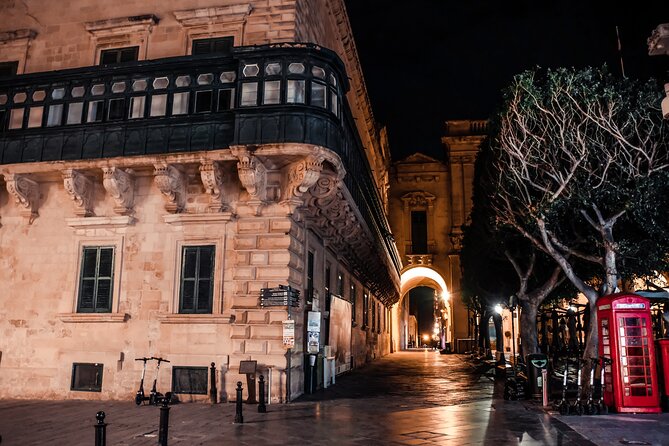
The guide makes or breaks a storytelling walk. Here, the strongest praise centers on engagement, timing, and care with the group. Mario is described as very well informed about Valletta and able to make the material interesting even for people who already know Malta.
That matters if you have visited the island before. The tour is not only for first-time visitors. A familiar city can feel new when someone points out lesser-known stories and connects them to streets you may already have walked.
The guide’s handling of delays is another practical strength. When a family was held up by traffic caused by a local event, Mario called to check their location and kept the rest of the group occupied with additional stories. He then helped them join the walk. That kind of flexibility is not guaranteed on every tour, but it suggests a considerate approach.
The group can contain up to 35 people. That is not a private walk, and you should not expect a one-to-one conversation with the guide. Still, the maximum is moderate enough for a guide to lead a shared experience without the group becoming enormous.
The tour is offered in English. Service animals are allowed, and the meeting point is near public transportation. Most people can take part, but the hills remain the key physical consideration.
Is $24.03 good value?
At $24.03 per person, this is a reasonably priced way to spend two hours in central Valletta. The tour does not list a separate admission charge, so most of what you are paying for is the guide’s time, route planning, and storytelling.
I see the value in using this as an evening activity after a day of standard sightseeing. You get a focused theme, a guided route, and a convenient finish near restaurants and bars. If you tried to find and connect these stories on your own, you might see the same streets without understanding why certain details matter.
The price is less compelling if you are looking for monument entry, transport, food, or a long historical lecture. None of those are part of the stated experience. You are paying for a walking narrative through Valletta.
The strong rating of 4.9 from 50 reviews and a 100 percent recommendation rate support the idea that the experience delivers on its main promise: engaging storytelling. I would still judge it by your interests. The subject is dark, the route is hilly, and the reward depends heavily on enjoying a guide-led story.
Who should book this walk?
I would recommend it to you if you:
- Have already seen some of Valletta’s major sights and want a different angle
- Enjoy ghost stories, mysteries, crime tales, and local legends
- Like tours where the guide builds suspense from stop to stop
- Want an evening activity that ends near restaurants and bars
- Are comfortable walking downhill and uphill for about two hours
- Prefer a small-group experience over exploring the city entirely alone
You may want to skip it if you dislike stories about murder, disturbing events, or supernatural claims. It is also a poor match if hills are difficult for you or if you want guaranteed access inside major buildings.
Families can decide based on their own comfort level. Most people can participate, and service animals are allowed, but the tour’s dark subject matter may not suit every child.
Booking, timing, and cancellation details
The experience is generally booked 19 days ahead, so I would reserve it before your trip if the date matters. Confirmation is provided at booking, and the tour is conducted in English.
You can cancel for a full refund up to 24 hours before the start time. Changes or cancellations made less than 24 hours before the start are not refunded or accepted. The cut-off uses Malta’s local time, so check the time carefully if you are changing plans from another country.
Since good weather is required, leave some flexibility in your schedule if possible. A weather cancellation gives you the choice of another date or a full refund.
Should you book The Dark History of Valletta?
Book this tour if you want Valletta to feel less like a collection of beautiful buildings and more like a city full of secrets, bad decisions, old fears, and odd local tales. The ghost of Oliver Starkey, the murder letter, the church mystery, Jean de Valette, and the grotesque statue offer enough variety to keep the two hours moving.
I especially like it for repeat visitors. If you already know the main streets, a darker route can give you a fresh reason to walk them again. Just arrive ready for hills, serious subject matter, and a guide who uses suspense as much as facts.
At $24.03, it is a fair buy for a focused two-hour experience. Choose it for the stories and the setting, not for formal sightseeing or monument admission.
FAQ
Where does The Dark History of Valletta walking tour start?
The tour starts at Tritons’ Fountain, Vjal Nelson, in Floriana, Malta.
Where does the tour end?
The walk ends at the Grand Master’s Palace in Valletta, close to bars and restaurants.
How long does the tour last?
The tour lasts approximately two hours.
What language is the tour offered in?
The tour is offered in English.
How much does the tour cost?
The listed price is $24.03 per person.
How many people can join the tour?
The maximum group size is 35 people.
Can I cancel for a refund?
Yes. You can cancel at least 24 hours before the start time for a full refund. Cancellations or changes made less than 24 hours before the start are not refunded or accepted. If poor weather causes the tour to be canceled, you are offered another date or a full refund.
Just added around Malta
- Serenity at Sea: Comino Blue Lagoon Exclusive Day Cruise★ 5.0 · 3 reviews
- Malta Chocolate Factory Gin and Truffle Making Experience★ 5.0 · 3 reviews
- Gozo Unveiled: Guided Hiking in Gozo – South East★ 5.0 · 3 reviews
- Gozo Unveiled: Guided Hiking in Gozo – The West★ 5.0 · 3 reviews
- From St. Julian’s: Jet Ski Safari to the South of Malta★ 5.0 · 3 reviews
- St. Julian’s: Comino Blue Lagoon Sunset Cruise by Speedboat★ 3.6 · 3 reviews
- Malta: Around Comino Cruise With Blue Lagoon stop★ 5.0 · 3 reviews
- Private Speedboat Tour: Blue Lagoon & 3 Islands from Split★ 5.0 · 3 reviews
Historical Tours, compared.

Prehistoric Temples, Limestone Heritage & Blue Grotto
Read our review →
Maltese Islands History Audio-Visual Show and La Sacra Infermeria Tour
Read our review →
Self-Guided Historical Walking Tour (Audio Guide)
Read our review →
Wonderful Valletta, gastronomy, art, and history in the Mediterranean
Read our review →

The Limestone Heritage Park and Gardens (Entry Ticket)
Read our review →
Browse the lists this tour appears in