
Reviewed · MDINA & RABAT TOURS
Mdina and Rabat: Guided City Walking Tour
Mdina and Rabat offer one of Malta’s best short introductions to the island. You enter the Silent City through its grand Main Gate, then move along quiet medieval lanes lined with palaces, churches, and convents. Across the bridge, Rabat adds a more lived-in feel, with Maltese homes and old-quarter streets.
I like the gentle pace and the way guides pause for small details, from door knockers to architectural clues. I also like the clear storytelling from guides such as Nadine, Angela, Marisa, Charlotte, and Ernest, who bring Malta’s changing rulers and local customs into focus without turning the walk into a lecture.
The main thing to consider is that this is a walking tour, not a museum visit. Entrance fees are not included, and a bank holiday or other closure can limit what you see indoors. At $24, it is good value for a first visit, but you may want extra time afterward for museums, churches, or St. Paul’s Catacombs.
Key points to know before booking
- Mdina begins at the Main Gate: Meet by the bridge for the opening account of the city’s Roman beginnings and long role as Malta’s political center.
- Rabat completes the picture: The tour moves beyond the polished walls of Mdina into an old quarter known for Maltese vernacular architecture.
- The walking is relaxed: Two hours gives you a useful introduction without making the route feel like a forced march.
- Local guides add the real value: Nadine, Angela, Marisa, Charlotte, Ernest, and others are praised for clear explanations, humor, and practical tips.
- Headsets can help: Some departures use individual audio headsets, especially useful when the group is spread along narrow streets.
- Bring comfortable shoes: You will be on foot for the full tour, and the route passes through historic streets rather than broad modern sidewalks.
Mdina’s Main Gate sets the scene
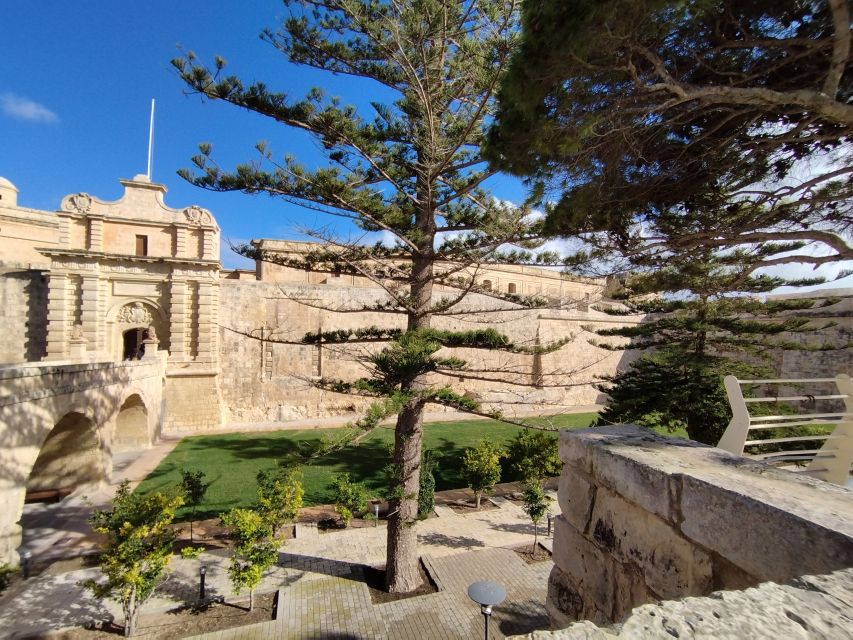
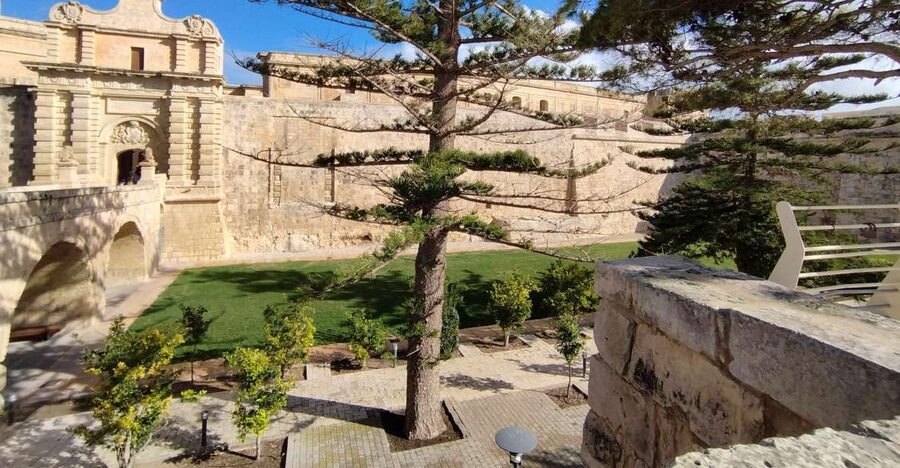
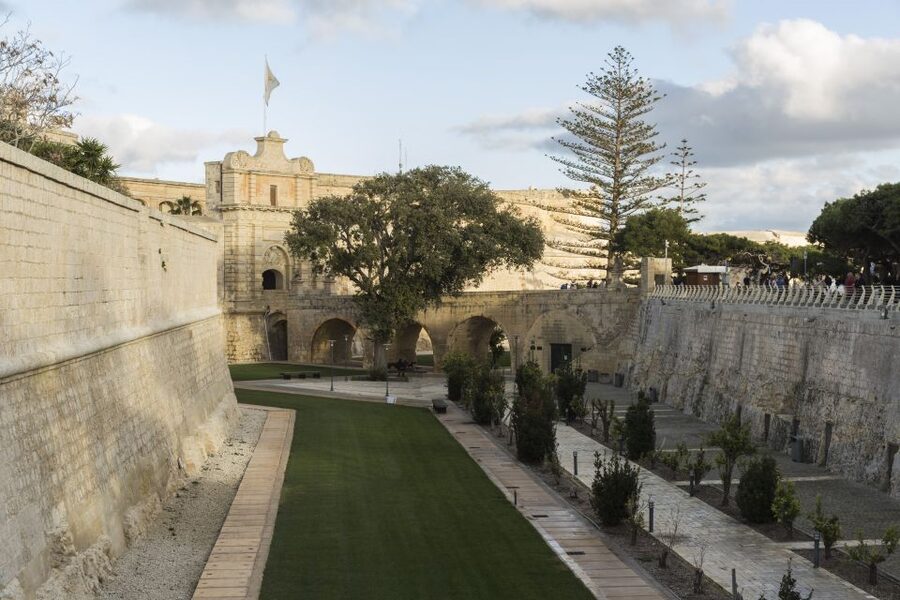
The tour starts at Mdina’s Main Gate by the bridge. This is a useful meeting point because it gives you an immediate sense of the city’s defensive position and its separation from the modern roads outside the walls.
Your guide begins with Mdina’s historical background. The settlement was founded by the Romans and served as the administrative and political capital of the Maltese Islands for almost two centuries. It remains the seat of Malta’s episcopacy, a detail that helps explain why the city has such a strong concentration of religious and noble buildings.
I find this opening important because Mdina can look almost too perfect at first glance. Its honey-colored stone, formal gate, and quiet lanes invite photographs, but a few minutes of context show you that this is not simply a pretty old town. It was a center of power, church life, and aristocratic residence.
The Main Gate is also where you get your first practical sense of the walk. You will be moving through historic streets and stopping often, so this is the time to adjust your shoes, water, and camera. The tour is wheelchair accessible, but you should still expect an old urban setting rather than a purpose-built visitor route.
More Mdina and Rabat visits:
- Malta: Mdina and Rabat Walking Tour with Catacombs
★ 4.8 · 1,126 reviews - Malta: Mdina and Rabat Tour with Local Guide
★ 5.0 · 408 reviews - Mdina and Rabat Walking Tour inc. Catacombs and St. Paul’s Grotto
★ 5.0 · 341 reviews
Following the Noble City through medieval lanes
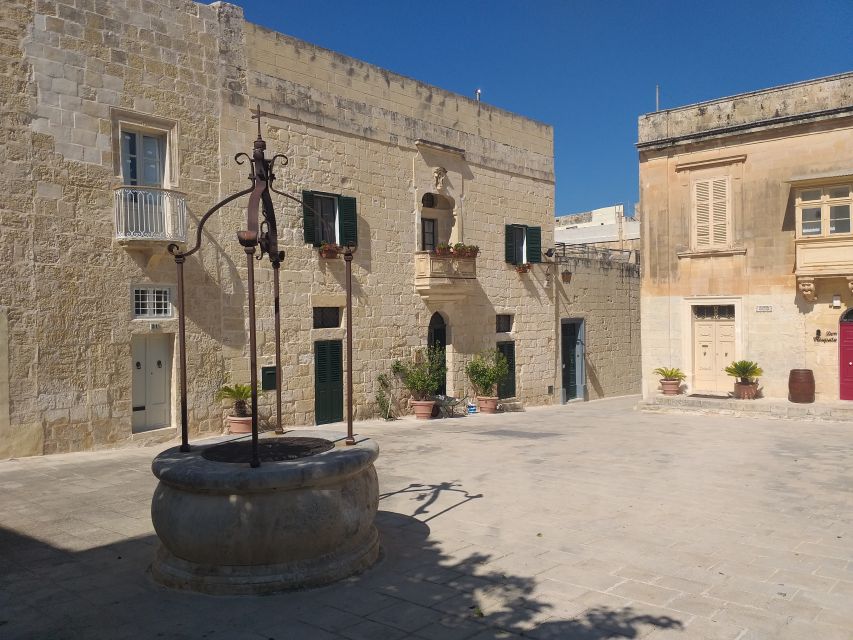
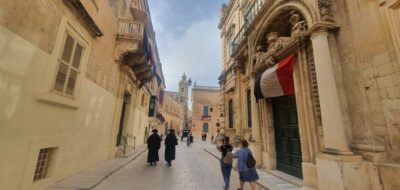
Mdina’s medieval name was Citta’ Notabile, or the Noble City. The name tells you who lived here and how the city was viewed. Malta’s noble families made their homes inside the walls, and the route points out the palaces and grand façades that reflect that past.
The streets are narrow, which gives the walk its time-capsule effect. You will not simply be shown a row of famous buildings and sent on your way. The guide explains how the architecture fits together, drawing your attention to details you might otherwise pass without noticing.
One particularly useful tip is to look at the door knockers. Their designs can carry meaning and character, and they are the sort of small feature that is easy to miss when you are focused on the larger palaces. This is where a guided walk earns its fee. You get an extra layer of observation, not just a list of dates.
The route is described as leisurely, and that matches the strongest part of the experience. Guides stop to point out details, answer questions, and let you take photographs. Angela has been praised for a relaxed delivery and clear audio, while Angele’s use of individual headsets made it easier to listen while taking pictures on a busy day.
You should not expect every group to feel identical. Different guides bring different styles. Nadine is described as warm, lively, and passionate, Ernest as enthusiastic and easy to follow, and Charlotte as friendly and entertaining. The common thread is a clear grasp of Mdina’s past and an ability to tell it in a human way.
Palaces, churches, and convents without an entrance ticket
The tour takes you past the impressive palaces, churches, and convents that line Mdina’s streets. These buildings give the city its formal character, and the guide explains their place in Malta’s political, religious, and social story.
This part of the route is best understood as an exterior tour. The price does not include entrance fees to churches or museums, so you should not book expecting a full indoor visit to every important site. Instead, you get orientation, background, and a clear idea of which places deserve a return visit.
That arrangement can be a plus. Two hours is enough for a focused introduction, and you can use the guide’s suggestions to choose what to see next. Several guides are praised for offering lunch ideas and tips on places to visit after the walk. Marisa, in particular, is noted for useful food recommendations.
It can also be a drawback if your main goal is to spend time inside religious buildings or museums. Plan to pay separately for any admission and allow extra time after the tour. One booking made on a bank holiday coincided with closures, which reduced access to some places. That was not a fault with the walking route, but it is a good reminder to check local opening days before you book.
The architecture tells Malta’s story
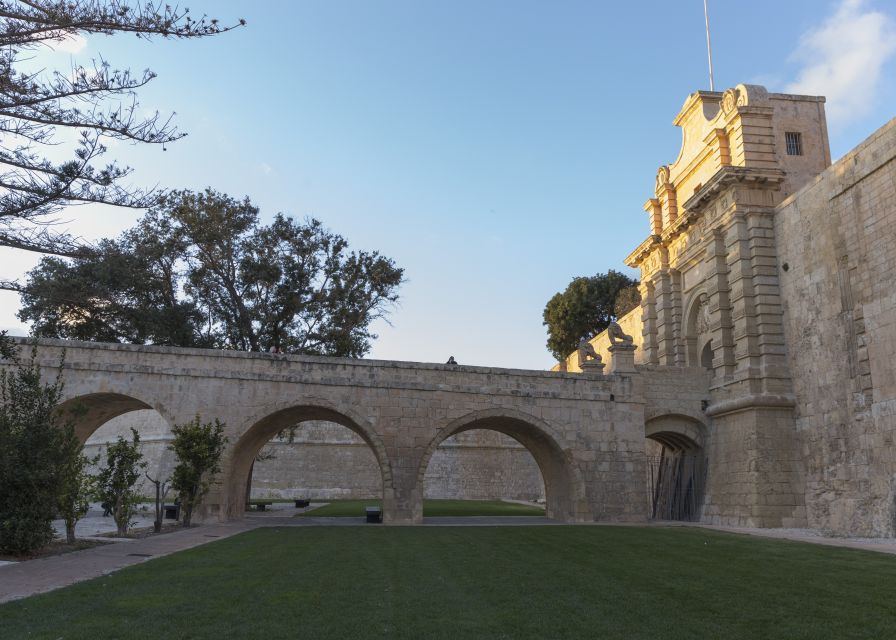
The most useful part of the walk is the link between buildings and Malta’s past. A guide can show you how the architecture reflects different occupations and periods, rather than leaving you with a vague impression that Mdina is simply old.
The city’s palaces point to the influence of noble families. Its churches and convents show the continuing role of the Catholic Church and explain why Mdina remains tied to Malta’s episcopacy. The narrow lanes reveal a city shaped long before modern traffic and wide roads.
Margaret’s guide was praised for explaining how architecture related to Malta’s many occupations. That kind of connection is exactly what you want from a local walking tour. The stones become evidence of changing power, not just a backdrop for holiday photos.
The guides also seem to balance facts with stories. Visitors describe Nadine’s anecdotes, Angela’s humor, and the dry wit of another guide who mixed historical details with present-day observations. This matters in a compact city where a constant stream of dates can blur together.
You should still expect a fair amount of historical information. If you prefer to wander silently and make your own discoveries, a guided route may feel structured. For a first visit, though, the structure saves time and helps you see why Mdina deserves more than a quick photo stop.
More walking tours in Mdina:
- Mdina: Private Historical City Walking Tour with Rabat Town
★ 4.5 · 41 reviews - Mdina and Rabat Private Walking Tour
★ 5.0 · 25 reviews - Mdina and Rabat Private Walking Tour with local pastizzi
★ 5.0 · 6 reviews - The Original Valletta Walking Tour
★ 5.0 · 2,719 reviews
Crossing into Rabat for a different side of Malta
Rabat is only a short distance from Mdina, but it changes the mood of the walk. Mdina is the fortified noble city, while Rabat’s old quarter gives you a closer look at Maltese vernacular architecture and everyday urban form.
This section keeps the tour from becoming a narrow palace walk. You move from a walled seat of power into a neighboring community with its own streets, homes, and local character. The contrast helps you understand how the two places relate without treating them as one interchangeable sight.
The Rabat portion is not described as a long independent excursion. It is a short continuation of the two-hour route, so you should see it as a companion to Mdina rather than a complete tour of every Rabat attraction.
You may also want to return afterward. One useful suggestion is St. Paul’s Catacombs, which costs €6 according to one visitor’s practical tip. That admission is separate, and the catacombs are not part of the guided walking tour, but Rabat’s location makes them a sensible addition if you have time.
Why the guide makes a difference
Mdina is easy to admire and surprisingly easy to misunderstand. A guide gives you the sequence: Roman foundation, capital city, noble residence, religious center, and modern historic quarter. That framework lets you look at the streets with more purpose.
The strongest guide reports focus on delivery as much as factual detail. Nadine is praised for warmth, passion, and a good sense of humor. Angela and Angele are described as clear, relaxed, and engaging. Charlotte receives praise for making the walk fun, while Marisa is noted for combining local insight with restaurant advice.
Several guides are also praised for answering extra questions. That is valuable in Mdina because the obvious questions often lead to the most useful conversation: who lived here, why the city was built this way, how Malta’s different occupations affected the buildings, and what deserves a second look.
Headsets are another practical advantage on some departures. Narrow streets can scatter a group, and an individual earpiece means you can stand back for a photograph without losing every word. Equipment can occasionally have a minor problem, but guides have handled such issues quickly.
The tour is in English. The use of a licensed professional guide is included, and the quality of the experience will depend in part on which guide leads your departure. The repeated praise for several different guides is reassuring, but no walking tour can promise the exact same personality or storytelling style each time.
Pace, comfort, and the two-hour limit
Two hours is a smart length for Mdina and Rabat. It is long enough to cover both places and provide real context, yet short enough to fit into a day of sightseeing around Malta.
The walk is repeatedly described as easy, relaxed, and well paced. Guides make frequent stops, and the amount of information is intended to be manageable rather than crammed into a nonstop speech. This suits you if you want history with room for photos and questions.
Comfortable shoes are essential. The route runs through old streets, and the experience is entirely based on walking between sights. Wear shoes you can trust for two hours, and bring whatever sun protection you normally need, especially in warmer weather.
A hot day does not automatically ruin the experience. One guide was praised for keeping the group in the shade for most of a very warm walk. Still, shade may vary by route and time, so do not rely on that alone.
The tour is wheelchair accessible, which makes it more usable for visitors who need an accessible activity. Since the information does not give a detailed route map or describe every surface, it is sensible to confirm any specific mobility needs when booking.
Is $24 a fair price?
At $24 per person, this is a good-value way to get oriented in two of Malta’s most important historic areas. You are paying for two hours with a licensed English-speaking guide, not for transportation, museum entry, food, or a full-day excursion.
The value is strongest if you are visiting Mdina for the first time. A self-guided walk will show you the same streets, but it will not necessarily explain the city’s political role, noble families, church importance, or architectural changes. The guide also helps you notice details such as door knockers and small features in the façades.
The price is less compelling if you already know Mdina and Rabat well, or if you mainly want to enter museums and churches. Since admission is extra, budget for those separately. The tour works best as a foundation, followed by your own exploration.
Free cancellation up to 24 hours before the start and reserve-now, pay-later booking also reduce the risk when your Malta plans are still changing. Those terms are useful, but the main value remains the guide’s local interpretation.
Who should book this Mdina and Rabat walk?
I would choose this tour for a first visit to Malta, especially if you want a clear introduction before exploring on your own. It suits couples, families, solo visitors, and anyone who likes history explained in plain language rather than read from a plaque.
It is also a good fit if you enjoy architecture. The route gives you a way to read the palaces, churches, convents, and homes as parts of Malta’s story. Food-focused visitors will appreciate the local lunch suggestions offered by some guides.
You may want something else if you prefer a private tour, a long museum visit, or a route built around indoor attractions. This is a shared walking experience, it lasts two hours, and entrance fees are not included.
The best plan is to schedule it early in your stay or early in your sightseeing day. Afterward, you can return to the buildings that caught your attention, follow up on restaurant advice, or visit Rabat attractions such as St. Paul’s Catacombs separately.
Should you book it?
Yes, if you want Mdina and Rabat to make sense rather than simply look beautiful. The combination of a gentle pace, local stories, architectural detail, and a short Rabat extension makes this a practical introduction at a fair price.
Book it with comfortable shoes and realistic expectations. You will see historic exteriors and gain useful context, but you will need separate tickets and extra time for museums, churches, and catacombs. If that suits your plans, this two-hour walk is a strong choice for seeing Malta’s Silent City with purpose.
FAQ
How long does the Mdina and Rabat walking tour last?
The tour lasts two hours.
What language is the tour conducted in?
The live tour guide speaks English.
Where does the tour begin?
The meeting point is at Mdina’s Main Gate by the bridge, although the exact meeting point may vary depending on the option booked.
Are entrance fees included?
No. Entrance fees to churches and museums are not included in the tour price.
Is the tour wheelchair accessible?
Yes, the activity is listed as wheelchair accessible.
What should I wear?
Comfortable shoes are recommended because the experience is a two-hour walking tour.
Does the tour include St. Paul’s Catacombs?
No. St. Paul’s Catacombs are not listed as part of the tour, and any admission would be separate.
Can I cancel for a refund?
Yes. You can cancel up to 24 hours in advance for a full refund. You can also reserve now and pay later.
Just added around Mdina
- 30-Minute Mdina Experience Audio-Visual Show Ticket (Open Ticket)★ 4.5 · 4 reviews
- Mdina and Rabat Private Walking Tour with local pastizzi★ 5.0 · 6 reviews
- Mdina, Dingli cliffs and San Anton Gardens guided tour★ 3.5 · 14 reviews
- Proposal Photoshoot with Professional Photographer in Malta★ 5.0 · 15 reviews
- Mdina: The Mdina Experience Audio-Visual Show (Open Ticket)★ 4.3 · 22 reviews
- Palazzo Falson Historic House Museum entrance ticket★ 4.7 · 22 reviews
- Guided Night Tour of Valletta Waterfront, Mdina and Rabat★ 4.5 · 22 reviews
- Mdina and Rabat Private Walking Tour★ 5.0 · 25 reviews
Mdina & Rabat Tours, compared.
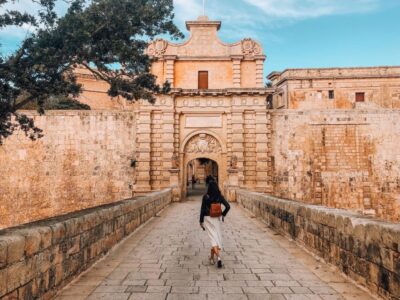
Highlights of Malta & Mdina Full Day Tour with Lunch
Read our review →
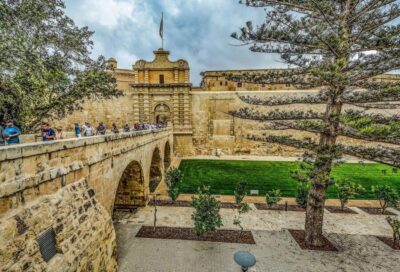
Mdina, Dingli Cliffs and San Anton Botanical Gardens
Read our review →

Mdina and Rabat Walking Tour inc. Catacombs and St. Paul’s Grotto
Read our review →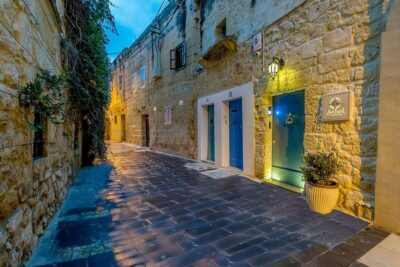
Valletta Waterfront Area, Mdina, and Rabat Night Tour
Read our review →Browse the lists this tour appears in