
Reviewed · MDINA & RABAT TOURS
Mdina and Rabat Walking Tour inc. Catacombs and St. Paul’s Grotto
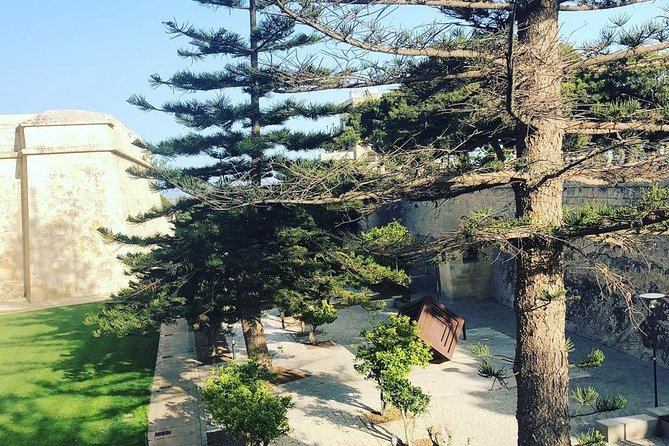
Malta’s underground past is the surprise here. Before you wander Mdina’s pale-stone streets, this tour takes you below Rabat to catacombs, World War II shelters, and St. Paul’s Grotto. Then it brings you into Mdina, the island’s old capital, where medieval walls, grand palaces, and quiet lanes tell a very different story.
I like the two-part design: Rabat gives you underground history and religious context, while Mdina supplies the grand architecture and wide rampart views. I also like the small group limit of 25, which gives guides such as Mario, Matthew, Carmel, and Dylan a fair chance to keep the group together and answer questions.
The main drawback is time. Two and a half hours is enough for a strong introduction, but not enough for a leisurely Mdina visit after every stop. If you want time to explore museums, linger at viewpoints, or wander without a guide, plan to return before or after the tour. The underground sections also involve stairs, uneven floors, and some tight spaces.
Key points to know before you book
- Rabat comes before Mdina: You visit the Wignacourt Museum, catacombs, WWII shelters, and St. Paul’s Grotto before entering the old capital.
- The tour costs $30.85 per person: The entrance ticket for the underground sites is included, making the price fair for a guided half-day introduction.
- Expect strong historical storytelling: Guides including Matthew, Carmel, Mario, and Dylan have been praised for clear explanations of Malta’s rulers, language, architecture, and folklore.
- Mdina’s best sights are viewed on foot: The route passes Palazzo Falzon, Palazzo Santa Sofia, Vilhena Palace, the Cathedral of Saint Paul, the Carmelite Priory, and Greeks Gate.
- The pace is active but manageable: You walk through both towns for about two and a half hours, with frequent stops for explanation.
- Save extra time for Mdina: The scheduled route ends at Greek’s Gate, so add your own time if you want to explore the city at a slower pace.
Why the Rabat-to-Mdina route works
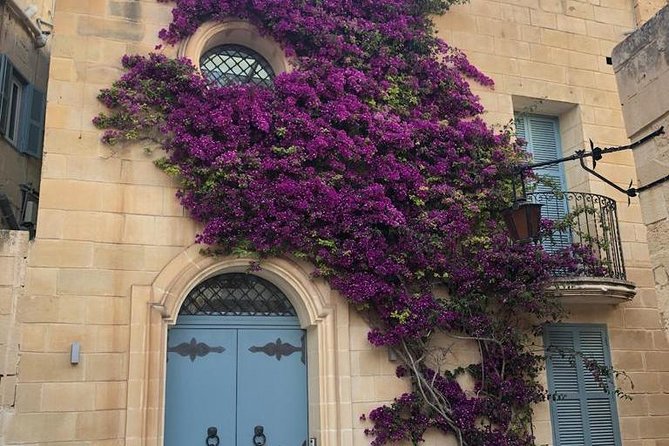
Mdina and Rabat sit side by side, but they offer different experiences. Rabat feels like a lived-in town with churches, convents, and ordinary streets. Mdina feels more enclosed and ceremonial, a fortified former capital of Malta shaped by centuries of rule.
Starting at Mdina Gate, the tour first moves through Rabat. That order makes sense. You begin with the island’s older burial and wartime spaces, then finish among Mdina’s palaces and fortifications. The experience moves from the practical and underground to the formal and defensive.
Your guide supplies the thread connecting it all. Malta’s story involves different rulers, changing languages, religious traditions, and layers of architecture. A guide such as Matthew or Carmel can make those changes easier to follow than a quick walk with a map and a few plaques.
The tour is offered in English. The group can include up to 25 people, so this is not a private walk, but it is still much more personal than a large coach excursion. A smaller group also helps when the guide stops in a narrow street or gathers everyone near a church façade.
More Mdina and Rabat visits:
- Malta: Mdina and Rabat Walking Tour with Catacombs
★ 4.8 · 1,126 reviews - Mdina and Rabat: Guided City Walking Tour
★ 4.8 · 549 reviews - Malta: Mdina and Rabat Tour with Local Guide
★ 5.0 · 408 reviews
Meeting at Mdina Gate
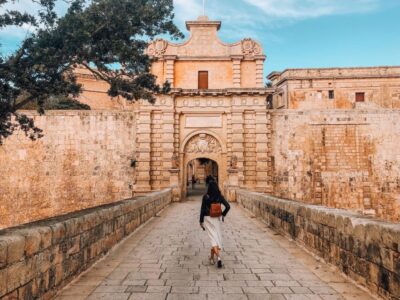
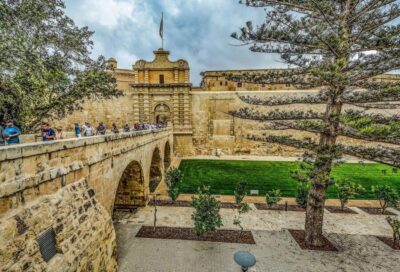
The starting point is the Baroque gateway at Mdina Gate, listed at map reference VCM3+V9W in Mdina. This is a sensible meeting place because the gate immediately gives you a strong first look at the city’s defensive character.
Allow a little time to identify your guide and group. One participant had trouble locating the guide and suggested clearer signs or a more obvious meeting marker. The practical lesson is simple: arrive early, keep your phone available, and do not expect a large tour flag to be easy to spot.
The opening stop lasts only about five minutes. It is mainly a meeting point and a quick introduction before the walk heads toward Rabat. Hotel pickup and drop-off are not included, so you must make your own way to Mdina. The area is near public transportation, and the tour ends in Mdina rather than returning you to a hotel.
Rabat’s streets and religious buildings
The Rabat section lasts about 25 minutes. You walk through its streets and pass churches and convents, with the guide explaining how the town relates to Mdina and Malta’s religious past.
This part is easy to underestimate. Rabat is not simply a path to the catacombs. Its streets show the contrast between the fortified old capital and the town that grew around it. A guide can point out details you might otherwise pass without notice, including local names, architectural features, and the way religious buildings fit into the town.
The walking is outdoors, so weather matters. The tour has operated in hot conditions and in rain, and guides have adjusted their presentations by using shaded spots when possible. Still, you will be more comfortable with water, sun protection, and sensible shoes.
Underground at the Wignacourt Museum
The Wignacourt Museum is the tour’s main included admission. The visit takes about 30 minutes and covers three distinct elements:
- Catacombs
- World War II shelters
- St. Paul’s Grotto
The combination gives you several ways to understand life beneath Rabat. The catacombs introduce ancient burial customs and underground passageways. The wartime shelters show how people used subterranean spaces in a much more recent crisis. St. Paul’s Grotto adds a major religious association to the visit.
This is where a guide adds real value. Underground rooms can look like a series of passages and chambers if you do not know what you are seeing. Guides such as Mario and Matthew have been praised for explaining the meaning of the spaces rather than simply leading the group through them.
Expect stairs. The catacombs and shelters are underground, with uneven floors and confined areas. If you dislike small spaces or have difficulty with stairs, take that seriously before booking. Most people can take part, and service animals are allowed, but the route is not a smooth, level museum visit.
The 30-minute stop is useful but brisk. You get an introduction to the main areas, not unlimited time in every chamber. If underground archaeology is your main reason for coming to Rabat, you may want to ask about the exact amount of free time during the visit.
More walking tours in Mdina:
- Mdina: Private Historical City Walking Tour with Rabat Town
★ 4.5 · 41 reviews - Mdina and Rabat Private Walking Tour
★ 5.0 · 25 reviews - Mdina and Rabat Private Walking Tour with local pastizzi
★ 5.0 · 6 reviews - The Original Valletta Walking Tour
★ 5.0 · 2,719 reviews
Entering Mdina, Malta’s old capital
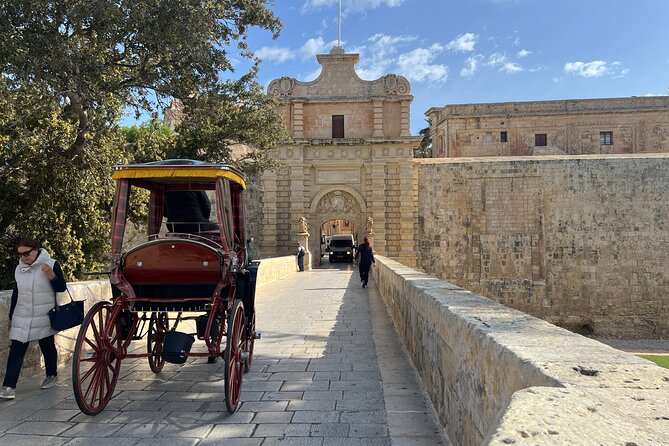
After Rabat and the museum, the tour spends about an hour and 25 minutes walking through Mdina. This is the longest part of the experience, and it covers the city’s main palaces, churches, convents, lanes, and walls.
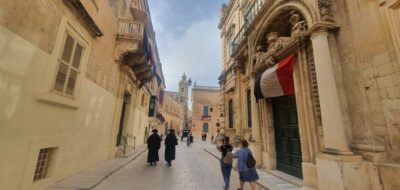
Mdina has been inhabited since the Bronze Age and served as Malta’s capital until the 16th century. That long timeline is easier to understand once you see how tightly the city is built. Defensive walls, formal palaces, religious buildings, and narrow streets all sit within a compact fortified area.
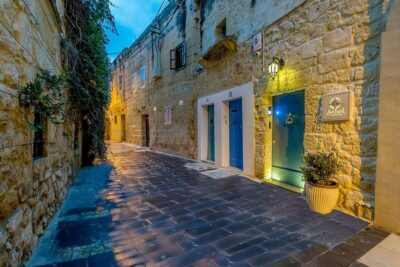
The city is often called silent, and the name fits its mood. You move through stone streets where the focus is on façades, doorways, courtyards, and views rather than modern city noise. The quiet can make the tour feel more atmospheric, but it also means the guide’s voice may be harder to hear if the group spreads out.
One criticism of the experience is that some guides may spend too long explaining details at the expense of walking time. That style will suit you if you want history, language, and architecture explained at each stop. If you prefer to cover ground quickly, you may find the commentary heavy. A participant even left the group partway through to explore more on their own.
Mdina’s palaces and churches
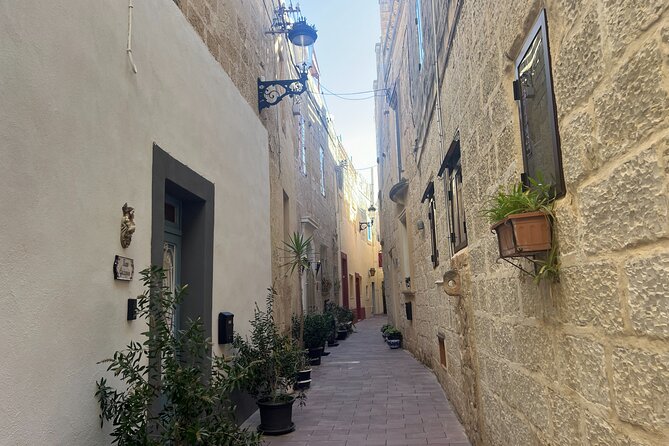
The route passes several of Mdina’s key buildings. Each one adds a different layer to the city.
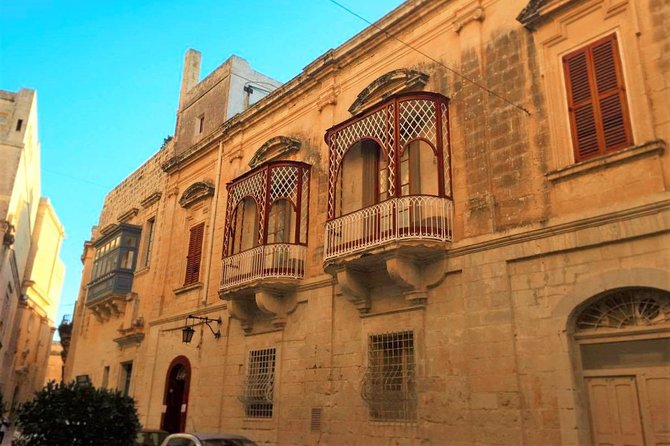
Palazzo Falzon is a grand 13th-century building and one of the clearest reminders that Mdina was once a place of power. Its medieval character helps balance the later Baroque buildings elsewhere in the city.
Palazzo Santa Sofia has an elaborate façade and is counted among Mdina’s oldest buildings. It is the sort of detail that benefits from a guide because the building’s age and appearance can be easy to miss when you are focused on the street ahead.
Vilhena Palace introduces a later period of Mdina’s story. Today it houses the Natural History Museum, but the palace itself is part of the city’s architectural sequence. You pass it rather than receiving a separate museum visit.
The Cathedral of Saint Paul is one of the major highlights. Its importance is both religious and architectural, and the guide helps place it within Mdina’s wider story.
The Carmelite Priory brings an elegant Baroque note to the walk. Its style contrasts with the city’s older medieval fabric, showing how Mdina changed over time instead of remaining frozen in one period.
You also get a look into the Chapel of Saint Agatha. The stops are presented as part of a connected city walk, so do not expect lengthy independent visits inside every building. The strength is the overall picture: palace, church, convent, chapel, and defensive wall all within a short walk.
Greeks Gate and the rampart views
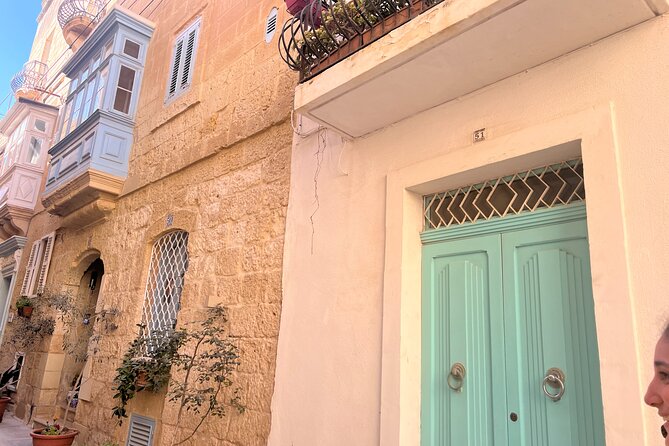
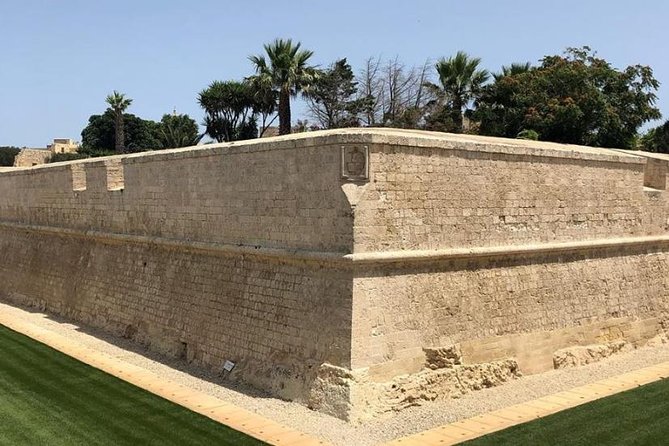
The medieval fortifications are among the most rewarding parts of the route. The guide explains Mdina’s defensive role while taking you toward the imposing Greeks Gate, where the tour ends.
The ramparts provide broad views over much of Malta. In clear weather, this is an ideal place to pause and understand why Mdina mattered as a seat of power. Rain or haze can soften the view, so the experience is partly dependent on conditions.
Greeks Gate is listed as the endpoint at map reference VCP2+7MF. This matters because the tour does not loop back to Mdina Gate. You finish inside the old city and can continue exploring, find food, visit another attraction, or make your own way onward.
The official final stop is only about five minutes, but you should treat that as the formal end of the guided experience, not the end of your Mdina visit. I would reserve at least another hour if your schedule allows. That extra time lets you revisit a street, study the façades, enjoy the ramparts, or explore at your own speed.
How good is the $30.85 value?
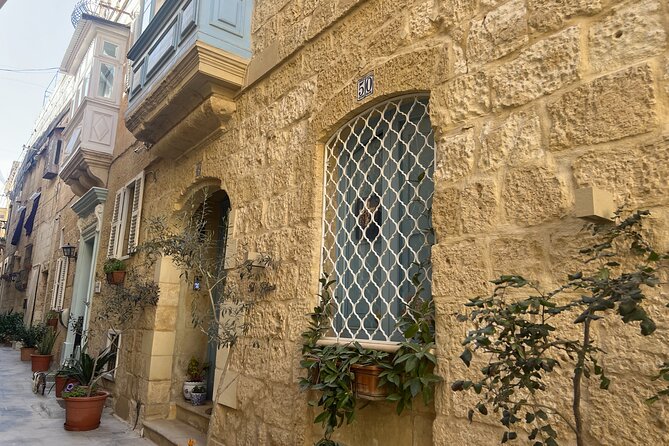
At $30.85 per person, this is a reasonable price for a 2.5-hour guided walk with an included entrance ticket to the Wignacourt Museum’s catacombs, shelters, and grotto.
The value depends on how you like to sightsee. If you want context, the guide earns the fee by explaining Malta’s rulers, languages, architecture, geography, and folklore. Several guides, including Mario, Matthew, Carmel, and Dylan, have been singled out for clear English, energy, patience, and strong command of the subject.
If you only want to walk through Mdina and take photographs, you can see much of the city without booking a tour. In that case, the underground admission and interpretation are the main reasons to pay. The tour also saves you from working out how Rabat’s catacombs and Mdina’s main sights fit together.
The group size is capped at 25. That does not guarantee a private feel, but it limits the crowd and gives you a better chance to hear the guide. One practical limitation is that headsets are not provided as a standard feature, so stay close during explanations, especially in busy streets or open areas.
Who will enjoy this walk most?
I would recommend this tour to you if you want a first look at Mdina and Rabat without spending hours planning a route. It suits history-minded visitors, first-time Malta visitors, and anyone who wants both underground sites and an old fortified city in one outing.
It is also a good choice if you value storytelling. Guides explain why the buildings matter, how different rulers shaped Malta, and how local words and names connect to the island’s past. Dylan, Matthew, Carmel, and Mario have all been praised for engaging delivery, though the individual guide and style can vary by departure.
You may want another option if you have limited mobility, dislike stairs, or feel uncomfortable in small underground spaces. The catacombs have uneven floors, and the shelter and grotto visit requires stairs.
It may also be less suitable if you want a fast-paced photo walk. The guide may stop often and speak at length. That is a benefit for some people and a drawback for others.
Practical tips for a smoother visit
Arrive early at Mdina Gate. Finding a guide in a busy meeting area can take a few minutes, and one person nearly missed the group before receiving help from the local operator.
Wear shoes with a firm sole. The route includes ordinary streets, fortifications, stairs, and underground floors that may be uneven.
Bring water and sun protection. Malta can be hot, and the outdoor sections have limited shade. Guides may use shaded places for explanations, but you should not rely on that at every stop.
Stay close when the guide is speaking. The group may gather in open squares or narrow streets, and no audio headsets are listed among the included features.
Leave free time for Mdina afterward. This is the most useful planning tip. The tour introduces the city well, but the schedule does not allow you to linger at every palace, church, lane, and viewpoint.
The tour can be canceled for a full refund if you cancel at least 24 hours before the local start time. Changes or cancellations made later are not accepted for a refund.
Should you book the Mdina and Rabat walk?
Book it if you want an efficient introduction to two closely linked historic towns, especially if the catacombs and WWII shelters appeal to you. The included underground admission, English-speaking guide, compact group, and strong emphasis on Malta’s history make $30.85 a fair spend.
Just set the right expectation. This is a guided overview, not a relaxed full-day exploration. You will walk, listen, climb stairs, and cover a lot in a short time. Add your own time in Mdina before or after, and the tour becomes a useful first chapter rather than the whole story.
FAQ
How long does the Mdina and Rabat walking tour last?
The tour lasts approximately 2 hours and 30 minutes. About 25 minutes are spent walking through Rabat, 30 minutes visiting the Wignacourt Museum, and about 1 hour and 25 minutes exploring Mdina, with short meeting and final stops.
What is included in the ticket price?
A professional guide and admission to the Wignacourt Museum are included. The museum visit covers the catacombs, WWII shelters, and St. Paul’s Grotto.
Is the tour offered in English?
Yes. The experience is offered in English.
Where does the tour start and finish?
The tour starts at Mdina Gate in Mdina and ends at Greek’s Gate in Mdina. Hotel pickup and drop-off are not included.
Are the underground areas suitable for everyone?
The underground sections include a number of stairs, uneven floors, and small spaces. Most people can participate, but you should consider your comfort with stairs and confined areas before booking. Service animals are allowed.
What is the cancellation policy?
You can cancel up to 24 hours before the experience start time for a full refund. Cancellations or changes made less than 24 hours before the start time are not accepted for a refund.
Just added around Mdina
- 30-Minute Mdina Experience Audio-Visual Show Ticket (Open Ticket)★ 4.5 · 4 reviews
- Mdina and Rabat Private Walking Tour with local pastizzi★ 5.0 · 6 reviews
- Mdina, Dingli cliffs and San Anton Gardens guided tour★ 3.5 · 14 reviews
- Proposal Photoshoot with Professional Photographer in Malta★ 5.0 · 15 reviews
- Mdina: The Mdina Experience Audio-Visual Show (Open Ticket)★ 4.3 · 22 reviews
- Palazzo Falson Historic House Museum entrance ticket★ 4.7 · 22 reviews
- Guided Night Tour of Valletta Waterfront, Mdina and Rabat★ 4.5 · 22 reviews
- Mdina and Rabat Private Walking Tour★ 5.0 · 25 reviews
Mdina & Rabat Tours, compared.
Highlights of Malta & Mdina Full Day Tour with Lunch
Read our review →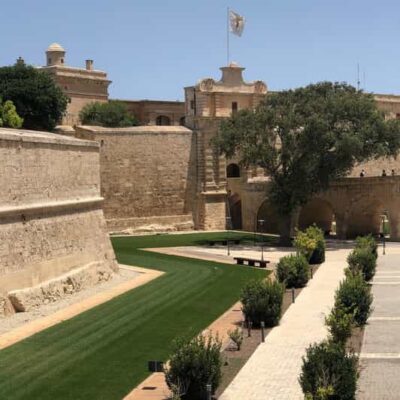
Mdina, Dingli Cliffs and San Anton Botanical Gardens
Read our review →


Valletta Waterfront Area, Mdina, and Rabat Night Tour
Read our review →Browse the lists this tour appears in