

Reviewed · MDINA & RABAT TOURS
Mdina and Rabat Private Walking Tour with local pastizzi
Mdina’s quiet stone lanes make the best first impression here. This is Malta’s Silent City, an old fortified town where grand palaces, small squares, and high bastions fit into a compact walking route. You’ll then cross into Rabat for a local pastizzi, Malta’s flaky, savory snack.
I like the private format because you can ask questions and set the pace. I also like the route’s mix of big views and ordinary streets, from Mdina’s formal Cathedral Square to Rabat’s more lived-in corners. The main consideration is that the price is $324 per group of up to four, so it makes the most sense for a small party rather than a solo visitor.
Key points to know before you book
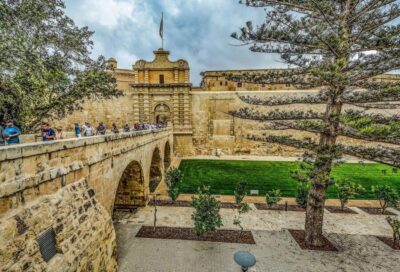
- Start at Mdina’s Main Gate: Meet your guide along the bridge before entering the old city.
- See Mdina’s main sights on foot: The route includes Palazzo De Vilhena, Xara Palace, Council’s Square, Cathedral Square, Mesquita Square, Greeks Gate, and the bastions.
- Expect a private 2.5-hour walk: The guide can explain the city in French, English, German, Italian, or Spanish.
- Finish with pastizzi in Rabat: A stop at a local coffee shop adds a simple taste of everyday Maltese food.
- Ask about extra visits: The Wignacourt Museum, Roman catacombs, and Saint Paul’s Grotto may be added if you want more time indoors.
- Plan for a confirmed meeting time: The appointment is confirmed by email and may change based on guide availability.
Why Mdina works best with a walking guide
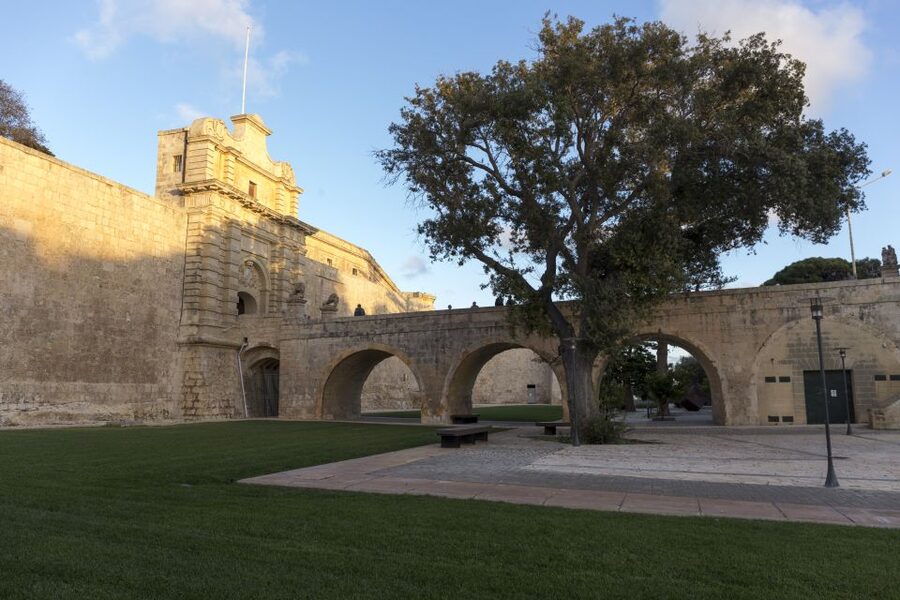
Mdina is easy to admire and harder to read on your own. Its pale stone walls, narrow lanes, and formal palaces give the town a polished look, but the setting can blur together if you do not know what you are seeing.
A guide gives the buildings a purpose. Instead of simply passing a carved doorway, you can learn why a palace belongs in that spot, how the fortified town was arranged, and what role each square played. The tour starts with a short introduction at the Main Gate, which gives you useful bearings before the walk spreads through the city.
I like this opening because it does not waste the first part of the tour on transport. You arrive at Mdina under your own steam and meet directly at the bridge by the gate. From there, the route is focused on the two old towns rather than on moving between distant sights.
The private setup also changes the feel of the walk. You are not trying to keep up with a large crowd or waiting for several dozen people to gather at every corner. With a group of up to four, you can ask about a family name on a palace, pause for a photograph, or request more detail about a site that catches your eye.
The guide service is available in English, French, German, Italian, and Spanish. A guide named Ángeles is praised in the supplied booking comments for being punctual, well organized, and clear in her explanations, but your assigned guide may vary.
More Mdina and Rabat visits:
- Malta: Mdina and Rabat Walking Tour with Catacombs
★ 4.8 · 1,126 reviews - Mdina and Rabat: Guided City Walking Tour
★ 4.8 · 549 reviews - Malta: Mdina and Rabat Tour with Local Guide
★ 5.0 · 408 reviews
Entering through Mdina’s Main Gate

Meet your guide along the bridge at the Main Gate of Mdina. This is a useful meeting point because you begin with the city’s outer approach before moving into its enclosed streets.
The first talk covers Mdina’s historical past in broad terms. It is not presented as a museum lecture, and that suits the visit. You need enough context to understand the walls, palaces, and street plan, but you also want to get walking.
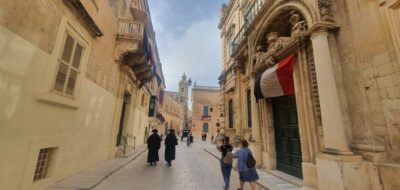
Once inside, the compact layout helps the tour pack in a lot without requiring transport. You can see major landmarks close together, then move from formal public spaces into quieter lanes. The pace is described as leisurely, which matters in a place where the details are often above eye level: balconies, stonework, doorways, and palace fronts.
The walk is a good match for you if you like history delivered in place. It is less suited to someone who wants a long indoor museum visit, since entrance fees are not included and the main focus is the streets, views, and buildings from outside.
Palaces, squares, and Mdina’s formal side
The first section includes Palazzo De Vilhena, Xara Palace, and Council’s Square. These stops show Mdina at its most formal, with large historic buildings lining streets that feel far more grand than the city’s small footprint might suggest.
Your guide points out the architectural features and explains the role of the buildings. That context is valuable because the pleasure of Mdina is not only in seeing old stone. It is in understanding how the city’s palaces, public spaces, and fortified position worked together.
The Main Street leads you toward Cathedral Square. This is one of the route’s central moments, with the city’s ceremonial side gathered around an important open space. The stop gives you a natural pause after the narrower lanes and helps you see how Mdina shifts between private corners and public gathering places.
Church entry is not included in the tour price. If you want to go inside a church or museum, ask the guide about the current options and any entrance fee. The listed route promises the city walk, not admission to every interior.
Mesquita Square adds another change of mood. Small squares such as this help you understand Mdina as a town made for slow movement, not a collection of isolated monuments. You will likely get more from the stop if you let the guide explain the surrounding buildings rather than rushing through for a quick photograph.
Bastion views across Malta
The bastions are among the strongest reasons to take this walk. From the elevated fortifications, you get wide views over roughly two thirds of Malta.
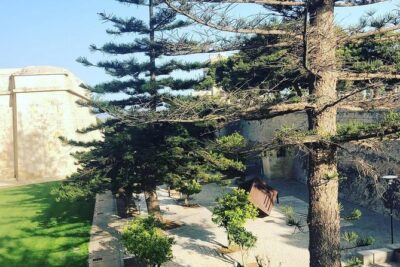
This is where the city’s position makes sense. The lanes inside Mdina can feel enclosed, but the bastions open the view and show why the site mattered. You can pause, take in the scale of the island, and connect the stone walls beneath you with the wider setting.
I especially like that the route includes views rather than keeping you among buildings for the full 2.5 hours. A good walking tour needs changes in pace. The bastions provide light, air, and a visual break from palace facades and narrow streets.
The exact view will depend on conditions on the day, and the experience is weather exposed. Still, this stop gives the tour a clear high point. If you enjoy photography, bring a phone or camera with enough space for broad city and countryside views.
More walking tours in Mdina:
- Mdina and Rabat Walking Tour inc. Catacombs and St. Paul’s Grotto
★ 5.0 · 341 reviews - Mdina: Private Historical City Walking Tour with Rabat Town
★ 4.5 · 41 reviews - Mdina and Rabat Private Walking Tour
★ 5.0 · 25 reviews - The Original Valletta Walking Tour
★ 5.0 · 2,719 reviews
Mesquita Square, Greeks Gate, and the quieter corners
After the larger squares and bastions, the route continues toward Mesquita Square and Greeks Gate. These places help round out Mdina beyond its most famous postcard views.
Greeks Gate is another reminder that Mdina is a fortified city with more than one point of entry and a carefully planned defensive edge. You are not simply walking from one pretty square to another. The route connects gates, walls, public buildings, and viewing points so the city begins to make sense as a whole.
This part of the tour also rewards questions. Ask your guide to compare the different streets and spaces, or to point out details you might miss while walking. The supplied comments repeatedly praise guides for clear explanations, careful organization, and listening closely to the people in the group. That is exactly the kind of service that matters on a private walk.
The route is described as wheelchair accessible. Since this is a historic fortified town, you should still confirm the precise path and any requested additions before booking, especially if you need a particular surface or access arrangement. The tour provider can confirm the meeting time and route with you by email.
Crossing into Rabat for a more local feel

The tour then reaches Rabat, whose streets provide a useful contrast with Mdina. Mdina feels enclosed, formal, and deliberately quiet. Rabat brings you into a more typical Maltese town setting, with streets and squares that feel less like a preserved citadel.
The walk includes a typical Rabat street and the Square of the Conversion of Saint Paul. This section keeps the experience from becoming only an old-city architecture tour. You get a sense of how the two neighboring places relate to one another while still having distinct characters.
I like the Rabat portion because it gives the outing a human scale. The buildings matter, but so does the ordinary rhythm of a town. You can listen to the guide’s explanation, notice the change in the streets, and make your way toward the food stop without treating Rabat as an afterthought.
The route is intended to cover the main points worth seeing in both places. That is useful if this is your first visit and you want a clear overview. If you prefer a slow, highly detailed look at just one church or museum, you may need to ask the guide to adjust the pace.
Pastizzi at a local coffee shop
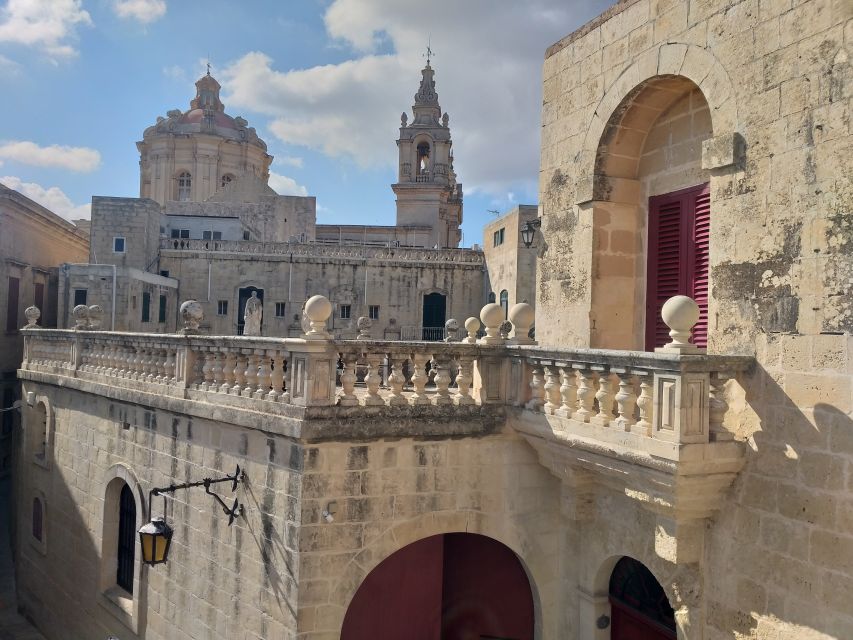
The food stop is small but well chosen. In Rabat, you pause at a local coffee shop to taste pastizzi, one of Malta’s best-known street foods.
Pastizzi are traditional savory pastries. The snack gives you a direct connection to everyday Maltese eating, and it breaks up the history lesson with something warm, simple, and local. It is not a full meal, so plan lunch separately if you are booking this near midday.
I like this inclusion because it does not turn the tour into a formal food crawl. You get one familiar local specialty in the middle of a walking route, then continue into Rabat. For many people, that is enough to make the history feel less distant.
The stop is included, along with a fully licensed guide. Other food, drinks, transport, and entrance fees are not listed as included. Keep that in mind when working out your day’s total cost.
Optional museums, catacombs, and Saint Paul’s Grotto
The tour can include a visit to the Wignacourt Museum, Roman catacombs, and Saint Paul’s Grotto if you want to add them. These options give you a way to shift the balance from outdoor sightseeing to more focused historic sites.
You should discuss this before or during the tour, since the base experience is 2.5 hours and entrance fees are not included. Adding interiors may require a slower pace or a separate admission charge.
The Wignacourt Museum suits you if you want more objects and exhibits after seeing the streets. The Roman catacombs and Saint Paul’s Grotto offer a different kind of experience, with more emphasis on underground and religious heritage. The provided information does not promise that every optional site will be visited, so confirm exactly what can be added and how much extra time it requires.
This flexibility is one of the better features of a private tour. You can keep the standard walk if you want an easy half-morning, or ask for more historic detail if your group is especially interested.
Is $324 good value for four people?
The price is $324 per group of up to four, not per person. For four people, that works out to $81 each. For two people, it becomes $162 each, and for a solo visitor it is a costly way to see Mdina and Rabat.
The value comes from the private guide, the language choice, the focused route, and the chance to set the pace within a fixed 2.5-hour visit. You are paying for personal attention rather than a low-cost group overview.
I think the price is easiest to justify for a family or group of friends who want one shared guide. It is also more appealing if you want the optional museum or catacomb discussion built into your time. If you are alone, or happy to read about the sights as you go, a public walking tour or self-guided visit may cost less.
Transport is not included, so you must arrange your own way to Mdina’s Main Gate. That is important if you are staying elsewhere in Malta. The guide meets you at the gate, not at your hotel or cruise terminal.
Timing, language, and practical details
The walk lasts 2.5 hours, with starting times available according to the date you select. The exact meeting time is confirmed by email and may change based on guide availability, so check your messages before the day of the tour.
You can choose from French, English, German, Italian, and Spanish. If language matters to your group, make the request clear at booking and confirm it when the appointment is set.
Free cancellation is available up to 24 hours in advance for a full refund. You can also reserve now and pay later, which helps if your Malta schedule is still moving around.
The meeting point is specific but worth double-checking: your guide waits along the bridge at Mdina’s Main Gate. Arrive with enough time to find the bridge and gather your group. Since transport is not included, allow extra time for your own journey to the city.
Who should book this Mdina and Rabat walk?
I would choose this tour if you want a well-organized first look at Mdina and Rabat without having to build your own route. It suits couples, families, and small groups who enjoy asking questions and want a local snack included.
It also works well if you are interested in more than the famous gate and cathedral square. The route reaches palaces, smaller squares, Greeks Gate, the bastions, Rabat streets, and the Square of the Conversion of Saint Paul.
You may want another option if you dislike walking, want a full food tour, or need every museum admission included in the price. The tour is centered on outdoor streets and viewpoints, with indoor sites available only as additions.
Should you book it?
Book this private walk if you are a group of up to four and want personal guidance through Malta’s old capital and neighboring Rabat. The strongest parts are the broad bastion views, the clear route through Mdina’s main spaces, the contrast with Rabat, and the pastizzi stop.
For two people, the cost deserves a careful look. For four, the per-person value is much better. I would also contact the provider ahead of time if you want the Wignacourt Museum, Roman catacombs, or Saint Paul’s Grotto included, since admission costs and extra time are separate.
FAQ
Where does the Mdina and Rabat walking tour meet?
Your guide waits along the bridge at the Main Gate of Mdina.
How long does the tour last?
The walking tour lasts 2.5 hours.
Is this a private tour?
Yes. It is offered as a private group experience for up to four people.
Which languages are available?
The tour is available in French, English, German, Italian, and Spanish.
Is pastizzi included?
Yes. A local pastizzi snack at a coffee shop in Rabat is included.
Are museum and church entrance fees included?
No. Entrance fees for churches, museums, and other sites are not included.
Can the tour include the Wignacourt Museum or Roman catacombs?
The tour may include the Wignacourt Museum, Roman catacombs, and Saint Paul’s Grotto if requested. Confirm the details with the guide, since entrance fees are separate.
Just added around Mdina
- 30-Minute Mdina Experience Audio-Visual Show Ticket (Open Ticket)★ 4.5 · 4 reviews
- Mdina, Dingli cliffs and San Anton Gardens guided tour★ 3.5 · 14 reviews
- Proposal Photoshoot with Professional Photographer in Malta★ 5.0 · 15 reviews
- Mdina: The Mdina Experience Audio-Visual Show (Open Ticket)★ 4.3 · 22 reviews
- Palazzo Falson Historic House Museum entrance ticket★ 4.7 · 22 reviews
- Guided Night Tour of Valletta Waterfront, Mdina and Rabat★ 4.5 · 22 reviews
- Mdina and Rabat Private Walking Tour★ 5.0 · 25 reviews
- Maltese Traditional Dinner and Folklore Show with Transfers★ 4.0 · 35 reviews
Mdina & Rabat Tours, compared.
Highlights of Malta & Mdina Full Day Tour with Lunch
Read our review →
Mdina, Dingli Cliffs and San Anton Botanical Gardens
Read our review →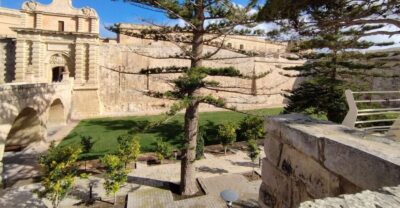

Mdina and Rabat Walking Tour inc. Catacombs and St. Paul’s Grotto
Read our review →Browse the lists this tour appears in