
Reviewed · MDINA & RABAT TOURS
Medina, Rabat and the pastizzi experience
Mdina and Rabat give you two sides of Malta in one compact walk: the formal old capital and the quieter suburb beside it. The most local moment comes at the end, when you sit down at Is-Serkin Crystal Palace Bar for a hot, flaky pastizz, Malta’s famously cheap savory pastry.
I like the small maximum of six people, which should make it easier to ask questions, and I like the way the tour mixes major landmarks with everyday Maltese food. Guides Julia and Silvia are praised for being warm, funny, and passionate, though the open-air walk can be tough in strong sun, wind, cold, or rain.
Key Points
- Starts at Mdina Gate: Meet at VCM3+V9W, Mdina, at 2:30 pm for a walking tour through the old city.
- Covers several kinds of history: See Saint Paul’s Cathedral, medieval law courts, a fine art museum, a Roman museum, and Christian burial sites.
- Rabat adds a quieter mood: Explore the suburb of Mdina, known as the cradle of Christianity in Malta.
- Pastizzi is included: Finish at Is-Serkin Crystal Palace Bar with a local pastry and your choice of tea, coffee, or beer.
- Small group size: The tour accepts a maximum of six people, making it a more personal experience.
- Plan for the weather: Good weather is required, and the walk may feel demanding in high heat or wet, windy conditions.
Starting at Mdina Gate and Entering the Silent City

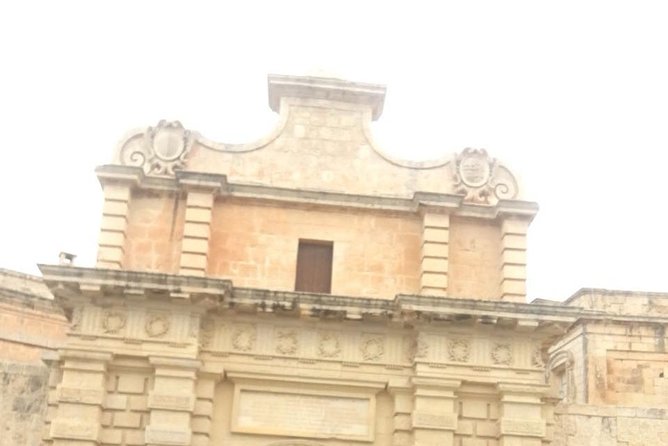
The meeting point is Mdina Gate, where the tour begins at 2:30 pm. Mdina is Malta’s historic walled city, and the starting point puts you straight into the old district rather than spending time on a transfer or a general introduction from outside town.
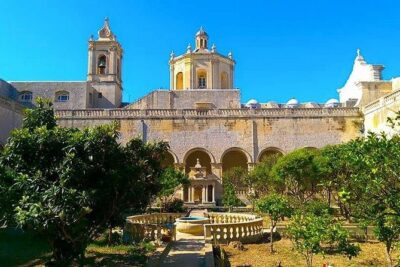
From here, you walk toward the Cathedral of Saint Paul. This is presented as the most important church among Malta’s 365 churches and the seat of the Diocese. The same site has been occupied since the ninth century BC, giving your guide a useful way to connect Malta’s ancient past with its Christian present.
I like this opening because it gives the walk a clear sense of place. You are not simply ticking off a church. You are standing on ground used for religious life across many centuries, with the cathedral serving as an anchor for Mdina’s story.
The cathedral is also a good point for understanding Mdina as more than a pretty old town. Its religious role helps explain the city’s importance, while the later walk through Rabat shows how faith and daily life continued beyond the fortified center.
Admission details for the cathedral are not specified, so you should treat this as a guided exterior and historic stop unless your guide tells you otherwise. The tour description does not promise a cathedral interior visit.
More Mdina and Rabat visits:
- Malta: Highlights of Malta & Mdina Full Day Tour with Lunch
★ 4.4 · 2,688 reviews - Malta: Mdina and Rabat Walking Tour with Catacombs
★ 4.8 · 1,126 reviews - Malta: Mdina, Dingli Cliffs and San Anton Botanical Gardens
★ 4.3 · 991 reviews
Medieval Law Courts and Malta’s Old Government
The next stop brings you to the former law courts of the Universitas. In medieval Malta, the Universitas was the feudal government, so this site represents the machinery of rule rather than church life or private homes.
This is the kind of stop that can pass unnoticed if you walk Mdina alone. A building may look like part of the old stone setting, but a guide can explain what happened there and how local government worked in the medieval period.
For me, this stop adds useful balance. You get a look at how Malta was governed, not only where people worshipped. It also helps you read Mdina as a working seat of power, not merely a preserved historic district.
The tour is conducted on foot, and the route links the stops in a fairly natural sequence. You should expect an easy-paced explanation rather than a rapid march. Julia is described as especially good at mixing historical facts with personal stories, and that approach suits a place where a short explanation can bring an old civic building to life.
A Fine Art Museum Inside One of Mdina’s Oldest Houses

The walk continues to one of Mdina’s oldest houses, now used as a museum of fine art collections. This stop shifts the focus from public institutions to domestic architecture and art.
The appeal here is the combination of building and collection. You are not only looking at paintings or objects in a modern display space. You are also seeing how one of Mdina’s older homes has been given a new public role.
The exact collection details and admission arrangements are not provided, so do not book this tour expecting a long museum visit or a guaranteed amount of indoor time. The museum is one part of a broader walking route, with the guide’s explanation doing much of the work.
This can be a welcome pause if the weather is harsh. One of the strongest practical points from the tour feedback is that conditions have ranged from pouring rain and cold wind to temperatures around 104 degrees Fahrenheit. A museum stop may offer some relief, but you should still dress for an outdoor walk.
Malta’s Only Roman Museum
Another stop is the only Roman museum in Malta. It gives the tour an ancient layer before the route moves more fully into Rabat and its Christian past.
The supplied details do not name the museum or describe the objects inside, so the main value here is the historical link. Malta’s Roman period is part of the wider story of Melita, the Roman city that included both Mdina and Rabat.
This is a useful reason to choose the tour over a simple old-town stroll. You move through religious, medieval, artistic, and Roman subjects in one activity. The range is broad, though the short total duration means each stop receives a limited amount of time.
If you want a detailed museum study, this tour may feel too quick. If you want an introduction that shows how the same area changed across different eras, the stop fits well.
Same islands, a completely different day out:
- Malta: Gozo & Comino Islands, Blue Lagoon & Seacaves Tour
★ 4.5 · 15,672 reviews - Comino: Blue Lagoon, Crystal Lagoon, and Seacaves Tour
★ 4.6 · 5,673 reviews - Malta: Blue Lagoon, Beaches & Bays Trip by Catamaran
★ 4.7 · 5,496 reviews - Malta: Gozo, Comino, Blue & Crystal Lagoon, & Caves Cruise
★ 4.6 · 5,092 reviews
Rabat, the Suburb Beside Mdina
The route then reaches Rabat, described as Mdina’s suburb. In Roman times, both places formed part of Melita. Rabat also carries the title of the cradle of Christianity in Malta.
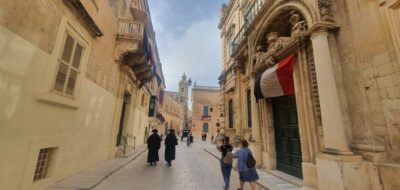
The mood here is different from the fortified old city. The tour describes Rabat as tranquil, and that change is part of its appeal. You get a sense of Malta beyond the grand walls and formal monuments.
Rabat is not treated as a separate destination far away. It works as the next chapter in the same story. Mdina shows the old center of power, while Rabat reveals the community that grew beside it and the religious traditions that took root there.
The scheduled time in Rabat is about 45 minutes, with admission listed as free. That gives you enough time for a meaningful walk and explanation, though not an exhaustive tour of every street or religious site.
Christian Catacombs and the Underground Side of Rabat
One stop in Rabat is part of the Christian catacombs. Malta’s catacombs are concentrated largely in Rabat, where burial places form an important part of the area’s Christian record.
The catacombs add a more serious note to the tour. After churches, government buildings, art, and Roman history, you encounter the way people dealt with death and burial. It is a strong reminder that Rabat’s importance is not only above ground.
The information provided does not specify the name of the catacomb site, the entrance fee, or whether the tour enters the underground chambers. You should confirm the exact arrangement with the guide on the day. The route does clearly include a catacomb-related stop, but it does not promise a full guided cave visit.
That distinction matters if the catacombs are your main reason for booking. If your priority is a broad introduction to Mdina and Rabat, the stop adds valuable context. If you want a specialist archaeological visit, you may need a separate ticket or tour.
Pastizzi at Is-Serkin Crystal Palace Bar
The final stop is the most distinctly Maltese part of the experience. At Is-Serkin Crystal Palace Bar, you try pastizzi, a small pastry snack that is widely associated with Malta and known for being inexpensive.
The tour includes the snack, along with a seasonal drink choice: hot tea or coffee in winter, or cold beer in summer. The scheduled stop lasts about 20 minutes.
This ending works because it changes the pace. After walking through churches, courts, museums, Roman remains, and catacomb sites, you get to sit down with a simple local food. Pastizzi is not presented as a formal meal. It is a quick, everyday bite, and that is precisely why it offers a useful glimpse into local food culture.
You should advise the operator about food allergies when booking. The available details do not specify the pastry filling, so ask before eating if you need to avoid particular ingredients.
The stop is also a practical value point. At a listed price of $65, the tour is not the cheapest way to see Mdina and Rabat, but the included snack and drink soften the cost. You are paying for a small-group guide, a structured route, historical interpretation, and a local food experience rather than simply entering one attraction.
What the Guides Add to the Walk
The guide can make or break a short history tour. Julia receives particularly strong praise for her friendly, attentive, funny, and informed manner. She is also described as passionate about Malta and able to mix historical detail with personal experiences and Maltese culture.
That matters here because the route includes several sites that could otherwise feel disconnected. A church, medieval court, old house, Roman museum, suburb, and catacombs need a clear thread. A good guide helps you understand why they belong together.
Silvia is also named as a guide who can communicate her passion for the city, not merely recite dates. The tour is supplied by Silvia, Excursiones en Malta, so the exact guide may vary.
The personal style appears to be one of the tour’s biggest strengths. At the same time, the pace and depth can vary with the guide, group, weather, and questions. The maximum of six people is a real advantage if you like conversation and want to ask about food, culture, or places to return to later.
Weather, Walking Pace, and Who Will Enjoy It
This is an outdoor walking activity, so conditions matter. The tour requires good weather and can be canceled if the weather is poor. In that case, you are offered another date or a full refund.
The tour has been enjoyed in both extreme heat and unpleasant cold, but that does not mean those conditions are comfortable. For a summer departure, bring water and sun protection. For cooler or wet weather, carry a light layer and rain protection. Wear shoes suited to walking on old-town streets.
The pace is described as easy and personable, but the total activity lasts about two and a half hours. Most travelers can participate, and the experience is near public transportation. Service animals are allowed.
I would recommend it most to you if you want an introduction to Mdina and Rabat, prefer a small group, and enjoy history explained through stories rather than a dense lecture. It also suits anyone who wants to combine sightseeing with a modest local snack.
You may want something else if you need a fully accessible route, a specialist museum tour, a long catacomb visit, or a food-focused experience with several tastings. Those details are not promised here.
Is $65 a Fair Price?
At $65, the value depends on how much you value a guide and a compact route. Mdina and Rabat can be explored independently, but you would need to research the sites, plan the order, and arrange your own context.
This experience brings several subjects together in about 2 hours and 30 minutes: religious history, medieval government, fine art, Roman Malta, Christian burial sites, and local food. The small group limit makes the price more reasonable than a large walking tour because you should have more access to the guide.
The snack is included, but pastizzi itself is a low-cost food. The real value lies in the interpretation and the route. I would not choose this tour solely for the pastry, but I would see it as a pleasant finish to a well-shaped introduction to central Malta.
The 4.7 rating from 19 ratings and 95 percent recommendation indicate strong satisfaction, though the sample is modest. I would treat the figures as encouraging rather than proof that every departure will be identical.
Booking, Cancellation, and Practical Details
Your mobile ticket is confirmed at booking, and the start point is Mdina Gate, listed as VCM3+V9W, Mdina, Malta. The tour returns to the meeting point at the end.
Free cancellation is available up to 24 hours before the 2:30 pm start time for a full refund. Cancellations or changes made within 24 hours are not refunded or accepted.
The activity needs a minimum number of participants. If that minimum is not met, the operator offers another date or experience, or a full refund. The same choice applies if poor weather causes cancellation.
Should You Book the Mdina and Rabat Pastizzi Experience?
Book it if you want a friendly, small-group introduction to Malta’s old center, with enough variety to keep a short afternoon interesting. The strongest reasons are the six-person maximum, the range of historic stops, and the chance to finish with pastizzi at Is-Serkin rather than ending at a monument.
I would be especially comfortable choosing it for a first visit, a half-day in Mdina and Rabat, or a trip where you want local food and cultural context without committing to a full-day excursion.
Think twice if you are visiting mainly for an in-depth cathedral, Roman, or catacomb study. Also check the forecast before booking, since the route is weather dependent. For most people seeking a personal overview with a simple Maltese snack at the end, this is a well-balanced way to spend an afternoon.
FAQ
Where does the tour start?
The tour starts at Mdina Gate, Mdina, Malta. The listed location code is VCM3+V9W.
What time does the tour begin?
The scheduled start time is 2:30 pm.
How long does the experience last?
The tour lasts approximately 2 hours and 30 minutes.
Where does the tour finish?
The activity ends back at the meeting point.
How many people can join the tour?
The tour has a maximum group size of six people.
Is the pastizz included?
Yes. A pastizz at Is-Serkin Crystal Palace Bar is included, along with tea, coffee, or beer depending on the season.
Can people with food allergies join?
Yes, but anyone with food allergies should advise the operator when booking.
What happens if the weather is poor?
The activity requires good weather. If it is canceled because of poor weather, you are offered a different date or a full refund.
Just added around Malta
- Serenity at Sea: Comino Blue Lagoon Exclusive Day Cruise★ 5.0 · 3 reviews
- Malta Chocolate Factory Gin and Truffle Making Experience★ 5.0 · 3 reviews
- Gozo Unveiled: Guided Hiking in Gozo – South East★ 5.0 · 3 reviews
- Gozo Unveiled: Guided Hiking in Gozo – The West★ 5.0 · 3 reviews
- From St. Julian’s: Jet Ski Safari to the South of Malta★ 5.0 · 3 reviews
- St. Julian’s: Comino Blue Lagoon Sunset Cruise by Speedboat★ 3.6 · 3 reviews
- Malta: Around Comino Cruise With Blue Lagoon stop★ 5.0 · 3 reviews
- Private Speedboat Tour: Blue Lagoon & 3 Islands from Split★ 5.0 · 3 reviews
Mdina & Rabat Tours, compared.
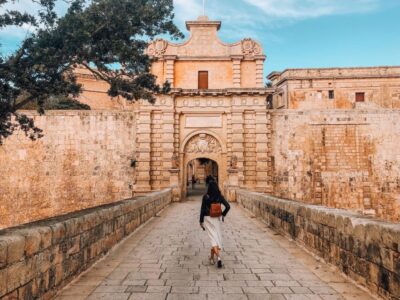
Highlights of Malta & Mdina Full Day Tour with Lunch
Read our review →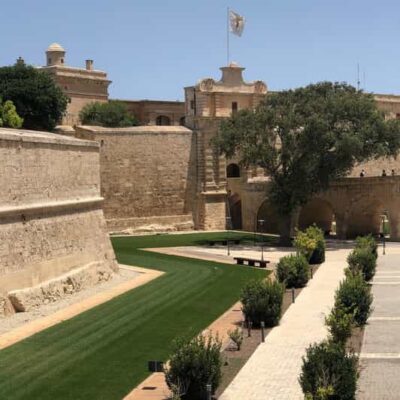
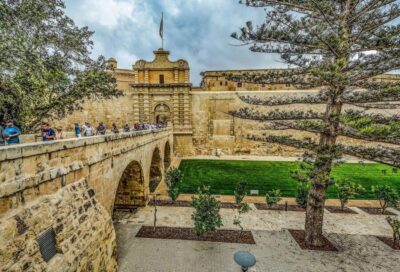
Mdina, Dingli Cliffs and San Anton Botanical Gardens
Read our review →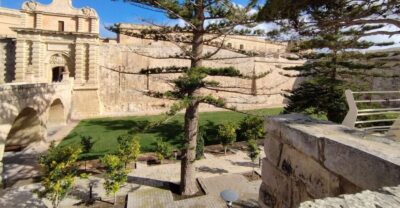
Mdina and Rabat Walking Tour inc. Catacombs and St. Paul’s Grotto
Read our review →Browse the lists this tour appears in