
Reviewed · MDINA & RABAT TOURS
Mdina at Sunset: Small Group Tour of the Ancient city
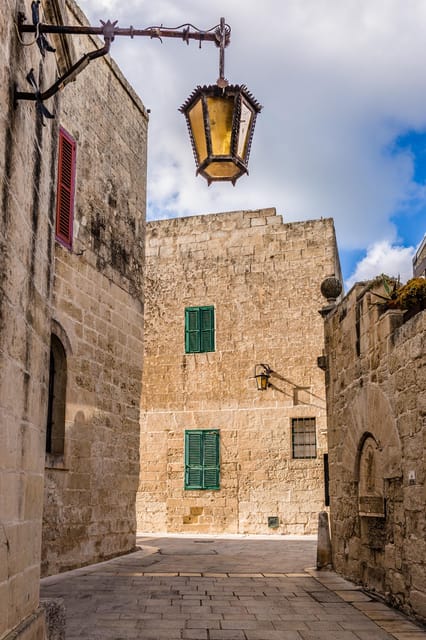
Mdina is at its most atmospheric when daylight fades and lamps begin to glow along the old stone lanes. This two-hour walk takes you through Malta’s former capital, from the Lion pillars at Mdina Gate to bastions, churches, palaces, and film locations, with stories of knights, royalty, local customs, and daily life.
I like the small group limit of eight, which makes it easier to hear the guide and keep a comfortable pace through narrow streets. I also like the way the tour blends major sights with small lanes and viewpoints, rather than treating Mdina as a collection of photo stops. Guide Ani is repeatedly praised for her wit, energy, and clear storytelling, and she has also been helpful with restaurant suggestions.
The main consideration is the cobblestone walking. Two hours can pass quickly, but the route has little sitting time, and the tour runs in all weather. Sunset timing also changes with the season, so check the start time when booking.
Key points at a glance

- Sunset atmosphere: See Mdina after the heat and glare of the day soften, then watch lamps come on in the old city.
- Eight-person maximum: A compact group helps you hear the guide and move through tight lanes without a crowd.
- Ani’s storytelling: Expect history told with humor, personal context, and links to modern Maltese life.
- A broad route: The walk includes Bastion Square, Mdina Cathedral, Palazz Vilhena, Carmelite Priory, and Greek’s Gate.
- Film locations included: The route points out places used for Game of Thrones and other productions.
- Good value at $49: You receive two hours with a licensed guide, rather than simply wandering past Mdina’s walls on your own.
Why Mdina works so well at sunset
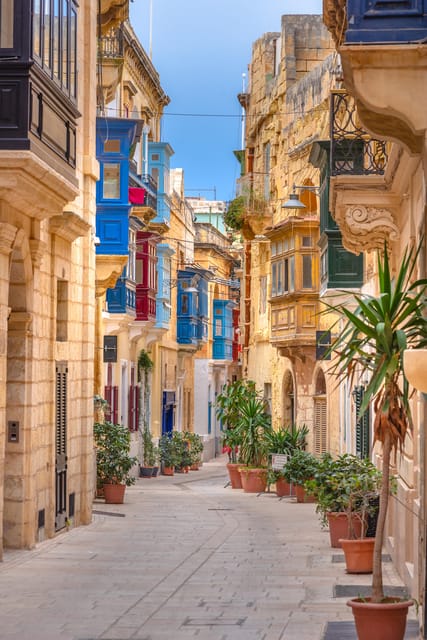
Mdina is a compact walled city with a very different mood from Malta’s coastal towns. Its narrow streets, honey-colored stone, and quiet lanes make it easy to picture another era, especially as the sun drops and the streetlights take over.
The nickname Silent City gives you a clue about the experience. This is not a tour built around traffic, shops, and constant movement. It is a slow walk through an old center where the setting does much of the work, and the guide supplies the context that a self-guided stroll often misses.
I would choose this timing over the hottest part of the afternoon if your schedule allows. Sunset brings softer photographs, cooler conditions, and a more dramatic feel around the bastions. The tradeoff is that light fades during the walk, so you should not expect every stop to have the same clear views or bright detail.
The route also gives you a useful introduction to Mdina’s role in Malta. You are not only looking at old buildings. You are hearing how the city was connected to the island’s political power, religious life, noble families, and changing public identity.
More Mdina and Rabat visits:
- Malta: Mdina and Rabat Walking Tour with Catacombs
★ 4.8 · 1,126 reviews - Mdina and Rabat: Guided City Walking Tour
★ 4.8 · 549 reviews - Malta: Mdina and Rabat Tour with Local Guide
★ 5.0 · 408 reviews
Meeting at Mdina Gate
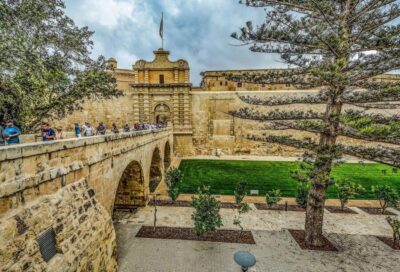
The meeting point is by the Lion pillars at the entrance to the Main Gate. This is a practical place to gather, but do not wait until the last second to find it. The gate area can feel confusing if you arrive while people are coming and going, so allow enough time to identify the pillars and settle in before the walk begins.
The Main Gate sets the tone immediately. It is a grand entrance into a city that feels much smaller and quieter once you pass through it. From here, the group heads into Mdina’s stone lanes and begins the loop that eventually returns to the same gate.
The route is conducted in English by a live licensed guide. With a group capped at eight, you should have a fair chance to ask questions without turning the walk into a private tour. The compact size also matters in Mdina, where broad walking space can disappear quickly around corners.
Bastion Square and the city’s high views
Piazza del Bastione, or Bastion Square, is one of the early points on the route. Bastions are not simply attractive viewpoints. They help explain why Mdina was built as a fortified city and why its position mattered to Malta’s rulers.
This is a good place to connect the city’s walls with the wider island. The views are one of the tour’s visual rewards, but the guide’s explanation gives them meaning. Instead of seeing stone defenses as decoration, you begin to understand them as part of Mdina’s role in Malta’s past.
Sunset is especially useful here. The changing light can make the surrounding views feel very different from one minute to the next. Bring a phone or camera if you want photographs, but remember that flash photography is not allowed in certain areas.
Mdina Cathedral and the religious center
The stop at Mdina Cathedral adds a different layer to the walk. The cathedral is part of the city’s religious and architectural identity, and the guide explains its place within Mdina rather than treating it as a quick exterior photograph.
The itinerary describes this as a guided stop, but the supplied information does not promise a separate admission ticket or a particular interior visit. If seeing the inside is essential to you, confirm the details before booking. Either way, the cathedral stop helps show how strongly religion shaped the old city’s buildings and daily life.
This is also where a good guide can make a difference. Ani’s style, as described in the tour information, mixes historical detail with humor and modern references. That approach suits a short walking tour because you get a clear story without being buried under dates and minor facts.
One useful point from the feedback is that Ani speaks quickly at times in order to fit a great deal into two hours. That can be an advantage if you want plenty of information, but you should say something if you need her to slow down or repeat a point.
A few more Mdina half-days to weigh up
- Guided Night Tour of Valletta Waterfront, Mdina and Rabat
★ 4.5 · 22 reviews - From Bugibba: Blue Lagoon Afternoon Swim with Sunset Cruise
★ 4.3 · 725 reviews - Malta: Sunset Cruise to the Blue Lagoon
★ 4.7 · 687 reviews - Mdina: Valletta Waterfront Area, Mdina, and Rabat Night Tour
★ 4.3 · 302 reviews
Palazz Vilhena and Mdina’s noble past
Palazz Vilhena brings the city’s aristocratic side into view. A palace stop helps explain that Mdina was not only a defensive stronghold or a religious center. It was also a place tied to status, authority, and Malta’s ruling families.
Expect your guide to focus on the building’s role, architecture, and connection to Mdina’s past rather than treating it as a stand-alone museum visit. The supplied details do not list interior entry, so think of this part as a guided look at the palace and its place in the city route.
This is one reason I find the tour more useful than a quick walk with a camera. A palace façade may look impressive, but a short explanation tells you what kind of society produced it and why certain buildings occupy such a prominent position inside the walls.
Carmelite Priory and the city’s quieter corners
The Carmelite Priory offers another change of pace. After the defensive walls, public squares, and grander buildings, a priory points toward the religious communities that helped shape life in Mdina.
The tour’s strength is its range. In two hours, you move between fortifications, sacred buildings, noble architecture, side lanes, and local stories. That variety keeps the walk from becoming a single long lecture about military history.
The small group is especially useful in places like this. A guide can point out details without needing to shout across a large crowd, and you can ask about architecture, customs, or the way the area functions today.
Greek’s Gate and the return through Mdina
Greek’s Gate is the final named stop before the walk returns to Mdina Gate. Like the Main Gate, it gives you another way to understand the city’s entrances and the movement of people through its walls.
By this stage, the route should have given you a fuller picture of Mdina as a living historic center, not just a pretty cluster of streets. The guide connects the city’s older stories with pop culture and everyday Malta, including locations used in Game of Thrones and other films.
The filming angle is useful if you enjoy seeing familiar places on screen, but it is not the whole reason to book this tour. Mdina’s film connection works best as an extra layer on top of the architecture and local history. If you care mainly about production trivia, you may find the tour broader than expected. If you want a well-rounded introduction, that breadth is a plus.
Returning to Mdina Gate makes the route easy to understand. You finish where you started instead of needing to find your way back from a distant neighborhood.
What the guide adds to the walk
The guide is the key part of this experience. The supplied tour information names Ani in the strongest feedback, with one reference also using Anisha. Her praised qualities are consistent: clear communication, humor, enthusiasm, strong knowledge of Malta and Mdina, and a willingness to answer questions.
That matters because Mdina can be enjoyed without a guide. You can walk its lanes, take photographs, and visit its churches on your own. What you cannot easily recreate is the flow between military history, family life, architecture, local customs, film locations, and modern Malta.
Ani’s reported style is conversational rather than stiff. She uses personal stories and current-day information alongside older events, which can help the city feel less like a museum. She also gives practical restaurant recommendations, a useful bonus if you are planning to eat in or near Mdina after the tour.
The tour is still only two hours, so it cannot cover every building or explain every period in Malta’s past. The guide has to keep moving, and some stops will receive more attention than others. That is a fair trade for a focused evening walk.
Walking conditions and what to bring
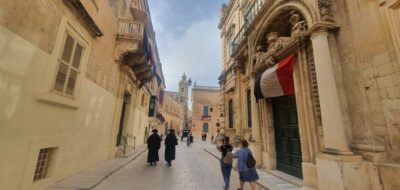
Wear comfortable walking shoes. The route uses cobblestone streets, small lanes, and historic surfaces that can be uneven. The tour information specifically warns that there is a lot of walking, so this is not the right choice if you want a seated sightseeing experience.
The tour operates in all weather. Dress for the forecast, and bring a light layer if the evening may turn cool. If rain is possible, use footwear and clothing that can handle wet stone. The fact that the walk continued comfortably in rainy conditions suggests the atmosphere can still work in poor weather, but your enjoyment will depend on being prepared.
Photography is allowed, which makes the sunset timing appealing. Flash photography is not permitted inside certain areas, so follow the guide’s instructions around religious or protected spaces.
Food and drinks are not included. You may have chances to purchase refreshments during the tour, but I would not count on a planned meal break. If you get hungry early, eat beforehand or plan to use the restaurant suggestions after the walk.
Is $49 a fair price?
At $49 per person, this is not the cheapest way to see Mdina. You can enter the city and wander without paying for a guide. The question is what you want from the visit.
For the price, you receive a two-hour guided walk, a licensed English-speaking guide, a group limited to eight, and a route that covers major sights plus film locations and quieter lanes. That is solid value if you want context, a clear route, and the chance to ask questions.
The small group is the most important part of the price. A large group can make Mdina’s narrow streets feel crowded and can turn the guide’s voice into background noise. Eight people gives the experience a more personal feel without the cost of a private tour.
I would consider the price worthwhile for a first visit, especially if you have limited time in Malta. It is also useful for repeat visitors who have already seen Mdina but want a stronger understanding of the city. One person joined after visiting Mdina several times and still found the guided version more informative, which is a good sign for travelers who think they have already covered the basics.
The value is weaker if you dislike guided walks, already have detailed knowledge of Mdina, or want to spend the entire evening inside the cathedral or palace. Those needs are not promised by the experience details.
Who should book this Mdina sunset tour?
I would recommend it to first-time visitors who want an easy introduction to Mdina without spending half a day on a large coach excursion. It also suits couples, families with older children, and solo travelers who prefer a small group and a set route.
Teenagers may enjoy it more than expected because the walk includes Game of Thrones locations and other film sites, not only formal history. The feedback also indicates that at least one teenager found the full two-hour walk worthwhile.
Repeat visitors can benefit if they want stories, local perspective, and places they might pass without noticing. The tour is less suited to anyone seeking a fast photo session, a food tour, or a dedicated film-location tour.
For the best experience, arrive ready to walk, keep an open mind about the mix of subjects, and let the sunset atmosphere do some of the work. The guide provides the structure, but Mdina’s lanes and walls provide the mood.
Should you book it?
Book this tour if you want to understand Mdina while seeing it at its most atmospheric. The combination of a small group, a two-hour route, an English-speaking licensed guide, film locations, and sunset views gives you more than a simple orientation walk.
I would skip it only if you prefer exploring alone, need guaranteed indoor access to specific buildings, or cannot manage two hours on cobblestones. For most visitors, $49 is a reasonable price for a focused introduction, particularly with Ani’s lively storytelling and the chance to ask questions along the way.
FAQ
How long does the Mdina sunset tour last?
The tour lasts two hours.
Where does the tour meet?
Meet by the Lion pillars at the entrance of Mdina’s Main Gate.
Where does the tour finish?
The walk returns to Mdina Gate, the same general location where it begins.
What language is the tour conducted in?
The live tour guide conducts the experience in English.
How large is the group?
The tour is limited to eight participants.
Are food and drinks included?
No. Food and drinks are not included, though there are opportunities to purchase refreshments during the tour.
What should I wear for the walk?
Wear comfortable walking shoes because the route covers cobblestone streets. The tour runs in all weather, so dress appropriately for the forecast.
Just added around Mdina
- 30-Minute Mdina Experience Audio-Visual Show Ticket (Open Ticket)★ 4.5 · 4 reviews
- Mdina and Rabat Private Walking Tour with local pastizzi★ 5.0 · 6 reviews
- Mdina, Dingli cliffs and San Anton Gardens guided tour★ 3.5 · 14 reviews
- Proposal Photoshoot with Professional Photographer in Malta★ 5.0 · 15 reviews
- Palazzo Falson Historic House Museum entrance ticket★ 4.7 · 22 reviews
- Mdina: The Mdina Experience Audio-Visual Show (Open Ticket)★ 4.3 · 22 reviews
- Guided Night Tour of Valletta Waterfront, Mdina and Rabat★ 4.5 · 22 reviews
- Mdina and Rabat Private Walking Tour★ 5.0 · 25 reviews
Mdina & Rabat Tours, compared.
Highlights of Malta & Mdina Full Day Tour with Lunch
Read our review →
Mdina, Dingli Cliffs and San Anton Botanical Gardens
Read our review →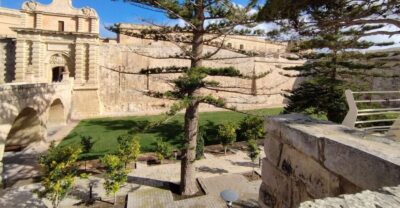


Mdina and Rabat Walking Tour inc. Catacombs and St. Paul’s Grotto
Read our review →Browse the lists this tour appears in