
Reviewed · MDINA & RABAT TOURS
Mdina: The Mdina Experience Audio-Visual Show (Open Ticket)
Mdina’s past is too long and layered for a quick stroll to explain properly. This 30-minute audio-visual show gives you a brisk, organized account of the city’s 7,000 years, from the cult of the mother goddess to the earthquake that wrecked much of Mdina and the rebuilding that followed.
I like the flexible open ticket, which lets you choose an available show on any day during the opening period. I also like the practical language choice: commentary comes through a headset in 12 languages. The main drawback is that this is a seated theater presentation, not a guided walk through Mdina, and the audio-based format is not suitable for people with hearing impairments.
Key points to know before you go
- A 30-minute account of 7,000 years: The show covers Mdina’s major turning points in a short, easy-to-follow format.
- Two major historical episodes: You’ll hear about St. Paul’s shipwreck and the earthquake that destroyed half of the city.
- Twelve audio languages: Choose from English, German, French, Dutch, Spanish, Italian, Russian, Turkish, Greek, Swedish, Japanese, and Maltese.
- Hourly shows from 11 a.m. to 5 p.m.: The last presentation begins at 5 p.m., though opening times can change.
- Open ticket flexibility: Use the ticket on any day within the theater’s opening hours and available time slots.
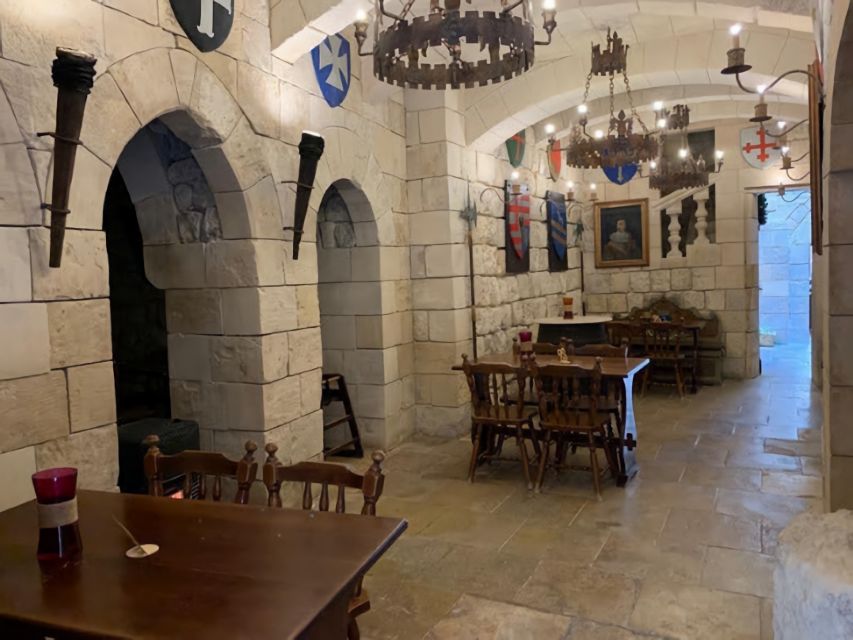
- Medieval tavern afterward: Food and drinks are available at the theater’s tavern, but they cost extra.
Why Mdina’s story needs more than a quick walk
Mdina is known as Malta’s Silent City, but its past is anything but quiet. The old capital has seen religious change, disaster, political importance, and rebuilding across roughly 7,000 years.
A walk through the streets shows you stone walls, narrow lanes, and an old city plan. It does not always explain why Mdina matters. This presentation fills that gap before or after you explore the city itself.
The story begins far back in prehistory with the cult of the mother goddess. That subject gives the show a useful starting point. Mdina is not presented as only a medieval settlement. Its story reaches into Malta’s earliest known religious and cultural traditions.
The program also covers the shipwreck of St. Paul, one of the major events connected with Malta’s Christian identity. You get a sense of how one event can become part of a country’s larger story, rather than hearing only a list of dates and rulers.
Then comes the earthquake that destroyed half of Mdina. The disaster helps explain why the city you see today includes so much rebuilding. The show does not stop at destruction. It also follows the city’s recovery and renewed form, giving you a better reason to look closely at the walls and streets afterward.
More Mdina and Rabat visits:
- Malta: Mdina and Rabat Walking Tour with Catacombs
★ 4.8 · 1,126 reviews - Mdina and Rabat: Guided City Walking Tour
★ 4.8 · 549 reviews - Malta: Mdina and Rabat Tour with Local Guide
★ 5.0 · 408 reviews
What happens during the 30-minute presentation

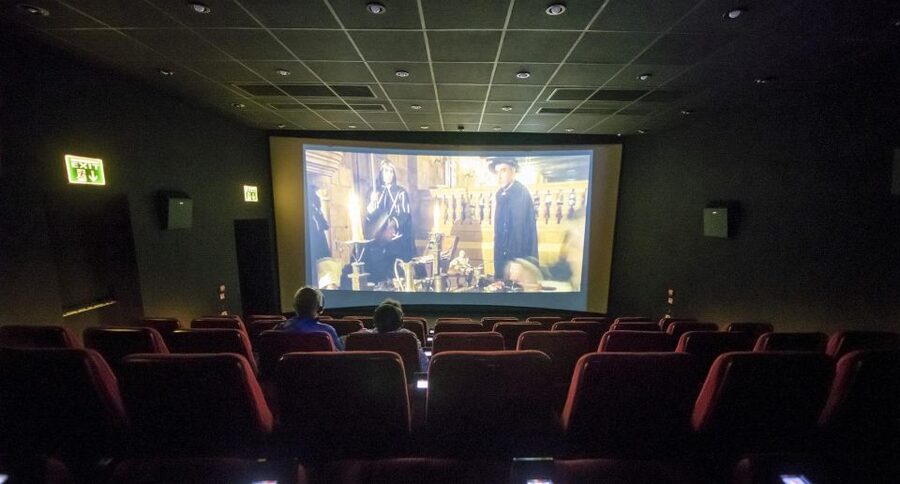
You enter through the front door of the Mdina Experience and check in at the theater reception area. The theater uses a large screen, high-resolution projection systems, and panoramic visual effects.
The presentation is designed as a chronological trip through Mdina’s past. You can expect the story to move from early religious culture through major episodes that shaped the former capital. The format combines narration, images, and sound rather than relying on a live guide.
The headset system provides surround sound and allows simultaneous soundtracks in 12 languages. That matters if you are visiting with family or friends who prefer different languages. You can select English, German, French, Dutch, Spanish, Italian, Russian, Turkish, Greek, Swedish, Japanese, or Maltese.
The host or greeter speaks English, but the recorded commentary gives you much broader language coverage. No individual guide is named for this activity, so you should think of it as a theater show with multilingual audio, not a tour led by a local historian.
The 30-minute length is one of the strongest features. You get a useful introduction without giving up half a day. It works well as a first stop in Mdina, when you want context before walking around, or as a break after exploring the streets.
The technology is central to the presentation. The big screen and panoramic projections are meant to make the history easier to picture. Sound effects and visual changes help keep the show from feeling like a basic museum lecture.
Still, the technology does not replace the city itself. You are watching a presentation about Mdina, not entering its archaeological sites or touring its buildings. I would use the show to prepare for a walk through Mdina, not as your only contact with the city.
The mother goddess and Malta’s earliest story
The reference to the mother goddess gives the opening part of the show an unusual focus. It connects Mdina with Malta’s very early religious past and reminds you that the island’s story began long before its medieval walls took shape.
For many visitors, this is valuable because Mdina can look like a compact old town with a single historical period. The program widens that view. You are shown that the city’s importance developed over a very long span, with beliefs and communities changing over time.
The presentation format also helps younger visitors follow the material. A long museum label about prehistoric religion may lose a child’s attention. A screen-based story with sound and images has a better chance of holding it for half an hour.
The tradeoff is that a short show cannot explain every period in equal detail. If you want a specialist account of prehistoric Malta, this will be only an introduction. Its job is to give you the main line of the story and make the rest of Mdina easier to understand.
St. Paul’s shipwreck and Malta’s Christian identity
The shipwreck of St. Paul is another major part of the presentation. It offers a clear connection between Malta’s geography and its religious history.
The show places the event within Mdina’s broader story rather than treating it as an isolated legend. That helps you see how the former capital became tied to larger changes in Malta.
I find this section particularly useful for visitors who know the name of St. Paul but not why the episode matters in Malta. The visual format can make the event easier to follow than a short plaque or guidebook paragraph.
You should also keep your expectations in check. The ticket does not include a walking tour, a live explanation at the actual sites, or a personal guide who can answer questions. The information arrives in a fixed presentation, so you cannot ask for more detail about one particular event.
A few more Mdina half-days to weigh up
- Maltese Traditional Dinner and Folklore Show with Transfers
★ 4.0 · 35 reviews - 30-Minute Mdina Experience Audio-Visual Show Ticket (Open Ticket)
★ 4.5 · 4 reviews - Malta: Folklore Dinner Show at a Traditional Restaurant
★ 4.4 · 613 reviews - Valletta: “The Malta Experience” Audio-Visual Show Ticket
★ 4.4 · 468 reviews
The earthquake, destruction, and rebuilding of Mdina
The earthquake is one of the most important practical details in the whole show. It explains that Mdina was not preserved in one untouched block. Part of the city was destroyed, and the city was rebuilt afterward.
That makes the presentation useful even if you have already walked through Mdina. Once you know about the destruction and rebuilding, the city’s appearance becomes easier to read. You can think about what survived, what changed, and why the old capital has the character it does today.
The story also gives the show an emotional arc. Mdina’s past is not just a sequence of proud achievements. It includes loss, damage, and recovery. That balance is better than a presentation that treats the city as a perfect relic.
The large-screen visuals should be helpful here because destruction and rebuilding are easier to understand when shown in sequence. The theater’s projection system is built for panoramic images, while the surround sound adds atmosphere to the narration.
This is still a short overview. You will not receive a full architectural study of the earthquake or a detailed account of every rebuilding project. But you should leave with a clearer sense of why the city looks the way it does.
Making the most of an open ticket
The open ticket is a real convenience. You are not locked into one fixed date or time. You can use it on any day during the theater’s opening hours and select an available time slot.
Shows run every hour from 11 a.m. through the last show at 5 p.m. The theater is open Monday through Sunday throughout the year, except on Christmas Day, December 25. Opening times can change, so it is sensible to confirm them with the provider during your stay.
Because the show lasts only 30 minutes, you can fit it around a day in Mdina without much trouble. An early afternoon presentation may work well if you want to walk first and watch later. If you prefer historical context before sightseeing, choose the first suitable time after arrival.
Remember that the ticket allows one entry only. You cannot leave and return on the same ticket, so plan to stay for the full presentation.
There is no hotel pickup or drop-off. You make your own way to the theater and enter through the front door. The meeting instructions are simple, but you should allow enough time to find the venue and check in at reception before the show begins.
The medieval tavern after the show
After the presentation, you can visit the on-site medieval tavern for freshly prepared food and drinks. This is a pleasant way to extend the Mdina theme, especially if you want to sit down before continuing through the city.
Food and drinks are not included in the $7 ticket. That low admission price covers the audio-visual show only, so budget separately if you plan to eat or drink there.
The tavern is best viewed as an optional add-on rather than part of the main tour. If you are watching your spending, you can skip it. If you want a themed stop after the presentation, it gives you a convenient place to pause without arranging another venue.
Is the $7 price good value?
At $7 per person, the attraction is priced as a short introduction rather than a full-day tour. I consider that good value if you want a clear overview of Mdina’s story and appreciate visual presentations.
The price is especially fair for families. A half-hour show is long enough to provide useful information but short enough for children who may not manage a lengthy museum visit. The multiple language tracks also make it easier for mixed-language groups to share the same presentation.
The value is weaker if you are looking for a live guide, detailed archaeological interpretation, or a walk through restricted parts of the city. None of those are included. You are paying for a theater experience, not personal guiding or transportation.
The open ticket adds value because your plans can shift. You can cancel up to 24 hours ahead for a full refund, and the reserve-now, pay-later option lets you hold a place without paying at once. Those terms help if your Malta schedule is still taking shape.
Who should book the Mdina Experience?
I would recommend this for first-time visitors who want historical context in a short format. It is also a good fit for families, visitors who prefer audio presentations, and anyone who wants to understand Mdina before spending time in its streets.
The show suits people who like a mix of education and entertainment. The subject matter is serious, but the screen and sound systems keep it from feeling like a plain lecture.
It is less suitable for people who need a live guide or want a highly personal experience. The show follows a fixed script, and the audio format means there is no chance to stop and ask questions.
It is also not suitable for people with hearing impairments, since the presentation depends heavily on headset-based sound. Pets are not allowed.
Should you book it?
Book the Mdina Experience if you want an affordable, 30-minute introduction to the former capital’s long story. The best reason to go is the combination of a short running time, flexible entry, strong projection equipment, and 12 language options.
I would schedule it on the same day as your Mdina visit, then use what you learn while walking through the city. If you already know Mdina’s past well, the show may feel basic. For most visitors, though, $7 buys a useful frame for understanding the mother goddess tradition, St. Paul’s shipwreck, the earthquake, and the city’s rebuilding.
FAQ
How long does the Mdina Experience audio-visual show last?
The presentation lasts 30 minutes.
What time do the shows run?
Shows are scheduled every hour from 11 a.m. until 5 p.m., with the 5 p.m. presentation being the last show. Opening times may change, so confirm them with the provider during your stay.
Can I use the open ticket on any day?
Yes. You can use the open ticket on any day within the theater’s opening hours and available time slots. The ticket is valid for one entry only, and re-entry is not allowed.
Which languages are available for the audio commentary?
Commentary is available in English, German, French, Dutch, Spanish, Italian, Russian, Turkish, Greek, Swedish, Japanese, and Maltese.
Is food included in the ticket price?
No. Food and drinks at the medieval tavern are not included in the admission price.
Is the theater open every day?
The Mdina Experience theater is open Monday through Sunday all year, except Christmas Day on December 25. Opening hours are subject to change.
More Audio Tours in Mdina
- Valletta: Self-Guided Audio Tour, Map and Directions
★ 4.5 · 26 reviews - Gozo Day Pass Ferry and Hop-on Hop-off buses with audio Tour
★ 3.0 · 19 reviews - Malta 5D Audio-Visual Show Ticket
★ 3.5 · 17 reviews - 20-Minute Audio-Visual Show + Optional Valletta Audio Guide
★ 3.2 · 11 reviews
More Self-Guided Tours in Mdina
- Maltese Islands History Audio-Visual Show and La Sacra Infermeria Tour
★ 4.0 · 344 reviews - Valletta: Self-Guided Historical Walking Tour (Audio Guide)
★ 3.7 · 251 reviews - Malta: 3-City Self-Drive Exploration with GPS Audio Guide
★ 4.4 · 126 reviews - Valletta: Malta 5D Audio-Visual Show
★ 4.0 · 91 reviews
Just added around Mdina
- 30-Minute Mdina Experience Audio-Visual Show Ticket (Open Ticket)★ 4.5 · 4 reviews
- Mdina and Rabat Private Walking Tour with local pastizzi★ 5.0 · 6 reviews
- Mdina, Dingli cliffs and San Anton Gardens guided tour★ 3.5 · 14 reviews
- Proposal Photoshoot with Professional Photographer in Malta★ 5.0 · 15 reviews
- Palazzo Falson Historic House Museum entrance ticket★ 4.7 · 22 reviews
- Guided Night Tour of Valletta Waterfront, Mdina and Rabat★ 4.5 · 22 reviews
- Mdina and Rabat Private Walking Tour★ 5.0 · 25 reviews
- Maltese Traditional Dinner and Folklore Show with Transfers★ 4.0 · 35 reviews
Mdina & Rabat Tours, compared.
Highlights of Malta & Mdina Full Day Tour with Lunch
Read our review →
Mdina, Dingli Cliffs and San Anton Botanical Gardens
Read our review →
Mdina and Rabat Walking Tour inc. Catacombs and St. Paul’s Grotto
Read our review →Browse the lists this tour appears in