
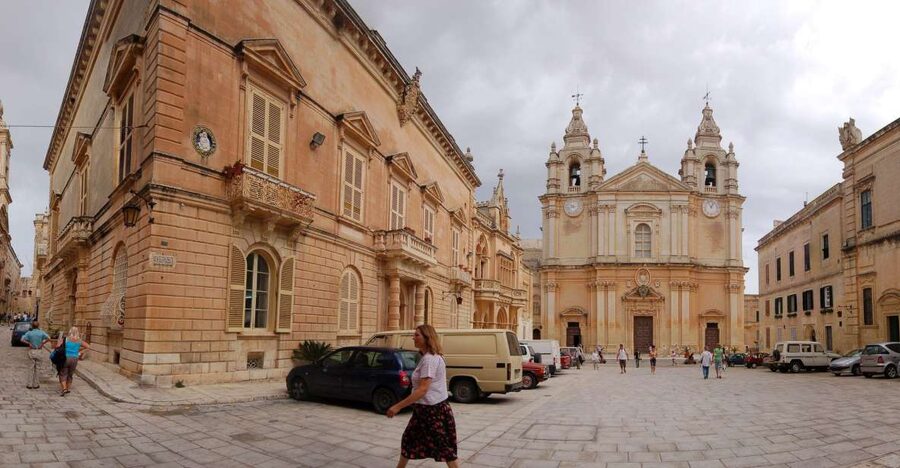
Reviewed · MDINA & RABAT TOURS
Mdina: St. Paul’s Cathedral and Mdina Museum Entrance Ticket
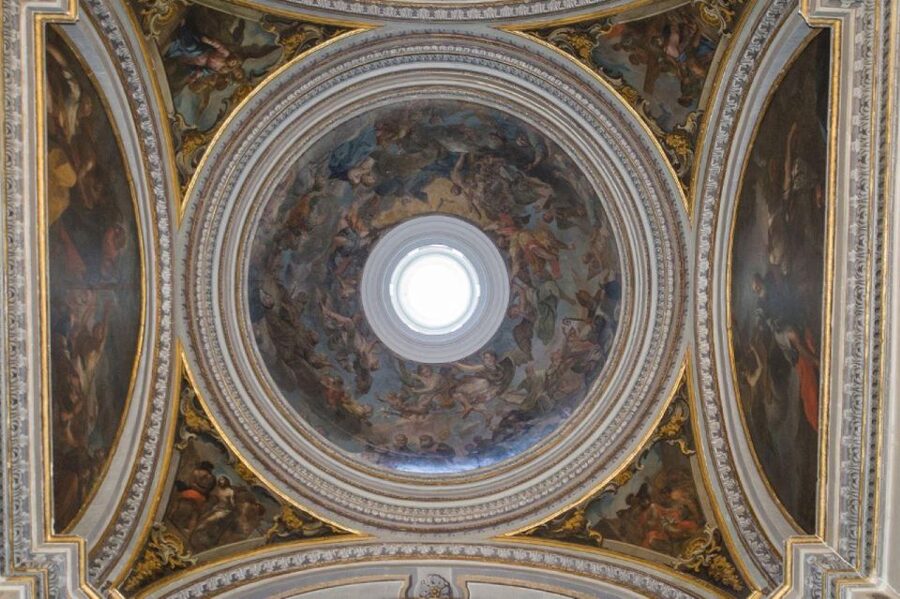
Mdina’s St. Paul’s Cathedral is a small-city heavyweight. Inside, your eyes move from the colorful inlaid marble floor to the painted ceiling, then on to altarpieces, statues, silverwork, woodcarving, and stained glass. The adjacent museum adds a fine collection of Albrecht Dürer prints, rare coins, silver objects, and a striking Trompe-l’oeil Baroque dome.
I like that one ticket covers both sites, and I like the freedom to visit them in either order after you first present your ticket at the museum. The main consideration is simple: this is an entrance ticket, not a guided tour. There is no named guide, and one recent booking described the visit as good but without an actual guide, so bring your own curiosity and allow time to read and look closely.
Key points at a glance
- Start at the museum reception: You must present your ticket at the Mdina Cathedral Museum first, even though the two sights can be visited in either order afterward.
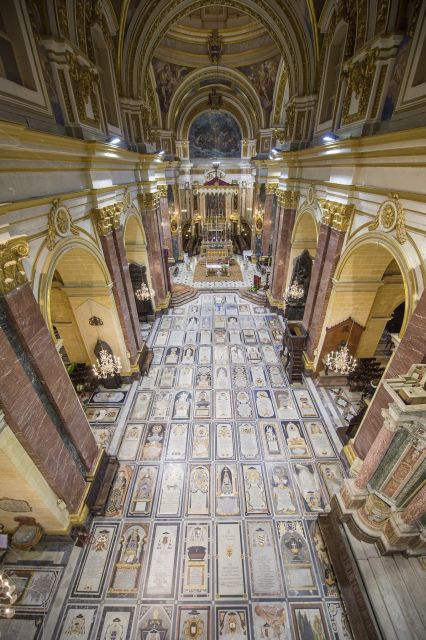
- Look down as soon as you enter: St. Paul’s Cathedral has a colorful inlaid marble floor that competes with the ceiling for attention.
- See art beyond the usual church interior: The museum contains Albrecht Dürer prints and engravings, silverware, rare coins, Maltese objects d’art, and wax reliefs.
- Expect a self-guided visit: English-speaking staff are listed, but no guided tour or named guide is provided.
- Plan one flexible day: Your ticket is valid for one day, giving you time to fit both stops around your visit to Mdina.
- Useful access support is available: The cathedral is wheelchair accessible, and shawls, wraps, and noise-cancelling headphones are provided where needed.
What your $18 ticket covers in Mdina
For $18 per person, you receive entry to two closely connected sights: St. Paul’s Cathedral and the Mdina Cathedral Museum. That makes the price reasonable if you enjoy church art, historic objects, and quiet museum time, but less compelling if you only want a quick look inside one building.
The ticket is valid for one day. There is no fixed tour departure to chase, and you can visit the cathedral and museum in either order after checking in at the museum reception desk. That flexibility matters in Mdina, where you may want to pause for a meal, walk the streets, or fit the visit around other plans.
The important practical detail is easy to miss: present your ticket at the museum first. The museum reception issues or validates what you need for cathedral entry. A January booking found this arrangement confusing at first, even though the visit worked out well. I would treat the museum as your first stop, not as an optional extra.
The experience provider is V. Tabone Travel. English is the listed language, and an English-speaking host or greeter is available, but the attraction itself is not presented as a guided tour. You should expect to move at your own pace rather than follow a person from room to room.
More Mdina and Rabat visits:
- Malta: Mdina and Rabat Walking Tour with Catacombs
★ 4.8 · 1,126 reviews - Mdina and Rabat: Guided City Walking Tour
★ 4.8 · 549 reviews - Malta: Mdina and Rabat Tour with Local Guide
★ 5.0 · 408 reviews
Entering St. Paul’s Cathedral in Mdina
The cathedral dates from 1702 and is tied to the island’s Christian story through St. Paul. According to the account presented with the site, governor Publius lived here when St. Paul appointed him Malta’s first bishop in 60 AD after being shipwrecked on the island.
That connection gives the building more than decorative appeal. You are not simply entering a pretty Baroque church. You are stepping into a place linked to one of Malta’s central religious traditions, then seeing how that story was expressed through architecture, painting, marble, and ceremony.
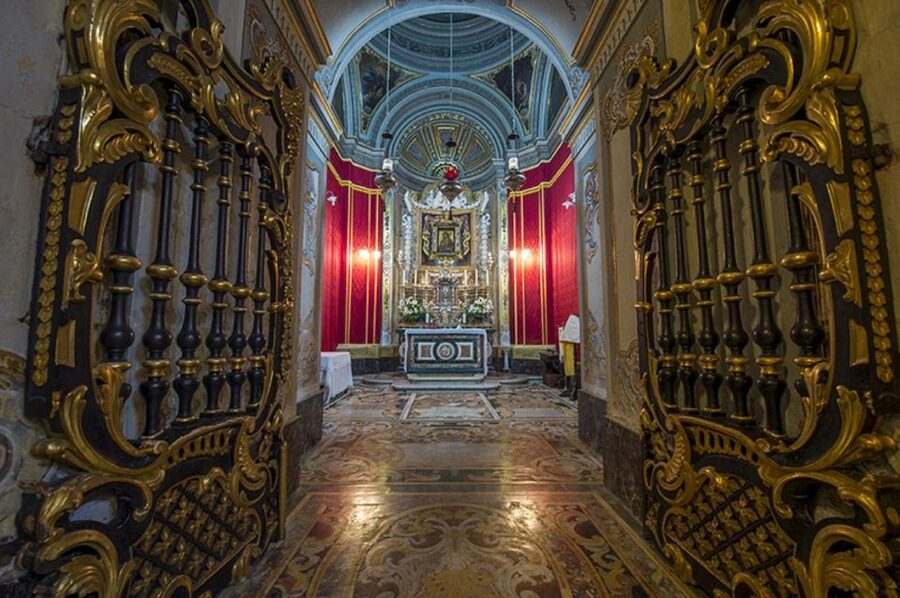
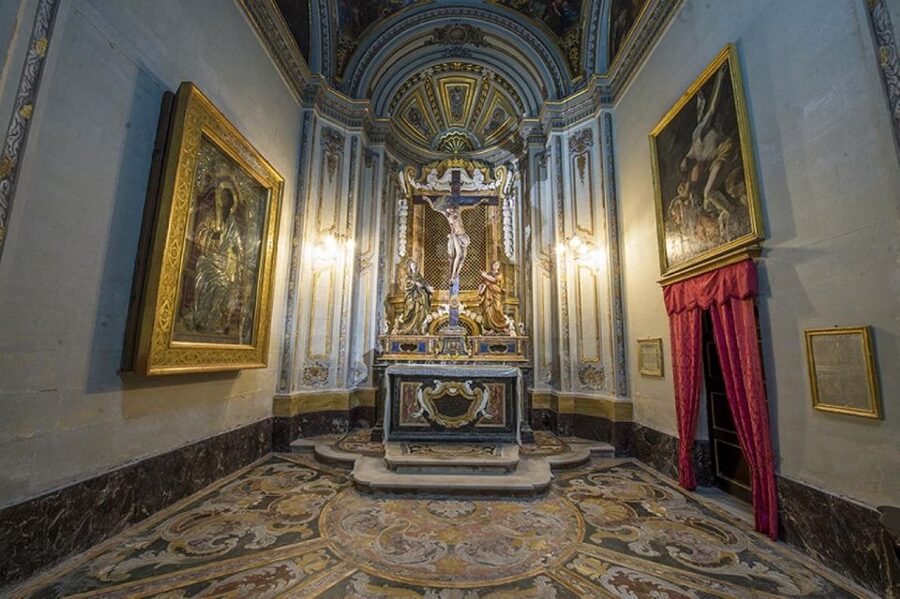
The first visual jolt is likely to come from the floor. Its colored inlaid marble forms a patterned surface that rewards a slow look downward. Many church interiors encourage you to stare at the ceiling, but here the floor deserves equal attention. Watch your step, though, since it is easy to become so busy studying the marble that you forget where you are walking.
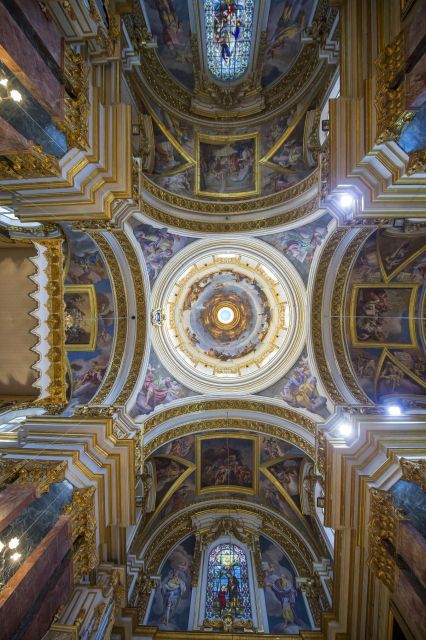
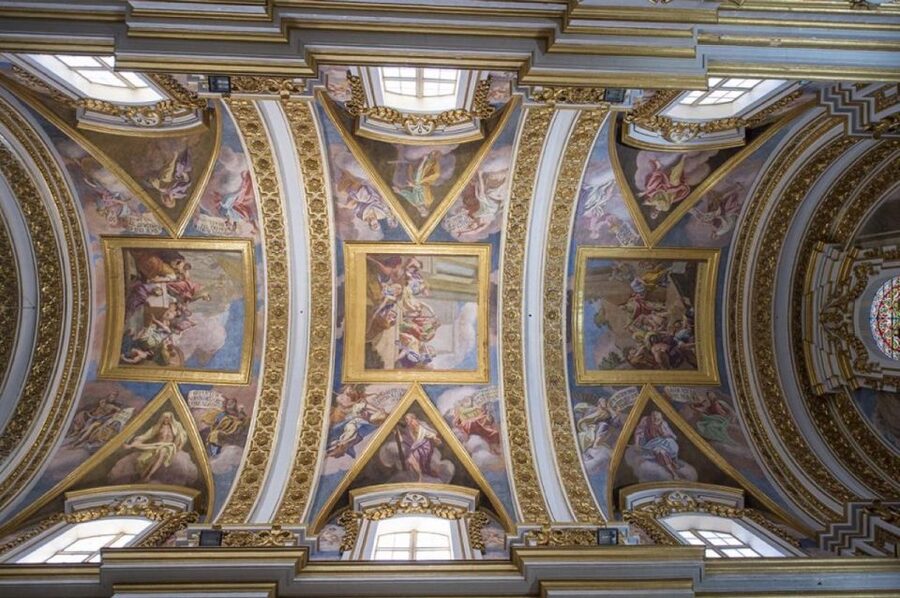
Above you, the frescoed ceiling adds another layer of color and movement. The floor and ceiling create a strong contrast: one is built from hard, polished stone; the other uses painted images and illusion to make the overhead space feel more elaborate.
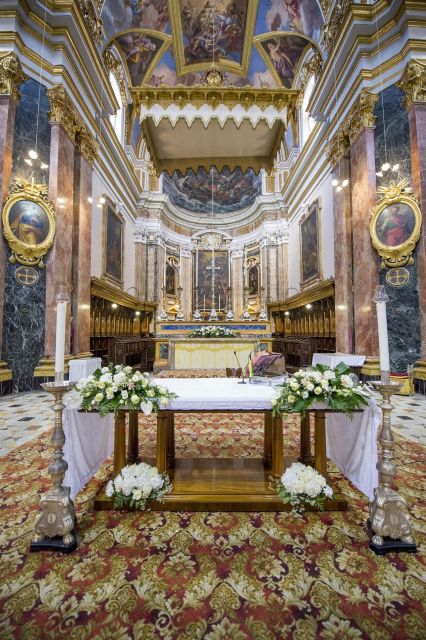
The cathedral also contains altarpieces, paintings, marble work, intricate woodwork, silver artifacts, statues, and stained glass windows. None of these features needs to be rushed. I would take a first circuit to get the overall impression, then make a second pass for smaller details such as carved wood, metalwork, and the way the light falls through the glass.
Why the cathedral interior rewards a slow visit
A quick five-minute stop will show you that the cathedral is ornate. A slower visit lets you understand how many different crafts are working together.
The marble work is not confined to one surface. It forms part of the building’s visual language, linking the floor with altars and other interior details. The woodwork softens the stone, while the silver objects add bright points that catch the eye. Paintings and altarpieces give the interior scenes to study rather than leaving you with decoration alone.
The stained glass windows bring a different kind of interest. Their effect depends on the light at the time of your visit, so the same window may look more subdued or more colorful at different hours. Since the ticket lasts all day, you have some flexibility if you want to return after spending time elsewhere in Mdina.
This is also an active place of worship, not just a museum room. Dress respectfully. Shawls and wraps are provided for cathedral entry, which is helpful if your clothing does not meet the church’s requirements. The provision makes the visit easier, but modest dress and quiet behavior remain the sensible approach.
If you need sensory support, noise-cancelling headphones and other facilities are available for people with autism and similar special needs. That information is worth knowing before you arrive, since it can make a major difference to how comfortable the visit feels.
The Mdina Cathedral Museum’s Dürer collection
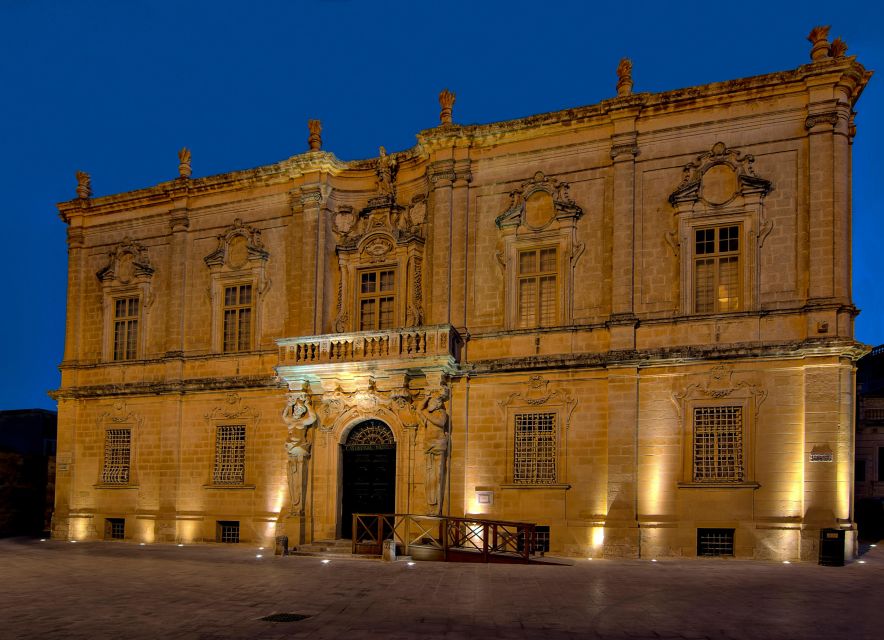
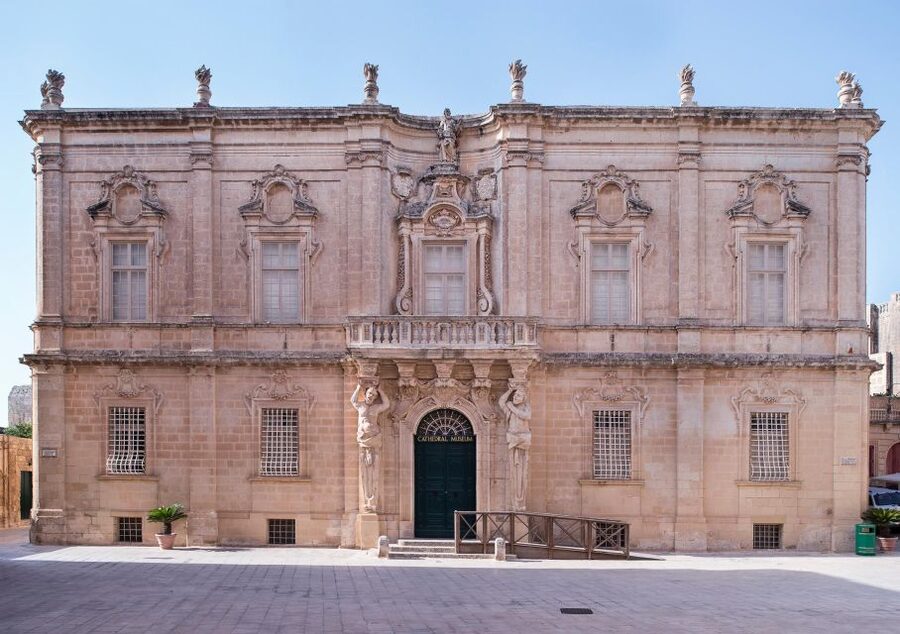
The museum is where the ticket begins, and it is also the part that may surprise art-minded visitors. Its most unusual draw is an important collection of prints and engravings by Albrecht Dürer, one of the leading artists of the Northern Renaissance.
Dürer worked in a medium that rewards close looking. Prints and engravings can appear modest beside a large church painting, but their power often lies in line, texture, and fine detail. Give these works time. You might find that the museum’s quieter rooms provide a better setting for careful study than the cathedral’s grand interior.
The collection adds an international dimension to your Mdina visit. The cathedral shows local religious life through its architecture and furnishings, while the Dürer works connect the museum to a wider European art tradition. That contrast gives the experience more range than a simple church admission.
The museum also houses paintings and other artifacts, so do not make a beeline for the Dürer collection and leave. Move through the displays at a steady pace and look for the relationship between formal religious art, practical church objects, and personal devotional pieces.
A few more Mdina half-days to weigh up
- Mdina: The Knights of Malta Museum Entry Ticket
★ 4.3 · 63 reviews - Palazzo Falson Historic House Museum entrance ticket
★ 4.7 · 22 reviews - Malta Classic Car Collection Museum Entry Ticket
★ 4.9 · 247 reviews - Skip the Line: Malta Classic Car Museum Admission Ticket
★ 5.0 · 174 reviews
Silverware, rare coins, and Maltese objects d’art
The museum’s silverware shows the ceremonial side of cathedral life. Silver objects are often designed to be seen in use, but here you can study their workmanship at close range. Notice the shapes, surfaces, and decorative details rather than treating the display as a collection of shiny objects.
Rare coins offer a smaller, more intimate form of history. They require patience, especially if you are not already interested in numismatics. Still, they help show how religious institutions preserved objects connected with money, authority, and changing periods on the island.
Maltese objects d’art broaden the visit again. The displays are not limited to one artist or one type of church furnishing. You will also find wax reliefs and many paintings, giving the museum a varied collection that suits visitors with different interests.
I would not judge the museum only by its size. The value comes from the mix. One room may appeal to an art lover, another to someone interested in church ceremony, and another to a visitor who enjoys small historical objects. You can spend a short time here, but the contents reward a slower pace.
The Trompe-l’oeil Baroque dome
One of the museum’s more theatrical features is its Trompe-l’oeil Baroque dome. Trompe-l’oeil painting uses visual tricks to make a flat surface look three-dimensional. The point is not simply to admire a painted ceiling, but to notice how paint can alter your sense of space.
This is a good place to pause and look from more than one position. Changes in angle can affect the illusion, and a few extra minutes may help you see how the artist created the impression of depth. It is a different experience from viewing a framed print or a silver object, so the museum’s collection has both intimate and theatrical moments.
The dome also fits the broader character of the visit. St. Paul’s Cathedral gives you a large, formal display of Baroque decoration, while the museum lets you examine specific works and objects. Taken together, the two sites show both the grand public face of religious art and the careful detail found in collections.
A practical one-day plan
Begin at the Mdina Cathedral Museum reception. Have your ticket ready and allow time for the check-in process before heading to the cathedral. This avoids the confusion experienced by one January visitor who did not realize the museum was the required starting point.
After presenting your ticket, choose the order that works best for you. Starting with the museum makes practical sense because you are already there, and the Dürer prints, silverware, coins, wax reliefs, and dome give you context before you enter the cathedral. Starting with the cathedral may suit you if the marble floor and frescoed ceiling are your main reason for booking.
There is no fixed duration beyond the one-day validity. That means you can keep the visit short or give the two sites a generous portion of your day. The right choice depends on your interest in art and church interiors.
A sensible sequence is:
- Check in at the Mdina Cathedral Museum reception.
- Visit the museum’s collection of prints, silverware, coins, paintings, wax reliefs, and Maltese art.
- Enter St. Paul’s Cathedral with the ticket issued or validated at the museum.
- Make a slow circuit of the floor, ceiling, altarpieces, windows, statues, woodwork, and silver details.
- Return to either site if your schedule allows and you want another look.
This is not a transport tour, and no transfer is included. You make your own way to the sites in Mdina. The two attractions are adjacent, so the ticket is best understood as a convenient cultural admission rather than a full-day escorted activity.
Who will get the most from this visit
I would recommend this ticket to you if you enjoy European church interiors, religious art, printmaking, decorative arts, or small museum collections. The Dürer material is a strong reason for art fans to look beyond the cathedral itself.
It also suits independent visitors. You do not have to stay with a group or follow a guide’s timetable. You can give the marble floor two minutes or twenty, depending on your interest.
Families may appreciate the flexible timing, though the value will depend on how much time everyone wants to spend looking at paintings, coins, and church furnishings. The one-day validity allows you to break up the visit instead of forcing every part into one rushed stop.
The ticket is also a practical choice for visitors who want a clear cultural activity in Mdina without booking a longer tour. It gives you two substantial indoor stops and some support for cathedral dress and sensory needs.
You may want to skip it if you are looking for a live guide, a story-filled walking tour, or a fast overview of Mdina. The English-speaking host or greeter can assist, but no named guide or guided presentation is included. You will need to supply the interpretation yourself.
Is $18 good value?
At $18, the price is fair for two connected attractions, especially if you take time with the museum. The cathedral alone may satisfy visitors who mainly want to see the famous interior, but the museum is what strengthens the overall value.
The Dürer prints and engravings give the ticket a clear point of distinction. Add the silverware, rare coins, Maltese objects d’art, paintings, wax reliefs, and Baroque dome, and you have a broader visit than a standard church admission.
Value depends on your pace. If you rush through both sites in fifteen minutes, the price will feel less attractive. If you enjoy close looking and spend enough time with the objects, the combination becomes much more worthwhile.
There is also value in the flexible format. You can reserve now and pay later, and free cancellation is available up to 24 hours before the visit for a full refund. Those terms are useful if your Malta schedule is still changing, though the cultural value of the ticket comes from the two sites themselves.
Access, clothing, and other useful details
The experience is listed as wheelchair accessible. Cathedral shawls and wraps are provided, so you have a practical backup if you need to cover your shoulders or legs before entering the place of worship.
Noise-cancelling headphones and other facilities are available for people with autism and similar special needs. If that support matters to you, ask the staff at the museum reception when you arrive.
The listed language is English. The attraction does not provide a named guide in the details available, so do not book it expecting a personal tour. Think of it as a self-paced visit with staff support at the entry point.
The overall rating is 4.5 from 89 bookings, and the strongest pattern is clear: the sites themselves make a good impression. One December visitor summed up the main limitation by noting that there was no actual guide. That is not a flaw if you prefer independence, but it matters if you want explanations at every stop.
Should you book St. Paul’s Cathedral and the Mdina Museum?
Book it if you want to see Mdina’s grandest church interior and a museum with more than the usual religious displays. The Dürer prints, colorful marble floor, frescoed ceiling, and Trompe-l’oeil dome give you several distinct reasons to visit.
I would especially choose it on a day when you can slow down. Start at the museum, remember that the cathedral ticket is handled there, and treat the two sites as one connected experience.
Skip it if a guide is essential to your plans. This ticket gives you access, flexibility, and English-speaking assistance, but not a named guide or guided commentary. For independent art and history lovers, that is a fair trade. For everyone else, it is the main point to consider before paying.
FAQ
How much does the Mdina cathedral and museum ticket cost?
The ticket costs $18 per person.
How long is the ticket valid?
The ticket is valid for one day.
Where do I present the ticket?
Present your ticket at the reception desk of the Mdina Cathedral Museum first.
Can I visit the cathedral before the museum?
You can visit the two attractions in either order after check-in, but you must present your ticket at the Cathedral Museum first.
Is a guided tour included?
No guided tour is specified. An English-speaking host or greeter is available, but the experience is primarily a self-paced entrance visit.
What does the ticket include?
It includes entry to St. Paul’s Cathedral and the Mdina Cathedral Museum, along with GST.
Is the experience wheelchair accessible?
Yes. The experience is listed as wheelchair accessible.
Are any facilities provided for cathedral entry or sensory needs?
Yes. Shawls and wraps are provided for cathedral entry, and noise-cancelling headphones and other facilities are available for people with autism and similar special needs.
Just added around Mdina
- 30-Minute Mdina Experience Audio-Visual Show Ticket (Open Ticket)★ 4.5 · 4 reviews
- Mdina and Rabat Private Walking Tour with local pastizzi★ 5.0 · 6 reviews
- Mdina, Dingli cliffs and San Anton Gardens guided tour★ 3.5 · 14 reviews
- Proposal Photoshoot with Professional Photographer in Malta★ 5.0 · 15 reviews
- Mdina: The Mdina Experience Audio-Visual Show (Open Ticket)★ 4.3 · 22 reviews
- Palazzo Falson Historic House Museum entrance ticket★ 4.7 · 22 reviews
- Guided Night Tour of Valletta Waterfront, Mdina and Rabat★ 4.5 · 22 reviews
- Mdina and Rabat Private Walking Tour★ 5.0 · 25 reviews
Mdina & Rabat Tours, compared.
Highlights of Malta & Mdina Full Day Tour with Lunch
Read our review →
Mdina, Dingli Cliffs and San Anton Botanical Gardens
Read our review →
Mdina and Rabat Walking Tour inc. Catacombs and St. Paul’s Grotto
Read our review →Browse the lists this tour appears in