
Reviewed · MDINA & RABAT TOURS
Mdina and Rabat Food and History Tour
A plate of pastizzi followed by rabbit stew, bragioli, Maltese bread, and wine is a fine way to understand Malta. This 3.5-hour walk pairs local food with Mdina’s old streets, St. Paul’s traditions, and Rabat’s everyday character, so you get more than a sightseeing loop.
I like the small maximum of 12 people, which leaves room for questions and personal attention. I also like the range of food and drink included, from Kinnie and Maltese coffee to local craft beer, wine, imqaret, and savory dishes. The main consideration is that the tour is built around walking and tasting, while the cathedral and St. Paul’s Grotto stops are photo visits rather than included interior tours.
Key points at a glance
- A food-first look at Malta: Try pastizzi, ħobż biż-żejt, bragioli, rabbit, Maltese bread, imqaret, and other local specialties.
- A small group setting: The tour accepts no more than 12 participants, making it easier to hear the guide and ask questions.
- Three-and-a-half hours on foot: The route links Mdina’s Main Gate with Rabat food stops and historic sights.
- Local guides with personal ties: Chris, Bridgette, and Darrell are named as guides associated with the experience, with Chris bringing family connections in the area dating back to the 1400s.
- Drinks are part of the price: You receive local craft beer, a glass of wine, Kinnie, and other drinks during the food stops.
- A practical starting point: Meet at Is-Serkin, also known as Crystal Palace Bar, on Triq San Pawl in Rabat at 10:30 am.
Why food is the best way into Mdina and Rabat
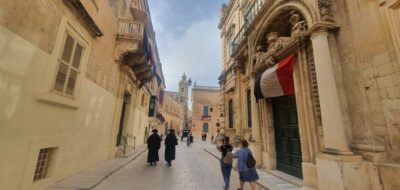
Mdina can look almost too polished at first glance. Its stone lanes, grand gate, and quiet streets invite photographs, but food gives the old city and nearby Rabat a more human scale. Instead of only hearing dates and names, you get a taste of how Malta’s kitchen uses pastry, bread, meat, coffee, fruit, and sweets.
The tour is especially useful if Maltese food is new to you. Your guide can explain what you are eating as the day moves along, and the generous portions mean you should arrive hungry. This is not a quick sample of one snack. The food can build from pastizzi and Kinnie to a Maltese platter, then to rabbit stew, bragioli, roast potatoes, vegetables, bread, wine, and imqaret.
That amount of food is a strength, but it also shapes the pace. You are not simply walking from monument to monument. Stops for eating take time, and the experience works best when you are happy to linger over a plate and listen to stories.
More Mdina and Rabat visits:
- Malta: Highlights of Malta & Mdina Full Day Tour with Lunch
★ 4.4 · 2,688 reviews - Malta: Mdina and Rabat Walking Tour with Catacombs
★ 4.8 · 1,126 reviews - Malta: Mdina, Dingli Cliffs and San Anton Botanical Gardens
★ 4.3 · 991 reviews
Meeting the guide in Rabat at 10:30 am
The tour begins at Is-Serkin, known locally as Crystal Palace Bar, on Triq San Pawl in Rabat. The activity returns to this same meeting point, so you do not need to arrange a second pickup location at the end.
A fixed meeting point is useful for a walking tour because you can arrive independently and begin near the Mdina and Rabat area. The supplied details do not include hotel pickup or transportation between cities, so plan on making your own way to Rabat before the 10:30 am start.
The group limit is 12. That is small enough for the guide to notice what interests you. One guide, Chris, is described as having family connections in the area going back to the 1400s. He also contacted participants before the tour to ask about allergies, a sensible touch for a food-focused outing.
Guides named in connection with the experience include Chris, Bridgette, and Darrell. Their styles may differ, but the format depends on a personable host who can connect local food with local stories. If you enjoy asking about recipes, customs, or family traditions, a small group gives you a better chance to do so.
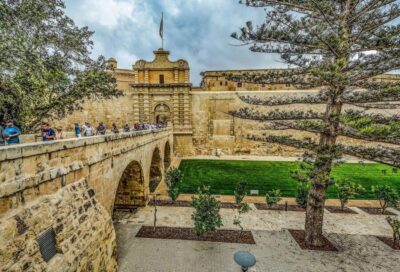
Entering Mdina through the Baroque Main Gate
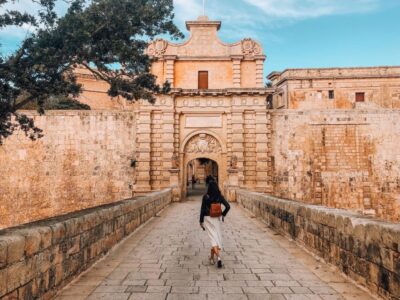
The first listed sight is Mdina’s Main Gate, a Baroque entrance that leads into Malta’s old capital city. You have about 10 minutes here, with no admission charge for the stop.
The gate is a natural opening scene. It gives the guide a place to explain Mdina’s role and point out the city’s film connections. The location has appeared in many movies, so you may hear how its stone architecture has been used on screen.
Do not expect a long archaeological lecture at the gate. Ten minutes is enough for photographs and a short introduction, not a full exploration of every corner. That brevity is helpful if food is your main interest, but it means you may want extra time in Mdina later if you want to see more of the old city on your own.
The guide’s commentary is what turns the gate from a photo stop into a useful beginning. Look closely at the stonework, the formal design, and the way the entrance frames the streets beyond it. Then let the tour move from public monument to local table.
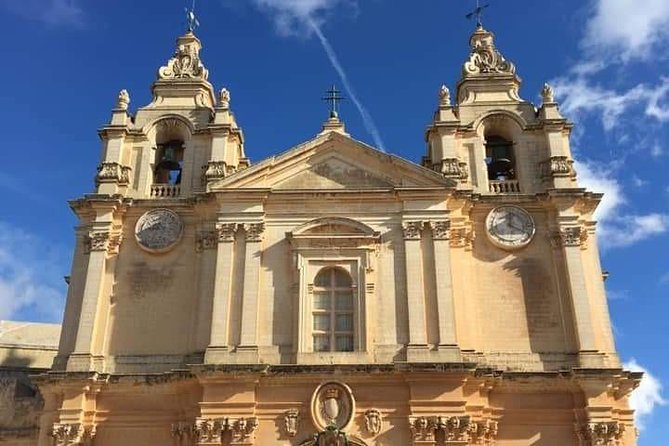
The Cathedral of Saint Paul, a photo stop with context
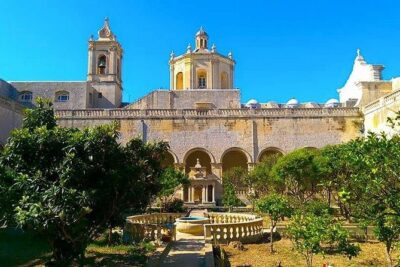
The group stops outside the Metropolitan Cathedral of Saint Paul, described as the mother church of the Maltese Islands and dedicated to St. Paul. You have about 10 minutes here for photographs. Admission is not included.
This is an important distinction when planning your day. The tour gives you a guided look and a chance to see the cathedral from outside, but it does not promise entry. If you want to visit the interior, ask the guide about timing and ticket arrangements, or return independently after the tour.
A short stop can still add useful context. Saint Paul is central to Malta’s Christian tradition, and the cathedral connects the old capital’s grand architecture with the religious stories that shape the island. You will get more from the stop if you listen for that connection rather than treating it as another quick picture point.
Because the tour is also a food walk, the cathedral is not meant to take over the morning. The balance suits you if you want history in manageable portions, with food and conversation between the major sights.
More food tours in Malta:
- Valletta: Street Food and Culture Walking Tour
★ 4.8 · 1,251 reviews - Malta: Lazy Pirate Boat Party with Drinks & Food
★ 3.8 · 788 reviews - The Valletta Street Food and Culture Walking Tour
★ 5.0 · 711 reviews - Valletta Food Tour
★ 5.0 · 711 reviews
St. Paul’s Grotto and the Malta story
The next historic stop is St. Paul’s Grotto. The group pauses in front of the church built above the grotto, which is thought to be the place where St. Paul lived during his three-month stay in Malta. Admission is not included.
Again, this is an exterior stop rather than a guaranteed interior visit. The value lies in the story and the setting. Your guide can place Rabat within Malta’s Christian traditions and explain why this particular site matters.
The 10-minute stop keeps the schedule moving. It will not satisfy someone seeking a long religious or architectural tour, but it works well for anyone who wants a clear introduction before returning attention to food and daily life.
These historic stops also help break up the tasting. A morning of several dishes can feel heavy if you sit the whole time. Walking through Mdina and Rabat gives the meal a steady rhythm and helps you notice the difference between formal historic spaces and the town’s more ordinary food places.
The Maltese tasting sequence
The food is the heart of this experience, and the selection reaches well beyond the familiar pastizzi. The exact order may vary, but the tour includes several stops for local delicacies.
Pastizzi and Kinnie
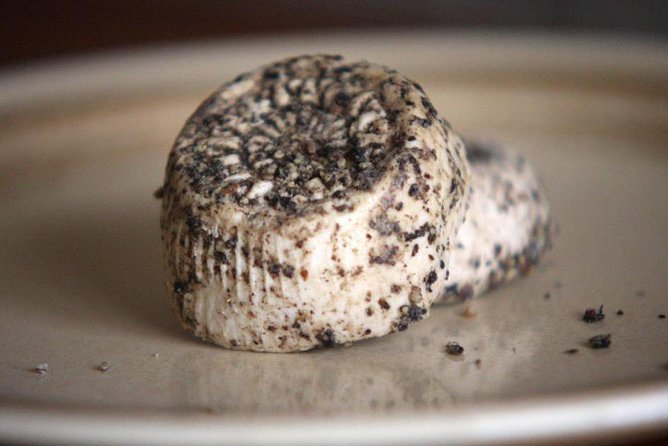
Pastizzi are among Malta’s best-known savory pastries, and they make a practical first taste. They are small, filling, and easy to understand as an introduction to local snack culture. Pairing them with Kinnie, Malta’s local soft drink, gives you two distinctly Maltese flavors at once.
A glass of Kinnie is included. Its unusual bitter and citrus character may not taste like an ordinary soda, so this is a good chance to try it without buying a full bottle.
Maltese coffee and fresh fruit
The tasting can also include Maltese coffee and fresh fruit. This lighter pause keeps the meal from being all pastry and meat, and it gives the guide another chance to explain local habits around drinks and snacks.
Food tours are often most useful when they show how people eat between larger meals. Coffee, fruit, and a small pastry tell you something different from a formal main course.
Ħobż biż-żejt and a Maltese platter
You can expect ħobż biż-żejt, a Maltese bread dish served with sides, along with a Maltese platter. Bread is central to the experience, not just an extra placed beside the main dish. The sides help you compare different textures and flavors in one sitting.
The tour description specifies various sides with the bread, but does not give a fixed list. That is worth keeping in mind if you have strict dietary needs. The guide may ask about allergies before the tour, but you should still share any restrictions when booking and again at the meeting point.
Rabbit and bragioli
Rabbit is one of the signature dishes associated with traditional Maltese cooking, and here it is served as rabbit stew. Bragioli is also included, along with roast potatoes, vegetables, and Maltese bread.
This is where the tour becomes a proper meal rather than a series of nibbles. You should arrive with an appetite. The portions described for this stop are substantial, and the food is paired with wine as part of the experience.
A meal centered on rabbit will not suit everyone, and the tour does not present a long list of substitute dishes. If you avoid rabbit or meat, confirm what alternatives may be possible before booking. The available information confirms the included dishes, but not a vegetarian replacement.
Wine, craft beer, and imqaret
The included drinks are a real part of the value. You receive local craft beer and a glass of wine, as well as Kinnie and other soft drink options. Imqaret, a Maltese date pastry, provides a sweet finish.
Since alcohol is included, you can sample local drinks without adding several separate purchases. You should still pace yourself, especially with a morning start and a meal that includes multiple courses.
What the 3.5-hour format does well
Three hours and 30 minutes is long enough to create a proper story. You begin with Mdina’s gate, move through religious and historic landmarks, and then use food to connect those places with Maltese life.
The schedule is not designed for a detailed museum visit. The cathedral and grotto stops are both listed at about 10 minutes, and admission is not included. That makes the tour a good choice for orientation, especially if you have limited time in Malta and want a guided first look at Mdina and Rabat.
I would think of it as a food walk with history, not a history tour with a snack. That distinction matters. If you want hours inside churches and monuments, choose a more museum-focused outing. If you want to learn the basics while eating a serious amount of traditional food, the balance is more appealing.
The tour also ends where it starts. That keeps the final logistics simple, though you will need to plan your next activity from Rabat rather than from a different part of Malta.
Small groups, personal attention, and local character
The maximum of 12 people is one of the strongest practical features. A guide can explain unfamiliar foods without shouting, adjust the conversation when someone asks a good question, and notice what catches your eye.
Chris is described as paying attention to what people photographed and using those interests to point out similar details. That suggests the tour can feel responsive rather than strictly scripted. Bridgette is also associated with a warm, personal style, while Darrell is named as a host and guide. You should not assume which guide you will receive, but the experience is clearly built around a local person rather than an anonymous audio system.
Timing can add an unexpected local touch. On one occasion, the route coincided with the eve of a festa, when flags and lights were being set up and local people were gathering. A festa is not guaranteed on your date, but it shows how the tour can intersect with ordinary community events when the calendar happens to align.
That kind of moment is difficult to schedule in advance. It is also why a local guide adds value. A guide can explain what you are seeing instead of leaving you to guess why a street has suddenly changed.
Is the $81.93 price good value?
At $81.93 per person, this is not the cheapest way to walk around Mdina. The price makes more sense when you count the included food, drinks, guide, and the time saved choosing what to try.
You are paying for a full tasting route rather than one pastry and a short talk. The included menu can cover pastizzi, Kinnie, coffee, fruit, a platter, ħobż biż-żejt, rabbit, bragioli, roast potatoes, vegetables, bread, wine, craft beer, and imqaret. If you bought a similar meal and several drinks separately, the total could rise quickly, while you would still miss the guide’s local context.
Value depends on your appetite and interests. I think the price is easier to justify if you want a meal and an introduction to Maltese cooking in one booking. It is less attractive if you plan to eat lightly, do not drink alcohol, or mainly want entry to the cathedral and grotto, since those admissions are not included.
The small group also matters. A 12-person limit gives the tour a more personal feel than a large coach excursion, and that is useful when the subject is unfamiliar food. You are not only buying calories. You are buying explanations, recommendations, and a structured way to try dishes you might otherwise skip.
Who should book this Mdina food walk?
This tour suits you if you want a first taste of Maltese food without spending days researching dishes and restaurants. It is also a good fit if you enjoy history in short sections and prefer local stories to a long formal lecture.
Book it if you:
- Like trying traditional dishes rather than sticking to familiar international food.
- Want rabbit, bragioli, pastizzi, and Maltese bread in one experience.
- Prefer a small group of no more than 12 people.
- Want local drinks included in the price.
- Need a useful introduction to Mdina and Rabat.
- Enjoy asking a guide about family traditions, festivals, and food customs.
Think twice if you need a fully accessible, seated food experience, though the supplied information only confirms that most people can participate and that the tour is near public transportation. It is also less suitable if you require guaranteed entry to the cathedral or grotto, since those are exterior stops with admission not included.
Service animals are allowed. The tour is offered in English, and confirmation is sent when you book. It requires good weather, so poor conditions can lead to a different date or a full refund.
The final call
I would book the Mdina and Rabat Food and History Tour if I wanted one morning that combined Malta’s old capital, Christian traditions, local streets, and a substantial meal. The strongest reasons are the small group, the generous food list, and the chance to learn from guides with personal ties to the area.
Go in expecting a guided introduction, not a full monument tour. You will see Mdina’s Main Gate, stop at the Cathedral of Saint Paul and St. Paul’s Grotto, and spend much of the time tasting and talking. If that sounds like the right balance, $81.93 is a fair price for a focused and filling look at Malta.
FAQ
How long does the Mdina and Rabat Food and History Tour last?
The tour lasts approximately 3 hours and 30 minutes.
What time does the tour start?
The tour starts at 10:30 am.
Where does the tour meet?
The meeting point is Is-Serkin, also called Crystal Palace Bar, on Triq San Pawl in Rabat, Malta.
Where does the tour end?
The activity ends back at the same meeting point in Rabat.
What language is the tour offered in?
The tour is offered in English.
How many people can join the tour?
The maximum group size is 12 participants.
Which foods are included?
The tour includes pastizzi, ħobż biż-żejt with sides, bragioli, rabbit, and other local delicacies. Food examples also include a Maltese platter, roast potatoes, vegetables, Maltese bread, fresh fruit, Maltese coffee, and imqaret.
Which drinks are included?
Local craft beer, a glass of wine, and a glass of Kinnie are included. Kinnie is Malta’s local soft drink.
Is admission to the cathedral or St. Paul’s Grotto included?
No. The tour stops for photographs outside the Metropolitan Cathedral of Saint Paul and St. Paul’s Grotto, but admission is not included.
Can I cancel for a full refund?
Yes. You can cancel at least 24 hours before the experience start time for a full refund. Changes or cancellations made less than 24 hours before the start time are not accepted for a refund. If poor weather causes the tour to be canceled, you are offered another date or a full refund.
More Historical Tours in Malta
- Malta: Prehistoric Temples, Limestone Heritage & Blue Grotto
★ 4.2 · 412 reviews - Maltese Islands History Audio-Visual Show and La Sacra Infermeria Tour
★ 4.0 · 344 reviews - Valletta: Self-Guided Historical Walking Tour (Audio Guide)
★ 3.7 · 251 reviews - Wonderful Valletta, gastronomy, art, and history in the Mediterranean
★ 4.5 · 72 reviews
More Food in Malta
- Valletta: Maltese Food and Drink Guided Walking Tour
★ 4.7 · 601 reviews - Valletta: Food Walking Tour with Tastings
★ 4.9 · 220 reviews - Sliema: Sailboat Party with an Open Bar, Food, and Swimming
★ 3.7 · 155 reviews - Valletta Food Tour – Eat like a local
★ 5.0 · 137 reviews
Just added around Malta
- Serenity at Sea: Comino Blue Lagoon Exclusive Day Cruise★ 5.0 · 3 reviews
- Gozo Unveiled: Guided Hiking in Gozo – South East★ 5.0 · 3 reviews
- Gozo Unveiled: Guided Hiking in Gozo – The West★ 5.0 · 3 reviews
- Malta Chocolate Factory Gin and Truffle Making Experience★ 5.0 · 3 reviews
- From St. Julian’s: Jet Ski Safari to the South of Malta★ 5.0 · 3 reviews
- St. Julian’s: Comino Blue Lagoon Sunset Cruise by Speedboat★ 3.6 · 3 reviews
- Malta: Around Comino Cruise With Blue Lagoon stop★ 5.0 · 3 reviews
- Private Speedboat Tour: Blue Lagoon & 3 Islands from Split★ 5.0 · 3 reviews
Mdina & Rabat Tours, compared.
Highlights of Malta & Mdina Full Day Tour with Lunch
Read our review →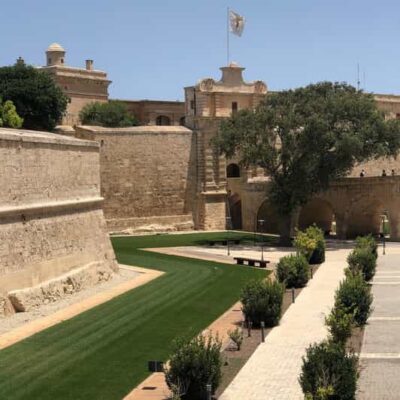
Mdina, Dingli Cliffs and San Anton Botanical Gardens
Read our review →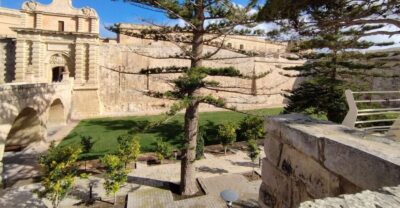
Mdina and Rabat Walking Tour inc. Catacombs and St. Paul’s Grotto
Read our review →Browse the lists this tour appears in